Free Shipping on Orders $100+ — Canada


Short answer: Beard dandruff is the flaking of skin under a beard, often from dry skin, product build-up or a harsh cleanser. A gentle routine is the sensible first step: wash daily with a mild non-soap cleanser, rinse well and moisturize the skin; if flakes are greasy, red, painful or last about a month, see a doctor.
If you have ever looked down and spotted white flakes on your collar, you have met beard dandruff, or "beardruff". It is a common beard complaint and it turns up on beards of every length and style. This guide is the step-by-step routine. To understand what causes flaking and when it points to something a doctor should look at, read our guide to beard dandruff causes and when to see a doctor.
Key takeaways
- Flaking under a beard often comes from dry skin, build-up or a harsh cleanser, and sometimes from a skin condition that needs a doctor.
- Wash your face and beard every day with a gentle, non-soap cleanser, then rinse with lukewarm water and pat dry.
- Moisturize the skin, not just the hair: work 3–5 drops of beard oil down to the skin (6–10 for a long or thick beard).
- Skip regular shampoo, very hot water, hard scrubbing and scratching.
- See a doctor if the flakes are greasy, the skin is red, painful or spreading, or nothing improves after about a month.

Knightsmen Recommends
Organic Beard Oil | Classic
A fragrance-free organic beard oil that moisturizes the skin under the beard and softens the hair — the daily step this guide keeps coming back to.
Shop Now →What is beard dandruff, and how do you fix it?
Beard dandruff, or beardruff, is dry, flaking skin under a beard. The flakes can be white or yellowish, they collect in the hair and drop onto your collar, and the skin underneath may feel tight or itchy.
There is no one-step fix. Flaking can have several causes: dry skin, build-up from products or sweat, a harsh cleanser, or sometimes a skin condition. For dry skin and build-up, a gentle routine is the place to start, and the sections below walk you through it. For anything else, see a doctor.
It is not a hygiene problem, either. The NHS says dandruff is not caused by poor hygiene and that you cannot catch it from another person.
What mistakes make beard flakes worse?
Most of the common mistakes come down to the cleanser, moisture and rinsing.
1. Washing with regular shampoo, body wash or soap
These products are made for the scalp and body, not the face. The American Academy of Dermatology (AAD) recommends a gentle cleanser rather than soap for the face and beard, and its guidance on dry skin warns that some products, such as deodorant soaps, are too harsh for dry, sensitive skin. A harsh cleanser can leave facial skin tight and dry, which makes flakes more noticeable.
2. Skipping moisturizer
Without moisturizer, the skin beneath a beard can become dry, flaky and itchy. Beard oil only moisturizes the skin if it reaches the skin, so work it down through the hair instead of leaving it on the surface.
3. Skipping the wash or rinsing badly
Not washing lets product, sweat and loose skin cells build up in the hair. Use enough cleanser to clean the skin and hair without a thick lather, and rinse thoroughly.
How should you wash a beard that flakes?
Wash your face and beard every day with a gentle, non-soap cleanser matched to your skin type, as the AAD advises. For dry skin that means a hydrating, fragrance-free cleanser; for sensitive skin, a creamy, soap-free, fragrance-free one.
- Wet the beard thoroughly with lukewarm water.
- Work a small amount of cleanser (a dime to quarter-sized amount, depending on beard length) down to the skin with your fingertips, using gentle circular motions.
- Rinse really well with lukewarm water, until no cleanser is left in the hair.
- Pat dry with a clean towel and leave the skin a little damp.
The fingertip massage gently exfoliates and loosens leftover product so it rinses away. Skip rough scrubs and hot water. Our beard washing guide covers the method in more detail.
How do you moisturize the skin under a beard?
Apply beard oil to a slightly damp beard and work it all the way down to the skin. The AAD pairs beard oil with normal to dry skin and says to use it sparingly, because too much can leave a beard looking greasy. For sensitive or breakout-prone skin it suggests other options, so ask a dermatologist if that sounds like you.
- Pour 3–5 drops into your palm for a short or medium beard, or 6–10 drops for a long or thick one.
- Rub your palms together to warm the oil.
- Push your fingertips through the hair to the skin and massage for 30–60 seconds, then work the oil out to the tips.
- Comb or brush through to spread it evenly.
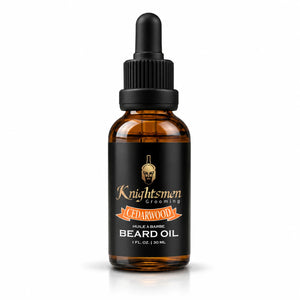
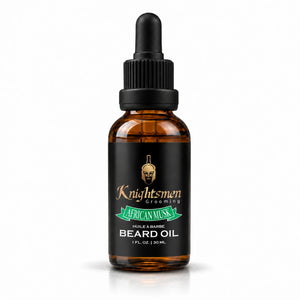
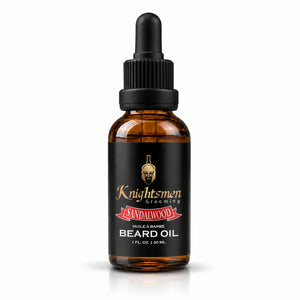
Our organic beard oils are made with certified organic ingredients, including carrier oils such as jojoba and argan. Organic Beard Oil | Classic has no added fragrance; the Cedarwood, Sandalwood and African Musk versions add a scent. Beard oil is a cosmetic that moisturizes and conditions. It is not a treatment for any skin condition.
Do you need beard balm or a brush?
Only if your beard is long enough to need them. Once a beard is longer than an inch or two, a small amount of beard balm after the oil adds a layer of conditioning and helps hold moisture in through the day.
Warm a little between your palms, then work it through the beard. A boar-bristle brush or a wide-tooth comb spreads oil and balm from root to tip and detangles the hair. Be gentle near the skin, and stop if the brush pulls or scratches.
Knightsmen beard balms are made with shea butter, beeswax and jojoba for light hold, and come in the same four versions as the oil.
How should you adjust the routine in a Canadian winter?
Add a little more moisture and keep the water warm rather than hot. Cold weather and dry air can leave skin dry, as Cleveland Clinic notes for the skin under a beard, and heated indoor air does not help.
- Use a few extra drops of oil, for example 5–8 instead of 3–5 on a short or medium beard.
- Add a small layer of balm over the oil to help hold moisture in.
- Keep showers short and warm; the AAD suggests five to ten minutes in warm water for dry skin.
- Choose fragrance-free products if your skin feels sensitive.
If your winters are long, cold and dry, consistency matters more than any single product.
Which habits help, and which make flaking worse?
Gentle, consistent habits help, and harsh ones make flaking more noticeable. This table puts them side by side.
| Do | Don't |
|---|---|
| Wash your face and beard daily with a gentle, non-soap cleanser | Use regular shampoo, body wash or deodorant soap on your beard |
| Rinse and bathe in lukewarm to warm water | Use very hot water |
| Pat dry and moisturize while the skin is slightly damp | Skip beard oil, especially in cold, dry weather |
| Massage gently with your fingertips as you wash | Scrub hard, or scratch and pick at the flakes |
| Use a few drops of oil and spread it with a comb or brush | Pile on oil until the beard looks greasy |
| See a doctor if the flaking is persistent or looks worse | Keep adding new products when nothing changes |
When should you see a doctor about beard flakes?
See a doctor or dermatologist if gentle care has not helped after about a month, or sooner if your skin looks or feels worse. The NHS gives the one-month guide for scalp dandruff, and the AAD says to see a dermatologist if a beard rash continues despite home care. Book a visit if you notice:
- Greasy, yellowish or thick scales
- Red or discoloured patches, or flaking on your scalp, eyebrows or the sides of your nose as well
- Pain, swelling, pus, crusting or broken skin
- Pimple-like breakouts or patchy hair loss under the beard
- Burning or stinging after you apply any product, including beard oil
Flaking like this can be a skin condition such as seborrheic dermatitis, so see a doctor for a diagnosis rather than guessing. Our guide to beard dandruff causes and when to see a doctor explains the signs in more detail.
Which Knightsmen products fit this routine?
Two products cover the moisturizing steps. Both are COSMOS-certified organic formulas, handcrafted in small batches in Toronto, Canada, with no mineral oil, no parabens and no synthetic fragrance.
- Organic Beard Oil | Classic: fragrance-free, for the daily moisturizing step. The Cedarwood, Sandalwood and African Musk oils add a scent.
- Organic beard balm: light hold and conditioning for longer beards and cold, dry weather.
- Beard Growth Starter Kit: beard oil and beard balm together.
These are cosmetics that moisturize and condition, not a treatment for any skin condition, and that is all this routine asks of them. Free standard shipping applies to orders over $100 CAD within Canada, and orders placed before 12 pm ET on a business day ship the same day.
Frequently asked questions
What should I use for beard dandruff?
Start with the basics: a gentle, non-soap cleanser every day and a moisturizer for the skin underneath. The AAD pairs beard oil with normal to dry skin, so choose what suits your skin type. Avoid products made for a skin condition unless a doctor or pharmacist recommends them, and see a doctor if the flakes are greasy, the skin is red or painful, or nothing changes after about a month.
Does beard oil help with beard dandruff?
Beard oil moisturizes the skin under the beard and softens the hair, so if the flaking comes from dryness it can make the skin feel more comfortable. It is a cosmetic, not a treatment for dandruff or any skin condition. Work 3–5 drops down to the skin on a slightly damp beard, and see a doctor if the flakes are greasy, the skin is red or sore, or nothing changes.
How often should I wash my beard if it flakes?
Every day, according to the AAD, which advises washing the face and beard daily with a gentle, non-soap cleanser matched to your skin type, then moisturizing. Rinse really well with lukewarm water and pat dry. Choose a hydrating, fragrance-free cleanser for dry skin, and a creamy, soap-free, fragrance-free one for sensitive skin.
Why is my beard flakier in winter?
Cold weather and dry air can leave skin dry, and Cleveland Clinic lists them among the causes of dryness under a beard. Moisturize daily, keep showers short and warm rather than hot, and add a little balm over the oil. If the flakes are greasy, red or stubborn, see a doctor instead of adding more products.
Is beard dandruff contagious?
No. The NHS says dandruff is not caused by poor hygiene and that you cannot catch it from another person. Flaking from dry skin or build-up is not contagious either. If you are not sure what is behind your flakes, see a doctor.
Shop these products
Related guides
- Beard Dandruff: Causes, Care and When to See a Doctor
- How to Stop Beard Itch Fast
- Organic vs. Regular Beard Oil: Which Is Actually Better?
Sources
- American Academy of Dermatology: A dermatologist's top tips for a healthy beard
- American Academy of Dermatology: Dermatologists' top tips for relieving dry skin
- Cleveland Clinic: What may be causing your itchy beard
- NHS: Dandruff
Knightsmen Grooming products are cosmetics. This guide is general information, not medical advice. If you have a skin or scalp condition, or sudden changes in your hair, see a doctor or dermatologist.