Free Shipping on Orders $100+ — Canada

Short answer: A proper beard wash is a daily, gentle cleanse of the skin under the hair with a soap-free cleanser: work it into the skin, rinse really well with lukewarm water, pat dry, and follow straight away with three to five drops of beard oil.
Your beard picks up everything — dead skin cells, sweat, food, pollution, product buildup. Many men either ignore this entirely and wonder why their beard itches and smells, or they overcorrect and wash it with regular shampoo, which can strip the beard's natural oils and leave the skin underneath dry and flaky.
Getting beard washing right is not complicated, but it does require knowing a few things that most grooming guides skip over. Here's what actually works.
Key takeaways
- Wash the skin under your beard every day with a gentle, soap-free, fragrance-free cleanser, not regular shampoo or harsh body soap.
- Work the lather into the skin as well as the hair, and rinse really well with lukewarm water.
- Pat dry gently instead of rubbing, leaving the skin a little damp.
- Apply three to five drops of beard oil straight after washing, then a little balm if you need hold.

Knightsmen Recommends
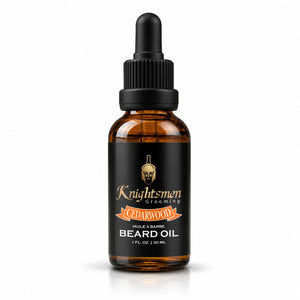
Organic Beard Oil | Classic
The step this guide calls “the most important thing in this entire article”: a few drops of fragrance-free beard oil on a towel-dried beard, right after washing, to moisturize the skin.
Shop Now →Why beard hair is different from scalp hair
Beard hair is often coarser than scalp hair. The skin underneath a beard can dry out, especially in cold, dry weather or after a harsh cleanser.
The result: the skin under a beard can dry out, and beard hair can feel dry and brittle. Both get worse when you wash with the wrong products.
Why are regular shampoo and body soap a problem for a beard?
Many regular shampoos — especially those labeled "clarifying" or "volumizing" — contain sodium lauryl sulfate (SLS) or sodium laureth sulfate (SLES). These are detergents that remove oil aggressively, and on the skin under a beard that can leave it tight, dry and itchy.
Body soap has similar issues, because a harsh bar can dry out the skin on your face (the Cleveland Clinic lists certain shampoos and soaps among the things that can contribute to dry skin).
What you want instead: a gentle, sulfate-free cleanser. If you prefer a bar, the Knightsmen Oatmeal, Shea and Honey Soap is a gentle one made with oatmeal, shea butter and honey, though the American Academy of Dermatology suggests a cleanser rather than soap for the face and beard. It contains colloidal oatmeal (which soothes dry skin), raw shea butter (moisturizes without stripping), and honey (gentle on skin). No SLS, no synthetic fragrance, no harsh detergents.
How often to wash your beard
Wash the skin under your beard once a day with a gentle, soap-free cleanser, as the American Academy of Dermatology advises; for dry skin, it suggests a hydrating, fragrance-free one. Skip washing for too long and buildup becomes a real issue — product residue, dead skin, and environmental debris accumulate at the skin level, can irritate the skin and make flakes more noticeable.
Exceptions: if you work in a physical environment (construction, kitchens, outdoor work) where the beard collects real grime, washing more frequently with a gentle cleanser is fine. If you have a long beard, very dry skin or an unusually dry climate, a lighter wash on some days is fine. Pay attention to how your skin feels — if it feels tight or dry after washing, try a more hydrating cleanser and moisturize right away. If your beard smells or feels grimy, wash it more thoroughly.
How to wash your beard properly — step by step
- Wet the beard thoroughly with warm water. Not hot — hot water opens the cuticle aggressively and increases moisture loss. Warm water is enough to soften the hair so the cleanser can do its job.
- Apply a small amount of cleanser to your palms. Work it into a lather before touching the beard.
- Work the lather into the skin, not just the hair. This is where most men go wrong. Run your fingers through the beard down to skin level and massage the cleanser into the skin underneath. That's where dead skin, sweat, and buildup actually accumulate. The hair gets cleaned as a byproduct.
- Rinse thoroughly with cool or lukewarm water. Residue left in the beard causes itch and product buildup. Take longer than you think you need to rinse — especially at the skin level near the chin and jawline.
- Pat dry — don't rub. Rubbing a towel through a wet beard roughens the cuticle and contributes to frizz and breakage. Pat gently and let it air dry for a minute or two before the next step.
Beard washing at a glance
| What | What to do |
|---|---|
| How often | Once a day with a gentle cleanser; more only if the beard collects real grime, and a lighter wash on some days is fine for a long or very dry beard |
| Cleanser | A gentle, soap-free cleanser (hydrating and fragrance-free for dry skin); sulfate-free is a good choice; skip regular shampoo and harsh body soap |
| Water | Warm to wet the beard, cool or lukewarm to rinse, never hot |
| Lather | Work it into the skin underneath, not just the hair |
| Drying | Pat dry gently, don't rub, and leave the skin a little damp |
| Afterwards | Three to five drops of beard oil on the slightly damp beard straight away; a little balm 30–60 seconds later if you need hold |
Should you use beard oil right after washing?
This is the most important thing in this entire article. Washing removes dirt, oils and dead skin cells, and the American Academy of Dermatology advises moisturizing right away, while the skin is still a little damp.
Apply beard oil to a towel-dried beard while the skin is still slightly damp. The residual moisture helps the oil absorb into the skin more effectively. Three to five drops — work it from the skin outward through the beard. Don't skip the skin under the chin and along the jaw where dryness tends to concentrate.
If you need hold and shape, follow with a small amount of beard balm after the oil has had 30–60 seconds to absorb.
The oil and balm kit in our beard care collection has both together — it's the complete post-wash routine in one purchase.
Common beard washing mistakes
Using hot water: Opens the hair cuticle aggressively and increases moisture loss. Use warm, not hot.
Not rinsing well: Residue left on the skin causes itch and buildup. Rinse really well with lukewarm water, especially near the chin and jawline.
Rubbing dry: Roughens the cuticle and causes frizz. Pat dry instead.
Skipping beard oil after washing: Washing without moisturizing afterward can leave the skin feeling dry and tight.
Using regular shampoo or body soap: Too harsh for facial skin, strips oils too aggressively. Use a mild, sulfate-free cleanser.
Frequently asked questions
How often should you wash your beard?
Wash the skin under your beard every day with a gentle, soap-free cleanser, as the American Academy of Dermatology advises; for dry skin, choose a hydrating, fragrance-free one. Rinse really well, pat dry and apply beard oil straight away. If you have a long beard or very dry skin, a lighter wash on some days is fine. If you work in a dirty environment, washing more frequently with a gentle, sulfate-free cleanser is fine as long as you apply beard oil immediately after every wash.
Can you wash your beard with regular shampoo?
Technically yes, but it's not ideal. Many regular shampoos — especially clarifying formulas — contain sulfate detergents that remove oil aggressively. The skin under a beard can dry out easily, and a drying cleanser can leave it tight, itchy and flaky. A mild, sulfate-free cleanser is a better choice.
What should I use to wash my beard?
A gentle, soap-free cleanser made for your skin type. For dry skin, the American Academy of Dermatology suggests a hydrating, fragrance-free one. Sulfate-free is a good choice. Avoid anything with SLS or a high fragrance load, such as regular shampoo or harsh body soap.
Why does my beard itch after washing?
Post-wash itch often means the skin was stripped of its natural oils and dried out. This can happen when you use a cleanser that's too harsh, use hot water, or skip beard oil after washing. Apply beard oil to a damp beard immediately after towel-drying to replace what washing removed.
Should I use beard oil after washing?
Always. Every wash removes natural oils from the skin and beard. Applying 3–5 drops of beard oil to a towel-dried beard immediately after washing replaces that moisture, helps the skin underneath feel less dry, and keeps the beard soft. If your skin is oily or very sensitive, talk to a dermatologist about which moisturizer suits it.
What causes beardruff?
Beardruff (flaky skin under the beard) is often caused by dry skin — usually made worse by using harsh cleansers or not applying beard oil. In some cases the cause is something other than dryness, so see a doctor or dermatologist if the flakes are greasy, red, or don't improve. Start by switching to a gentle cleanser and using beard oil daily, then give your skin a couple of weeks to settle before you judge the result.
Sources
- American Academy of Dermatology: A dermatologist's top tips for a healthy beard
- Cleveland Clinic: What may be causing your itchy beard
Knightsmen Grooming products are cosmetics. This guide is general information, not medical advice. If you have a skin or scalp condition, or sudden changes in your hair, see a doctor or dermatologist.