Free Shipping on Orders $100+ — Canada

Short answer: Certified organic beard oil is a beard oil whose plant ingredients are grown and processed to an organic standard and checked by an independent certifier, while regular beard oil makes no such claim. Neither is automatically better or gentler, so read the ingredient list as well as the front label.
Both kinds of beard oil condition the hair and moisturize the skin under it. The difference is in what goes into the bottle and how much of it has been independently checked. This guide shows how to read a beard oil label, what "certified organic" means in general terms, and what to compare before you spend. For the basics of using beard oil, see our beard oil guide.
Key takeaways
- "Organic" describes how plant ingredients are grown and processed. It does not tell you how gentle a formula is or whether it is scented.
- A certification mark names the certifier and the standard, such as COSMOS ORGANIC or COSMOS NATURAL. The word "organic" on its own does not.
- Read the base (plant oils, mineral oil or silicone) and whether the scent comes from named essential oils or just "fragrance".
- If your skin is sensitive, choose fragrance-free and patch test any new oil, organic or not.
- Compare cost per use, using bottle size and drops per application, not just the price on the bottle.

Knightsmen Recommends
Organic Beard Oil | Classic
COSMOS-certified organic and fragrance-free. Our Classic beard oil is made with organic plant oils such as grape seed, coconut, argan and jojoba, plus vitamin E, with no added scent; the full ingredient list is on the product page.
Shop Now →What is in a regular beard oil?
Regular beard oil is any beard oil that is not certified organic, and the formulas vary widely. Some are blends of plant oils such as jojoba or argan. Others are built on mineral oil, a refined oil derived from petroleum, or on silicones such as dimethicone, which give a slippery feel and a glossy finish. Many also contain fragrance.
None of those choices is automatically harmful, and a plant-oil base does not make a formula good on its own either. What matters is that you can tell what you are buying. A label that lists the base oils and names the essential oils behind the scent tells you more than one that only says "fragrance". On an ingredient list the first few ingredients are usually the largest part of the formula, so start there.
What does certified organic actually mean?
It means an independent body has checked a product against a published organic standard. COSMOS is an international standard for organic and natural cosmetics, managed by a non-profit association. It covers how ingredients are sourced and processed, how products are made and labelled, and how they are inspected, and authorised certification bodies carry out the checks, including audit visits.
A COSMOS-certified product carries the certifier's logo with either COSMOS ORGANIC or COSMOS NATURAL beneath it, and its label shows the percentage of organic ingredients. Words like "organic" or "natural" on their own do not tell you who checked the claim or against which standard.
Knightsmen Grooming beard oils are made with certified organic ingredients and handcrafted in small batches in Toronto, and the ingredient list on each product page marks the organic oils.
Does organic mean gentler or fragrance-free?
No. Organic describes how the plant ingredients were grown and processed, not how a formula will feel on your skin. A certified organic oil can still carry a scent your skin does not like.
Health Canada notes that cosmetics can sometimes cause allergic reactions and skin irritation, and that a product labelled "hypoallergenic" can still cause a reaction. The American Academy of Dermatology (AAD) suggests beard oil for normal to dry skin and a fragrance-free moisturizer for sensitive skin.
So treat "organic" and "fragrance-free" as two separate choices. If your skin is sensitive, pick an unscented oil and patch test it first: clean a small area behind your ear or on the inside of your forearm, apply a little oil, and wash the area gently after 24 hours. Do not keep using it if the area is red, itchy, burning or blistering. Our guide to beard oil for sensitive skin covers what to check first.
How do I read a beard oil label?
Start with the front label, then turn the bottle over. This table shows what each detail tells you:
| What to check | What it tells you |
|---|---|
| Certifier logo with COSMOS ORGANIC or COSMOS NATURAL | A named certifier checked the product against a published standard |
| Percentage of organic ingredients | How much of the formula is certified organic |
| The first few ingredients | The base of the oil: plant oils, mineral oil or silicone |
| Named essential oils, or just "fragrance" | Whether you can tell what the scent is made from |
| "Fragrance-free" or "unscented" | Whether the maker added any scent |
| The full ingredient list | Details that may not fit on a small bottle; check the product page |
Which Knightsmen beard oil should I choose?
All four Knightsmen beard oils share the same organic carrier-oil base and differ mainly in scent. They are made without mineral oil, parabens or synthetic fragrance:
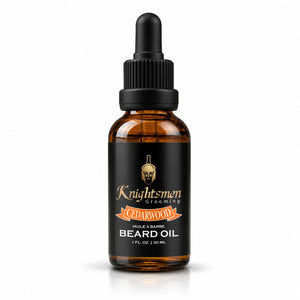
- Cedarwood: clean and woodsy, scented with cedarwood essential oil.
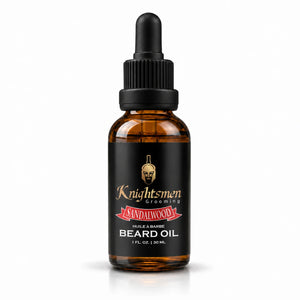
- Sandalwood: warm and smooth, scented with sandalwood essential oil.
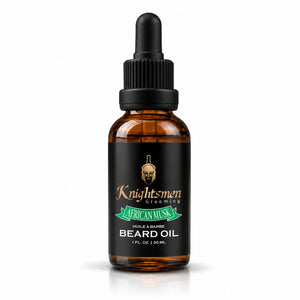
- African Musk: warm and earthy with a slight sweetness, scented with a natural musk fragrance.
- Classic: unscented, with no added fragrance.
Our scent guide describes each one in more detail, and the Beard Oil Discovery Set has all four in 5 ml bottles so you can find a favourite before choosing a full size. Browse the full range in our beard care collection.
How do I compare the price of beard oils?
Compare cost per use rather than the price on the bottle. Check the size in millilitres and the number of drops the maker suggests per application (our guide suggests 3 to 10, depending on beard length). A larger bottle at a higher price can cost less per application than a small, cheap one that you refill more often. Dividing the price by the millilitres gives you a fair comparison between bottle sizes.
Then ask what you are paying for. Certification, the base oils, a fragrance-free option and a named scent source are differences you can check on the label. A claim on the front of the bottle that you cannot check is worth less.
Frequently asked questions
Is organic beard oil worth the extra cost?
That depends on what you value. Certification gives you an outside check on how the ingredients were grown and processed. It does not promise a different result on your beard, and it is not the only thing worth paying for. Compare cost per use, then choose by ingredient list, scent and how the oil feels on your beard.
Is organic beard oil better for sensitive skin?
Not automatically. Organic describes how the ingredients were grown and processed, not how your skin will react. For sensitive skin the AAD suggests a fragrance-free moisturizer, so an unscented oil such as our Classic is the simpler choice. Patch test first, add one new product at a time, and see a doctor or dermatologist if a reaction does not settle.
Can a regular beard oil still be a good choice?
Yes. A regular oil from a maker that lists every ingredient, and that suits your skin and your scent preference, can work well. Look at the base oils, what the scent is made from and how it feels on your beard. The label tells you more than the word organic does.
How many drops of beard oil should I use?
Use 3 to 10 drops depending on the length and thickness of your beard, and start with fewer. The AAD advises using beard oil sparingly because you can always add more. Our guide on how to use beard oil has a drops table by beard length.
Does organic beard oil help a beard grow?
No oil grows a beard by itself. Genetics and age decide how much hair you have and where. Good care keeps the hair and the skin underneath moisturized and comfortable, which is the sense in which our beard oils help promote healthy beard growth: they look after the hair and skin you have.
Related guides
- Beard oil guide: benefits and how to use it
- How to use beard oil the right way
- Best beard oil in Canada (2026)
- Beard balm vs beard oil: which one does your beard actually need?
- Scented beard oil for men: African Musk and our other scents
Sources
- COSMOS-standard: COSMOS certification (ORGANIC and NATURAL signatures)
- Health Canada: Use cosmetics safely
- American Academy of Dermatology: A dermatologist's top tips for a healthy beard
Knightsmen Grooming products are cosmetics. This guide is general information, not medical advice. If you have a skin or scalp condition, or sudden changes in your hair, see a doctor or dermatologist.