Free Shipping on Orders $100+ — Canada


Short answer: Healthy beard and hair growth is a slow cycle that your genes largely set, and there is no reliable way to speed it up. You can support it with enough sleep, a balanced diet, clean, moisturized skin under the beard and on the scalp, and gentle handling that limits breakage.
The honest starting point is that you can't change the follicles you were born with, but you can look after the skin around them, avoid damage and give your body what it needs. This guide is the whole-body overview and a simple routine. For a beard-only timeline and what to expect month by month, see our beard growth timeline guide.
Key takeaways
- Genes set how thick and how fast your beard and hair can grow; habits help you reach that limit.
- Sleep (7 to 9 hours for most adults), a balanced diet and stress management are the basics. Supplements matter mainly if you are low in something, so ask a doctor first.
- Wash and moisturize the skin under your beard daily, and shampoo your scalp rather than the full length of your hair.
- Breakage can be why hair seems to stop growing, so go easy on heat, rough towelling, wet brushing and tight styles.
- Shaving and trimming do not change how fast hair grows. See a doctor about sudden or patchy changes.

Knightsmen Recommends
Organic Beard Oil | Classic
A fragrance-free beard oil made with organic carrier oils such as jojoba and argan, to moisturize the skin beneath the beard and condition the hair as part of the daily routine in this guide.
Shop Now →How does beard and hair growth actually work?
Each hair grows in a cycle: a growth phase that lasts years, a short transition of a few weeks, and a resting phase before the hair sheds. Every hair is at a different point in its cycle, so you shed a few each day. The American Academy of Dermatology (AAD) says it is normal to shed 50 to 100 hairs a day.
On average, scalp hair grows 4 to 6 inches a year, according to Cleveland Clinic. Beard hair follows the same kind of cycle, and your genes are a main factor in how thick and full a beard can be. Many beards keep developing until around age 30.
That is why nothing you put on your skin changes the genes that set your hair's limits. What you can influence is the environment around the hair: the condition of your skin, your sleep and food, and how much of the hair you grow breaks off before it gets long.
What can you actually influence, and what can't you?
You can't change your genes, but you can influence the conditions around your hair. This table separates the two.
| Factor | Can you change it? | What helps in practice |
|---|---|---|
| Genetics (follicle number, thickness, growth cycle) | No | Pick a style that suits the density you have |
| Speed of growth | Not reliably | Shaving and trimming do not change it |
| Sleep | Yes | Adults aged 18 to 64 are advised to get 7 to 9 hours a night |
| Food | Yes | Vegetables and fruit, whole grains and protein foods most days |
| Stress | Partly | Regular activity, a steady bedtime and real downtime |
| Skin and scalp care | Yes | Gentle daily washing, then moisturizer or oil; shampoo the scalp and condition the ends |
| Breakage | Yes | Less heat, a wide-tooth comb, loose styles and regular trims |
How do sleep and stress affect your hair?
Both work mostly indirectly: sleep supports your overall wellbeing, and stress can show up as extra shedding. The Government of Canada advises adults aged 18 to 64 to get 7 to 9 hours of good-quality sleep a night. Cleveland Clinic also mentions a small study of 10 young men in which short-term sleep loss slowed beard growth. It is a hint, not a rule.
Stress works differently. After a stressful event, surgery or an illness with a high fever, some people shed noticeably more hair. The AAD says most people notice this a few months afterwards and that it usually stops as the body readjusts. If it does not settle, see a doctor.
The Government of Canada's sleep tips are a sensible place to start for both sleep and stress: keep a regular bedtime and wake time, try relaxation, be active during the day, and avoid alcohol, caffeine and nicotine before bed. They help your whole body, not just your hair.
What should you eat for healthy hair and beard growth?
A balanced diet is the first step. Cleveland Clinic's hair advice starts with enough protein, iron and a range of vitamins, and Canada's Food Guide suggests building meals around vegetables and fruit, whole grain foods and protein foods. Hair is made of protein (keratin), so eggs, fish, poultry, beans, lentils, nuts and tofu all earn a regular place on the plate.
Not getting enough iron or protein is a recognized cause of increased shedding, so if your hair is shedding more than usual, ask a doctor about a blood test before buying supplements. Supplements are most useful when you are actually low in something, and more is not better: too much vitamin A, for example, can itself cause hair loss. A 2024 review of the published biotin studies concluded that biotin's popularity as a hair supplement is not matched by high-quality research.
How do you look after the skin under your beard?
Wash it, then moisturize it. The AAD advises washing your face and beard every day with a gentle cleanser matched to your skin type rather than soap (hydrating and fragrance-free for dry skin), rinsing with lukewarm water and patting dry so the skin stays a little damp. Then moisturize: without moisturizer, the skin beneath a beard can become dry, flaky and itchy. In the stubble phase it suggests a moisturizer with SPF 30 or higher.
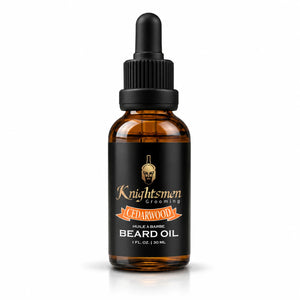
Beard oil is one way to moisturize, and the AAD says to use it sparingly. It suits normal to dry skin; for sensitive skin, or skin that is oily and breaks out easily, it suggests a fragrance-free moisturizer or a beard conditioner instead. Our organic beard oils are made with organic carrier oils such as jojoba and argan, and Organic Beard Oil | Classic adds no fragrance. Beard oil helps promote healthy beard growth by moisturizing the skin and conditioning the hair, but it does not add follicles. Our beard washing guide has the full method.
How should you care for your scalp and hair?
Choose products for your hair type and wash according to how oily your scalp gets. The AAD says straight hair with an oily scalp may need daily shampooing, while dry, textured, curly or thick hair needs shampoo only when needed. Apply shampoo to the scalp rather than the whole length, then condition: the ends for fine or straight hair, the full length for dry or curly hair.
Our Rosemary Hair Growth Shampoo and Rosemary Hair Growth Conditioner are sulfate- and paraben-free and contain rosemary oil and tea tree oil. A light hair oil such as Organic Hair Oil | Tea Tree conditions the strands and moisturizes the scalp, which helps promote healthy hair growth. Massaging it in is a pleasant habit; research on scalp massage is small and early, so treat it as a comfortable ritual rather than a method.
How do you avoid breakage so the length you grow stays?
Be gentle, because hair that breaks as fast as it grows never gets long. Wet hair is fragile, so the AAD suggests a wide-tooth comb on wet hair and blotting with a towel or T-shirt instead of rubbing. Heat is the other big one: excessive heat can damage any hair type, so limit blow-drying and flat or curling irons, choose low or medium settings and use a heat-protectant product.
Cleveland Clinic adds that hairstyles that pull tightly, such as tight ponytails, braids and extensions, are a recognized cause of hair loss, and that processing such as perms and bleach can damage hair. Regular trims remove split ends before they travel up the hair and break it, although a dermatologist quoted by the AAD notes that cutting hair more often does not speed up growth.
For a beard, comb gently once it is long enough and condition it with a little balm. Organic Beard Balm | Classic adds light hold with shea butter and beeswax.
What does not work for growing a beard or hair?
A few popular ideas do not hold up.
- Shaving to thicken a beard. Cleveland Clinic says shaving does not change how thick or how fast hair comes back. Stubble only looks darker and feels coarser because you see the wider base of the hair rather than its finer tip.
- Trimming to speed things up. Growth happens below the skin, so cutting does not change it. Trims only remove damaged ends.
- Serums with big promises. Nothing you apply changes your genes. Cleveland Clinic notes that even popular hair-growth products are not FDA-approved for beards, and the AAD notes that a common side effect of putting a scalp hair-loss medicine on the face is raw, irritated skin, so talk with a dermatologist first.
- High-dose supplements. If you are not low in a nutrient, extra is unlikely to help, and too much of some vitamins causes problems of its own.
- At-home derma rollers. Cleveland Clinic says home rollers use much shorter needles than a dermatologist's devices, so do not expect the same results. See a dermatologist first.
What does a simple routine look like?
A simple routine takes a few minutes a day and adjusts to your skin and hair type.
- Morning: wash your face and beard with a gentle cleanser, rinse with lukewarm water and pat dry. While the skin is still slightly damp, work a few drops of beard oil down to the skin.
- Wash days: shampoo the scalp, condition the ends (or the full length if your hair is dry or curly), comb gently and protect hair from heat.
- Every day: eat protein foods, vegetables and fruit, aim for 7 to 9 hours of sleep and make time to unwind.
- Every week: clean clippers and razors at least every five to seven days, and try not to touch your beard while it grows in (Cleveland Clinic).
- Every month: take a photo and compare. Hair changes over months, so judge progress then.
For a ready-made start, the Beard Growth Starter Kit pairs beard oil with beard balm, and the Hair Growth Starter Kit pairs a hair oil with a hair balm. For more on scalp care and styling, see our men's hair health guide, or browse the beard care collection.
Frequently asked questions
Can you make your beard or hair grow faster?
Not reliably. Growth speed and density are largely set by your genes, and shaving and trimming do not change them. What you can do is protect the length you grow: sleep, eat a balanced diet, keep the skin moisturized and avoid breakage. If you are worried about your growth, a doctor can check for underlying causes.
Does beard oil make a beard grow?
Not by itself. Beard oil moisturizes the skin under the beard and conditions the hair, which helps keep a growing beard comfortable and limits breakage. It does not add follicles or change your genes. Use a few drops sparingly, work them down to the skin, and choose an unscented oil if your skin is sensitive or you prefer no fragrance.
Do hair growth vitamins and biotin work?
Supplements mostly matter if you are low in a nutrient, and a doctor can check that with a blood test. A 2024 review concluded that biotin's popularity as a hair supplement is not matched by high-quality studies, and too much of some vitamins, such as vitamin A, can itself cause hair loss. A balanced diet is the safer first step.
How long should you give a new routine?
Give it months rather than weeks, because hair grows slowly: on average 4 to 6 inches a year on the scalp. Skin that was dry may feel better sooner once you moisturize it, but density and thickness are largely set by your genes. Take a monthly photo to compare, and see a doctor if you notice sudden changes.
Is it normal to lose hair every day?
Yes. Dermatologists say it is normal to shed 50 to 100 hairs a day. Each hair is at a different point in its cycle, so some are always resting and falling out while others grow. If you notice far more hair than usual on your pillow, in the shower or in your comb, talk to a doctor.
When should you see a doctor about hair or beard changes?
See a doctor or dermatologist if hair falls out suddenly or in patches, if shedding is heavy or lasts for months, if your scalp or beard skin burns, itches or feels sore, or if you are losing hair on your body as well as your head. These can have causes a grooming routine cannot address, and earlier advice is better.
Shop These Products
Beard Growth Starter Kit Hair Growth Starter Kit Organic Hair Oil | Classic Rosemary Hair Growth ShampooRelated: Best Beard Oil for Black Men in Canada (2026)
Related: Beard Oil Guide: Benefits & How to Use It
Sources
- American Academy of Dermatology: a dermatologist's top tips for a healthy beard
- American Academy of Dermatology: tips for healthy hair
- American Academy of Dermatology: hair loss or hair shedding
- American Academy of Dermatology: skin, hair and nail tips from dermatologists
- Cleveland Clinic: how fast hair grows and everyday hair care
- Cleveland Clinic: why some beards come in sparse
- Cleveland Clinic: shaving and hair thickness
- Cleveland Clinic: hair loss overview
- Cleveland Clinic: vitamins and supplements for hair
- StatPearls (NCBI Bookshelf): physiology of hair
- Cleveland Clinic: microneedling and at-home devices
- Cleveland Clinic: beard care tips
- Public Health Agency of Canada: sleep recommendations in the Canadian 24-Hour Movement Guidelines
- Government of Canada: are Canadian adults getting enough sleep?
- Health Canada: eat a variety of healthy foods
Knightsmen Grooming products are cosmetics. This guide is general information, not medical advice. If you have a skin or scalp condition, or sudden changes in your hair, see a doctor or dermatologist.