Free Shipping on Orders $100+ — Canada


Short answer: A good organic hair oil is a plant-oil blend with a short, readable ingredient list, certified organic ingredients, no mineral oil and a weight that suits your hair. In Canada, cosmetics sit outside the Canada Organic Regime, so look for a named third-party certification such as COSMOS rather than the word "organic" alone.
Organic hair oils vary a lot, from a single pressed oil to a blend of several oils and essential oils. This guide shows how to read the label, match an oil to your hair and use it well, and what is in Knightsmen's four organic hair oils.
Key takeaways
- Look for a named certification such as COSMOS and a full ingredient list, not just the word "organic".
- Hair oil adds shine and softness and tames frizz. No oil grows hair by itself.
- Use less than you think: 2 to 3 drops on the ends of fine hair, 4 to 6 drops for thick or coarse hair.
- Opinions differ on oiling the scalp, so ask a dermatologist first if yours is flaky or easily irritated.
- Knightsmen's four organic hair oils are handcrafted in Toronto with no mineral oil, parabens or synthetic fragrance.

Knightsmen Recommends
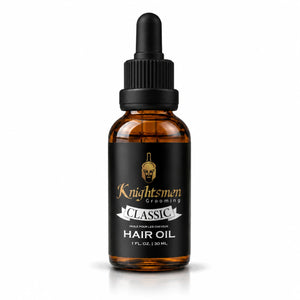
Organic Hair Oil | Classic
The unscented Classic formula from the lineup covered below — castor oil and rosemary extract in a plant-oil base, with no added fragrance.
Shop Now →What makes a hair oil genuinely organic?
The most reliable sign of a genuinely organic hair oil is an independent certification you can check, plus a full ingredient list. The Canadian Food Inspection Agency says cosmetics are outside the scope of the Canada Organic Regime, so a hair oil cannot be certified under it or carry the Canada Organic logo. That makes these the best clues on a label:
- COSMOS: COSMOS is an international standard for organic and natural cosmetics, checked by independent certification bodies such as Ecocert. COSMOS ORGANIC needs at least 95% of the physically processed agro-ingredients and at least 20% of the whole product to be organic (10% for rinse-off products). COSMOS also certifies raw materials, so check whether a claim covers the finished product or only its ingredients.
- Other third-party marks: the USDA Organic seal can also appear on personal care products certified in the United States. Check which standard a mark belongs to.
- Ingredient transparency: a full INCI (International Nomenclature of Cosmetic Ingredients) list, not just "organic blend" or "proprietary formula".
If a label names no certification, ask the brand what its organic claim is based on. Our guide to organic grooming products in Canada compares certifications in more depth.
What should you look for in the ingredient list?
Look for a short list of plant oils you recognize. These carrier oils usually make up the base:
| Carrier oil | Feel | Good to know |
|---|---|---|
| Castor oil | Thick and rich | Adds weight and shine; often blended with lighter oils |
| Argan oil | Light, absorbs quickly | Adds softness and shine without heaviness |
| Jojoba oil | Light; technically a liquid wax | Often described as similar to the skin's own oils |
| Sweet almond oil | Light and soft | Moisturizes dry lengths and ends |
Essential oils add scent: rosemary and tea tree smell herbal and fresh, lavender is soft and floral, bergamot is citrusy, and cedarwood is clean and woodsy. Many people prefer to avoid mineral oil (a petroleum-derived oil), parabens, silicones (names ending in -cone or -siloxane) and synthetic fragrance in an organic hair oil.
What does hair oil actually do?
Hair oil is mostly about how hair looks and feels. Cleveland Clinic describes hair oiling as spreading or massaging natural oils through the hair to add shine and moisture, and says it can make split ends look tidier for a while, though only as a temporary fix. It also notes that dry, coarse or tightly curled hair can benefit, while fine, straight hair can be weighed down.
Growth is a different matter. No oil grows hair by itself, and hair grows about 4 to 6 inches a year on average, according to Cleveland Clinic. Rosemary is a popular ingredient, but research on it is limited, as our rosemary oil guide explains. Opinions differ on oiling the scalp: a dermatologist quoted by Cleveland Clinic advises against it, so ask a dermatologist first if your scalp flakes or is easily irritated.
Which organic hair oils does Knightsmen make?
Knightsmen Grooming makes four organic hair oils, handcrafted in small batches in Toronto with COSMOS-certified organic ingredients. All four share one plant-oil base with castor oil, vitamin E and rosemary extract, and the three scented versions add an essential oil. They contain no mineral oil, parabens or synthetic fragrance, and each product page lists the full ingredients.
| Hair oil | Scent | Good to know |
|---|---|---|
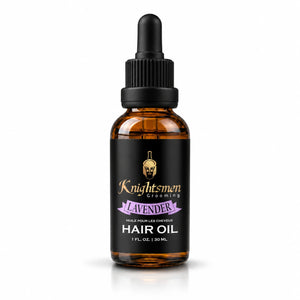
| Organic Hair Oil | Lavender | Clean, light floral | An easy everyday scent |
| Organic Hair Oil | Bergamot | Fresh citrus with a slightly herbal finish | Light, non-greasy and quick to absorb |
| Organic Hair Oil | Tea Tree | Clean, sharp and herbal; fades quickly | A classic scalp-care ingredient that helps the scalp feel clean and refreshed |
| Organic Hair Oil | Classic | Unscented | Fragrance-free, for fragrance-sensitive scalps or for layering with cologne |
The Hair Oil Discovery Set has one small bottle of each if you want to try them all. You can also browse the organic hair oil collection.
How much hair oil should you use for your hair type?
Use less than you think and add a drop at a time, because Cleveland Clinic notes that fine, straight hair can be weighed down by oil, while dry, coarse or tightly curled hair can benefit from it. These amounts are a starting point:
| Hair type | Drops | Where and how |
|---|---|---|
| Fine or thin | 2 to 3 | Ends only, on damp hair; keep oil off the roots, where it can make fine hair look flat |
| Thick or coarse | 4 to 6 | Roots to ends on damp hair, before styling, to tame frizz |
| Dry or damaged | 4 to 5 | Towel-dried hair, starting about 2 inches (5 cm) from the roots; fine as a leave-in finish |
| Oily scalp | A few | Lengths only; if you oil the scalp, use a small amount, massage for 2 minutes, leave 10 to 15 minutes, then shampoo out |
The Lavender and Bergamot oils are described on their product pages as light and fast-absorbing, which makes them a sensible place to start on fine hair.
How do you massage hair oil into your scalp?
Warm the oil first, work in sections and use your fingertips. Here are the steps:
- Warm three to five drops between your palms.
- Part your hair in sections to expose the scalp.
- Apply the oil to the scalp with your fingertips, not your palms.
- Use circular motions with medium pressure, working from the front hairline to the back.
- Continue for two to three minutes.
- Leave it on for 30 minutes, or overnight, then shampoo it out.
Our Classic product page suggests this routine three to four times a week. Pressure should never hurt, and if your scalp flakes or is easily irritated, see a dermatologist before oiling it.
How should you use hair oil in the Canadian climate?
Use a little more in cold, dry weather and a little less when it is humid. Cold air outside and heated air indoors can leave hair and scalp feeling dry in winter, so you may want to oil more often, or add a weekly pre-wash oiling for extra moisture. In summer, humidity can make hair frizzy, and a drop or two on the ends tames frizz without weighing hair down.
A drop or two smoothed over dry hair before a toque goes on can also help tame static and flyaways. If your hair ever looks flat or greasy, you used too much, so cut back by a drop. Our guide to winter hair care with organic hair oil goes deeper on cold-weather routines.
How do you pair hair oil with hair balm?
Use oil as the conditioning layer and balm as the styling layer. Apply a few drops of oil to damp hair after washing, let it settle for a couple of minutes, then work a small amount of balm through to shape and hold. Balm over oil can give a more natural finish than balm alone, and it can mean fewer touch-ups later in the day.
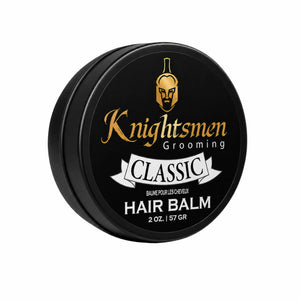
Knightsmen Organic Hair Balm comes in the same four scents (Bergamot, Lavender, Tea Tree and Classic), with light hold from shea butter and beeswax. See the hair balm collection or our guide to organic hair balm for men.
Frequently asked questions
Does organic hair oil grow hair?
No oil grows hair by itself. Hair oil conditions the hair you have, adding shine and softness and taming frizz. Rosemary is a popular ingredient, but research on it is limited. Knightsmen's hair oils are cosmetics formulated to help promote healthy hair growth as part of a routine. For sudden or patchy hair loss, see a doctor.
Can I use hair oil every day?
Our care guide says the oils can be used daily or every second day, and a small amount on the ends is enough on most days. For oiling the scalp before a wash, the Classic product page suggests three to four times a week. Use less if your hair looks flat or greasy, and ask a dermatologist before oiling a flaky or easily irritated scalp.
Which carrier oil is best for hair?
There is no single best oil. Lighter oils such as argan, jojoba or sweet almond tend to suit fine hair, and richer oils such as castor tend to suit thick, coarse or dry hair. Look for named oils on a full ingredient list and certified organic ingredients. Knightsmen's hair oils use a base of plant oils with castor oil, and each product page lists them all.
How long should I use a hair oil before judging it?
Some effects, such as shine and softness, show up as soon as you use it. Length changes slowly: hair grows about 4 to 6 inches a year on average, so there is no need to check every day.
Are there organic hair oils made in Canada?
Yes. Knightsmen Grooming's organic hair oils are handcrafted in small batches in Toronto, Canada. Wherever you shop, check how the label and the maker's website describe where a product is actually made, and look for the certification mark and full ingredient list described above.
Is organic hair oil better than regular hair oil?
It depends on what you want. A certification such as COSMOS covers sourcing, manufacturing and labelling; it is not a promise of results. Many people choose organic hair oil because they prefer plant-based oils and an ingredient list they can read. Mineral oil, a petroleum-derived oil, is common in some conventional hair oils, so check the list and choose by hair type.
Related: Rosemary Oil for Hair Growth — Does It Actually Work?
Knightsmen Grooming products are cosmetics. This guide is general information, not medical advice. If you have a skin or scalp condition, or sudden changes in your hair, see a doctor or dermatologist.