Free Shipping on Orders $100+ — Canada

Short answer: The best test of an organic grooming product in Canada is the ingredient list plus a named certification, not the front label. Ingredients are listed from the highest concentration to the lowest, and a standard such as COSMOS means an outside certifier has checked the organic claim.
In Canada, "natural" and "plant-based" have no set definition on a cosmetic label, so those words alone tell you very little. "Organic" is easier to check, but only when a named standard and certifier stand behind it. This guide shows how to read the label, what the COSMOS standard is, and how Knightsmen describes its own products.
Key takeaways
- Cosmetic ingredients are listed from the highest concentration to the lowest, but ingredients at 1% or less, fragrance and colours do not have to follow that order.
- "Natural", "plant-based" and "clean" are not certifications. "Organic" can be checked only when a standard and a certifier are named.
- COSMOS is an international standard for organic and natural cosmetics. Its signatures are COSMOS ORGANIC and COSMOS NATURAL, shown with the certifier's logo.
- Cosmetics are outside the Canada Organic Regime, so they cannot carry the Canada Organic logo.
- Knightsmen beard, hair and body care products are made with certified organic ingredients in Toronto, and the oils and balms contain no mineral oil, no parabens and no synthetic fragrance.

Knightsmen Recommends
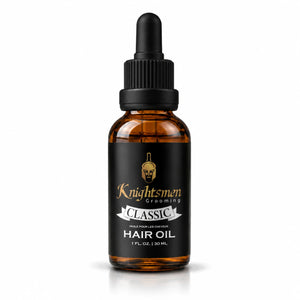
Organic Beard Oil | Classic
Fragrance-free beard oil made with certified organic ingredients in Toronto, with no mineral oil, no parabens and no synthetic fragrance. The full ingredient list is on the product page.
Shop Now →How do you read a cosmetic ingredient list?
You do not need a certification logo to spot a weak formula. Health Canada's labelling guide says cosmetic ingredients must be listed in descending order of predominance, by concentration by weight. Ingredients at 1% or less may be listed in any order, and the rule does not necessarily apply to fragrance and colouring agents.
- Read the first three to five ingredients. They make up most of the formula. Carrier oils such as jojoba or argan near the top mean an oil-based product. Water first means it is mostly water, with the botanicals present in smaller amounts.
- Look up unfamiliar names. Botanicals are listed by genus and species, so "Simmondsia chinensis" is simply jojoba oil. An unfamiliar name is not automatically synthetic; a quick search tells you what it is.
- Check the end of the list. Preservatives, fragrance and colours often sit here, in small amounts.
- Use length as a clue, not a verdict. A short list is easier to check than a long one, but length proves nothing on its own.
None of it needs a chemistry degree, only a minute with the bottle turned around.
What do "natural", "organic" and "certified organic" mean on a label?
"Natural" has no set legal definition for cosmetics in Canada, and neither do "plant-based" or "clean". Any brand can use those words, so on their own they tell you very little.
"Organic" carries more weight, but only when something checkable stands behind it. "Made with organic ingredients" does not say how much of the product is organic. "Certified organic" should come with the name of a standard and a certifier, so you can confirm the claim yourself. A real certification means an outside body has inspected the product or its ingredients, while a front-label claim is whatever the brand chose to print.
So look for three things: a named standard, the certifier's name or logo, and a statement of what is certified, whether that is the finished product or particular ingredients.
What does COSMOS certification mean?
COSMOS-standard is an international standard for organic and natural cosmetics. It is managed by COSMOS-standard AISBL, a non-profit association founded by BDIH, Cosmebio, Ecocert, ICEA and the Soil Association. COSMOS sets the criteria, and authorized certification bodies inspect and certify products and raw materials, including an audit visit to the applicant's site.
A certified retail product carries a COSMOS ORGANIC or COSMOS NATURAL signature beneath the certifier's logo, and the label also shows the percentage of organic ingredients. ORGANIC products contain the required percentages of organic ingredients. NATURAL products meet the standard but not the minimum organic percentages. Raw materials can be certified separately: COSMOS CERTIFIED covers organic agro-ingredients and COSMOS APPROVED covers approved non-organic materials.
The certifier's logo tells you who did the inspection, which is the detail a vague "natural" claim can never give you.
Does the Canada Organic logo apply to cosmetics?
No. The Canadian Food Inspection Agency says cosmetics are outside the scope of the Canada Organic Regime, and products that are out of scope cannot be certified under it or carry the Canada Organic logo. A cosmetic that appears to show that logo is worth a question to the brand.
On a cosmetic, then, an organic claim rests on a private standard such as COSMOS, or on the brand's own word. When you see "organic" on a grooming product made in Canada, ask which standard, which certifier, and whether the whole product or only some ingredients are certified. Those three questions sort out most claims.
What are the most common greenwashing tactics?
A few patterns show up again and again on grooming labels.
- "Made with organic ingredients." This does not say how much of the product is organic.
- "Free from parabens, sulfates and synthetic fragrance." Useful to know, but a "free from" claim does not confirm what the product does contain.
- Green packaging and nature imagery. These are design choices, not certifications.
- "Cold-pressed" with no organic certification. Cold-pressing describes how the oil was extracted, not how the plant was grown.
- "Plant-derived." This says where an ingredient started, not how far it was processed.
- "Natural fragrance" or "essential oils" with no list. Check the ingredient list for the named oils.
Which label terms do shoppers look up?
These are the terms shoppers most often check when they compare grooming products.
| Label term | What it is | Why shoppers look it up |
|---|---|---|
| Parfum or fragrance | The scent part of a formula, listed as one term. Certain fragrance allergens must be named separately (Health Canada) | Shoppers who prefer fragrance-free products look for "fragrance-free" or named essential oils |
| Mineral oil (paraffinum liquidum) | An oil refined from petroleum | Some shoppers prefer plant oils |
| PEG compounds, such as PEG-7 | Synthetic emulsifiers and humectants | Shoppers who want plant-based formulas look them up |
| Dimethicone or cyclopentasiloxane | Silicones that give a smooth, slippery feel | Some shoppers avoid silicone-based ingredients |
| Methylparaben or propylparaben | Synthetic preservatives from the paraben family | A common "free from" claim |
| SLS or SLES | Sulfate detergents that make a foaming lather | Effective cleansers that some people find drying |
| Synthetic dyes (CI numbers) | Colour added for appearance | They add colour only |
None of these is automatically dangerous in the amounts typically used. The point is to match the claim to the formula: a product built around them is a poor fit for the word "natural".
How does Knightsmen describe its own products?
Knightsmen products are handcrafted in small batches in Toronto, Canada, and our beard, hair and body care products are formulated with certified organic ingredients. On our beard oil and hair oil pages, the ingredient list marks which oils are organic, so you can check the claim ingredient by ingredient. Our beard and hair oils and balms contain no mineral oil, no parabens and no synthetic fragrance, as the product pages state. The ingredient lists on our oil, balm, shampoo and conditioner pages use INCI names, with the common name in brackets for the plant oils and butters, so you can look up every ingredient independently, and the label tips above work on our products too.
Browse the range: beard care, hair care and skincare. To see what organic oils and balms are and how to use them, read our guide to organic beard and hair care.
Frequently asked questions
Are Knightsmen products approved by Health Canada?
Health Canada does not approve cosmetics before they go on sale. Manufacturers and importers must notify Health Canada within 10 days after first selling a cosmetic in Canada, and a notification number is not an approval. Knightsmen products are not approved by Health Canada either, but, like every cosmetic sold in Canada, they have to follow the Cosmetic Regulations, including the ingredient restrictions and labelling requirements.
Is "natural" the same as "organic" on a grooming label?
No. "Natural" has no set legal definition for cosmetics in Canada, so it can describe almost anything. "Organic" only means something you can check when a named standard and certifier stand behind it, so look for both, and read the ingredient list either way.
Is COSMOS certification recognized in Canada?
COSMOS is an international standard run by a non-profit association, and brands in many countries use it. It is a voluntary, private certification rather than a government label. Every cosmetic sold in Canada, certified or not, also has to follow the Cosmetic Regulations.
Why do organic grooming products often cost more?
Certified organic raw materials can cost more to grow and source, and certification itself involves audits and fees that a brand pays for, so those costs can show up in the price. Price alone does not prove quality either way, so compare ingredient lists and certifications rather than price tags.
How can I check a brand's organic claim?
Ask three questions: which standard, which certifier, and whether the whole product or only some ingredients are certified. Then look at the certifier's own information, such as the COSMOS-standard website, and read the ingredient list for named oils and butters. If a pack shows no certification mark, ask the brand which standard and certifier stand behind the claim.
Related guides
- Organic Beard and Hair Care: Why It Matters
- The Art of Grooming with Knightsmen
- Organic vs. Regular Beard Oil
Sources
- Health Canada: Industry guide for the labelling of cosmetics
- Health Canada: Guide for cosmetic notifications
- Health Canada: Regulating cosmetics
- Canadian Food Inspection Agency: Organic products
- COSMOS-standard
- COSMOS-standard: COSMOS certification
Knightsmen Grooming products are cosmetics. This guide is general information, not medical advice. If you have a skin or scalp condition, or sudden changes in your hair, see a doctor or dermatologist.