Free Shipping on Orders $100+ — Canada

Short answer: Rosemary oil is a fragrant essential oil from the rosemary plant, long used as an ingredient in hair and scalp care. Research on it is limited, and it is not a medical treatment, so use it as a cosmetic: dilute it, patch test first, and see a doctor about sudden or patchy hair loss.
If you searched for rosemary oil and hair growth, you have probably seen big promises. This guide sticks to what we can stand behind.
Key takeaways
- Rosemary oil is a cosmetic ingredient with a fresh, herbal scent. It is not a medical treatment.
- Research on rosemary oil and hair is limited, and no oil grows hair by itself.
- Never apply essential oil straight from the bottle. Dilute it in a carrier oil to about 1% and patch test first.
- Hair grows about 4 to 6 inches a year on average, so changes in length are slow.
- See a doctor or dermatologist about sudden, patchy or fast hair loss.

Knightsmen Recommends
Rosemary Hair Growth Shampoo
Rosemary with tea tree and cedarwood in a sulfate-free shampoo that cleanses the scalp and hair, with a clean, woodsy scent from the cedarwood.
Shop Now →What is rosemary oil, and how is it used in hair care?
Rosemary oil is an essential oil, a concentrated plant oil usually distilled from the leaves of the rosemary plant (Rosmarinus officinalis, now also called Salvia rosmarinus), an evergreen herb from the Mediterranean region. It has a fresh, herbal scent. Rosemary is a classic ingredient in hair oils, shampoos, conditioners and beard oils.
Essential oils are very concentrated, so they are normally diluted in a carrier oil before they touch skin. Ready-made products have already done that for you. Here is a quick reference:
| Question | Short answer |
|---|---|
| What is it? | An essential oil, usually distilled from rosemary leaves |
| What does it smell like? | Fresh and herbal |
| Where is it used in hair care? | Hair oils, shampoos, conditioners and beard oils |
| How is it applied? | Diluted in a carrier oil, or as part of a ready-made product |
| Is it a medical treatment? | No. It is a cosmetic ingredient, and research on it is limited |
| Who should ask a health provider first? | Anyone who is pregnant or could become pregnant, has a medical condition or takes medication |
Does rosemary oil work for hair growth?
Nobody can promise that. Research on rosemary and hair is limited, and rosemary oil is not a medical treatment. Researchers have looked at it in a small number of human studies and in lab and animal studies. Those studies are few, small and short, and some tested extracts or blends rather than plain essential oil, so they cannot tell you what it will do for your hair. Larger, better-designed studies are still needed.
What a cosmetic can do is more modest. Health Canada describes a cosmetic as any substance used to clean, improve or change the skin, hair, teeth or nails, and says a product with a medical effect on the body belongs in a different category, with a DIN or NPN product number on its label.
That is why Knightsmen Grooming sells rosemary hair products as cosmetics. They cleanse, condition and scent, and they are formulated to help promote healthy hair growth as part of a routine. They do not replace medical care.
When should you see a doctor about hair loss?
See a doctor or dermatologist if your hair is falling out suddenly or in patches, if you are shedding much more than usual, or if you cannot tell what is behind it. The American Academy of Dermatology says effective care begins with finding the cause, and that a board-certified dermatologist can help with that.
Hair can thin or shed for many reasons, including genetics, age, illness, some medicines, stress, diet and rough styling habits. A cosmetic oil cannot tell you which one applies to you, and waiting to see whether an oil helps can delay getting answers.
The same goes for a sore, red or flaking scalp: see a doctor or dermatologist rather than trying to cover it up with products.
How do you dilute rosemary essential oil?
Dilute it in a carrier oil to about 1% before it touches your skin, and never apply it straight from the bottle. About 1% is the figure Cleveland Clinic gives for massage. With a standard dropper of roughly 20 drops per millilitre, it works out as follows:
| Carrier oil | Rosemary essential oil at about 1% |
|---|---|
| 1 teaspoon (5 ml) | 1 drop |
| 1 tablespoon (15 ml) | 3 drops |
| 1 fluid ounce (30 ml) | 6 drops |
Lower is fine. Jojoba, argan and sweet almond are light carrier oils. Castor oil is thick, so it is often blended with a lighter oil. Keep the blend away from heat and direct sunlight, and stop using it if its smell, colour or feel changes.
How do you apply a diluted rosemary oil blend?
Patch test first, then use a small amount. Here is the routine:
- Patch test. Following Health Canada's steps, put a little of the blend on clean skin behind your ear or on your inner forearm, let it dry, and wash it off gently after 24 hours. Do not use it if the area is red, itchy, burning or blistering.
- Part your hair in sections and apply a small amount to your scalp with your fingertips.
- Massage gently for 3 to 5 minutes.
- Leave it on for about 30 minutes, or overnight with a towel on your pillow.
- Shampoo it out thoroughly.
Start with once or twice a week, and do more only if your scalp stays comfortable. Keep it out of your eyes. Opinions differ on oiling the scalp: a dermatologist quoted by Cleveland Clinic advises against putting oil directly on it and says people prone to flaking should avoid oils. If your scalp is flaky, sore or easily irritated, see a dermatologist first, or keep the oil to the lengths of your hair.
Is a ready-made rosemary hair oil easier than DIY?
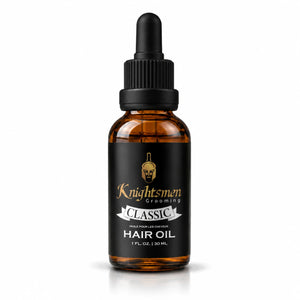
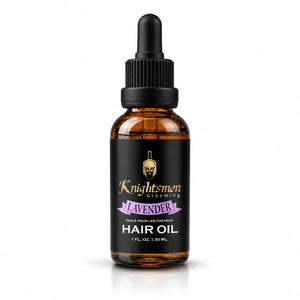
For most people, yes. A ready-made hair oil is already diluted, so there is nothing to measure, and the blend is made for use on hair. Organic Hair Oil | Classic is our fragrance-free option. It is made with castor oil and rosemary extract in a plant-oil base, with no added fragrance, and its product page gives directions for how often to use it. The Lavender, Bergamot and Tea Tree versions add an essential oil for scent and also list rosemary oil.
All four are handcrafted in small batches in Toronto, with no mineral oil, parabens or synthetic fragrance, and the full ingredient list is on each product page. Our hair care collection has the full range.
How do you choose a good rosemary essential oil?
A good rosemary essential oil names the plant, comes in dark glass and tells you where it was made. Check the label for these:
- Botanical name: look for Rosmarinus officinalis (also written Salvia rosmarinus) as the only ingredient. "Fragrance oil" or "rosemary scent" is not the same as an essential oil.
- Oil or extract: a label may list rosemary oil or rosemary leaf extract. They are different ingredients, so check which one you are buying.
- Dark glass: essential oils can break down with exposure to air, sun and heat, so dark bottles and a cool, dark cupboard are the norm.
- Supplier information: look for a seller that says where the oil was produced and, ideally, shares a GC/MS report, a lab analysis of what the oil contains.
Never swallow essential oils, and keep them out of reach of children and pets.
What else affects how healthy your hair looks?
A lot more than one oil. Dermatologists at the American Academy of Dermatology suggest washing based on how oily or dirty your hair gets, putting shampoo on the scalp and conditioner on the lengths, combing wet hair gently with a wide-tooth comb, and limiting heat styling. Cleveland Clinic adds a balanced diet with enough protein and iron, regular trims and stress management. Our hair care routines guide lays out a full morning and evening routine.
Rosemary products can be part of that routine:
- Shampoo: a rosemary-based shampoo gives you a rinse-off way to use rosemary and keeps the scalp clean before you oil it.
- Conditioner: the Rosemary Hair Growth CONDITIONER adds moisture to the lengths after shampooing.
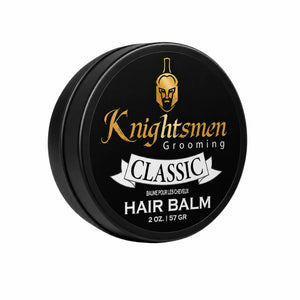
- Hair balm: oil at night, balm in the morning for light hold. The Hair Growth Starter Kit includes one hair oil and one hair balm.
Frequently asked questions
Does rosemary oil really work for hair growth?
Nobody can promise it will. Research on rosemary oil and hair is limited, and rosemary oil is not a medical treatment. Diluted properly, it adds a fresh scent to a conditioning routine. Knightsmen's rosemary products are cosmetics formulated to help promote healthy hair growth as part of a routine. For sudden or patchy hair loss, see a doctor or dermatologist.
How long should I use rosemary oil before judging it?
Hair grows about 4 to 6 inches a year on average, according to Cleveland Clinic, so changes in length are slow. Judge a routine by how your hair and scalp look and feel, not by length alone. If your scalp feels sore, burns or becomes irritated, rinse the oil out, stop using it and talk to a doctor if it lasts.
Can I put rosemary essential oil straight on my scalp?
No. Essential oil is highly concentrated and can irritate skin, so dilute it in a carrier oil to about 1% first, as Cleveland Clinic advises, and patch test on clean skin. Keep it out of your eyes and do not swallow it. If you are pregnant or could become pregnant, or you take medication, talk to a healthcare provider before using essential oils.
Is rosemary oil or castor oil better for hair?
They do different jobs, so it is not a contest. Rosemary essential oil is a fragrant concentrate that must be diluted. Castor oil is a thick carrier oil you can blend with lighter oils. Many hair oils combine plant oils with rosemary: Organic Hair Oil | Classic contains castor oil and rosemary extract. Our castor oil guide has more detail.
Can I use rosemary oil on my beard?
Yes, with the same care: dilute it, patch test and keep it away from your eyes. Rosemary extract is an ingredient in our beard oils and balms. No oil makes a beard grow where genetics do not, so if your beard is patchy, our guide to beard oil for patchy beards explains what a beard oil can and cannot do.
Also see: Best Organic Hair Oil in Canada (2026) →
Knightsmen Grooming products are cosmetics. This guide is general information, not medical advice. If you have a skin or scalp condition, or sudden changes in your hair, see a doctor or dermatologist.