Free Shipping on Orders $100+ — Canada

Short answer: Beard care for coarse, curly hair is a routine built on moisture and gentle handling: wash daily with a gentle non-soap cleanser, moisturize with oil and balm, comb out tangles, and trim dry. Tightly coiled hair is more prone to dryness and breakage, so how you handle it matters as much as what you apply.

Knightsmen Recommends
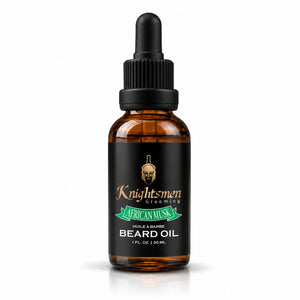
Organic Beard Oil | African Musk
A grounded, warm African Musk scent with a woody base and a touch of sweetness, on an organic base that includes jojoba, argan and castor oils, with no mineral oil and no synthetic fragrance. Massage a few drops into a damp beard, down to the skin, as the oil step of the daily routine in this guide.
Shop Now →Key takeaways
- Curly and tightly coiled hair is more prone to dryness and breakage than other hair types, according to the American Academy of Dermatology (AAD).
- Wash the face and beard every day with a gentle, non-soap cleanser suited to your skin type, then moisturize.
- Work 5–7 drops of beard oil through a damp beard in small sections, down to the skin, then smooth in a little balm.
- Trim dry: curly hair stretches when it is wet and springs back shorter once it dries.
- Shave the neckline slowly, in the direction the hair grows, without stretching the skin; if bumps keep coming back, see a dermatologist.
Coarse, tightly curled beard hair has specific needs that most generic beard care advice ignores. This guide covers how to wash, moisturize, trim and shape a coarse, curly beard, and which Knightsmen products fit the routine.
Why does coarse, curly beard hair need different care?
Curly and tightly coiled hair is more prone to dryness and breakage than other hair types, according to the American Academy of Dermatology. A coarse, curly beard has a tighter curve than straight beard hair, and that structure shapes how you care for it:
- Dry ends are common, so regular moisture matters more than it does for straight hair.
- The hair can be more fragile at the bends of each curl, especially when it is dry.
- Rough combing can break dry curls, so detangle gently with your fingers or a wide-tooth comb.
- A very close cut can leave a hair pointing back toward the skin, so cutting technique counts.
These are not problems, only different requirements. The answer is consistent moisture, gentle handling and careful trimming.
How do I apply beard oil and balm to a curly beard?
Apply oil in sections, down to the skin. Part the beard into small sections and work the oil to the skin with your fingertips, massaging in small circles before smoothing it outward. This spreads the oil evenly across every twist instead of leaving it on the outermost curve, where it rubs off within hours.
Use it on a slightly damp beard. Start with 5–7 drops of beard oil and add more only if the beard still feels dry, because dermatologists advise using beard oil sparingly. The Classic unscented beard oil is fragrance-free if you prefer no scent. Then smooth in a small amount of beard balm for softness and light hold. Knightsmen's balms are made with shea butter. Not sure whether you need both? See our guide to beard balm vs. beard oil.
Which oils suit coarse, curly beard hair?
Look for rich plant oils that condition coarse hair. The AAD's curly-hair advice names argan oil among the ingredients to look for in a conditioning product, and jojoba oil is a light, smooth oil often used in beard oils.
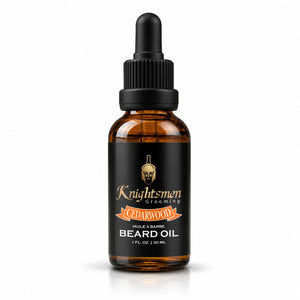
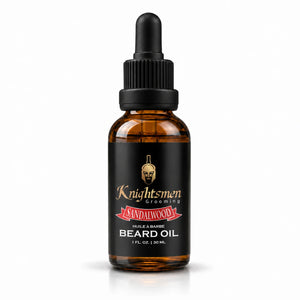
Our four beard oils share one organic base that includes jojoba, argan and castor oils, with no mineral oil and no synthetic fragrance, so the choice comes down to scent: African Musk, Cedarwood, Sandalwood or unscented Classic. We break down the options in our full guide to beard oil for coarse beard hair. For product recommendations, see our best beard oil for Black men in Canada roundup.
How do I trim a coarse, curly beard?
Trim dry. Curly hair stretches when it is wet and shrinks back as it dries, so a length that looks right in the shower can end up shorter than you intended. Dry-trimming shows the true, sprung length the whole time. Comb out any tangles first, then trim in the direction of growth with a guard on an electric trimmer. The AAD suggests an electric razor for trimming, with scissors as an option for longer facial hair. For more on technique, see our guide to trimming a beard at home.
| Feature | Dry trim | Wet trim |
|---|---|---|
| Length you see | The true, sprung length | A stretched length that shrinks as the hair dries |
| Main risk | Little: you can see what you are cutting | Cutting more than you intended |
| Best practice | Comb out tangles first, then trim with a guard | If unavoidable, trim slightly longer, air-dry fully, then decide on a second pass |
How should I shave or shape the neckline of a curly beard?
The neckline is where a close cut meets taut skin, so technique matters most here. The AAD publishes a step-by-step shaving routine written for men with darker skin tones. These steps draw on it and on the AAD's beard-care tips:
- Soften the hair first: shave at the end of a shower, or hold a warm compress on the area for five minutes.
- Apply a shaving cream, gel or oil, and never dry shave.
- Use a sharp single-blade or electric razor, and change a single blade after 5–7 shaves.
- Shave slowly in the direction the hair grows, using short strokes and no more than two passes over any area.
- Do not pull or stretch the skin, shave very closely or press hard.
- Rinse the blade after each stroke, and store the razor dry.
- Rinse off the cream, rest a cool, damp washcloth on the area for five minutes, then moisturize.
If painful bumps or ingrown hairs keep coming back after you change your technique, see a dermatologist. Beard oil and balm are cosmetics, not a treatment for either.
How often should I wash a coarse, curly beard?
Wash your face and beard every day, as the American Academy of Dermatology advises, using a gentle cleanser made for your skin type rather than soap. For dry skin it suggests a hydrating, fragrance-free cleanser, and for sensitive skin a creamy cleanser labelled soap-free and fragrance-free.
Massage the cleanser in with circular motions, rinse well with lukewarm water, and pat dry with a clean towel, leaving the skin slightly damp. Then moisturize straight away, applying oil to the skin and the beard. The AAD adds that moisturizing can help soften the skin and the beard hairs, so it is worth doing even if your skin tends to be oily. For a full method, see our guide to washing your beard properly.
What does a daily routine look like?
Use this as a starting point and adjust the amounts to the length and density of your beard.
- Wash the face and beard with a gentle, non-soap cleanser, rinse well and pat dry, leaving the skin slightly damp.
- Apply 5–7 drops of beard oil to the damp beard, in sections, and massage it into the skin.
- Comb through gently with a wide-tooth comb to spread the oil evenly and detangle.
- Warm a small amount of beard balm between your palms and smooth it over the beard for softness and light hold.
- Style and shape, finishing with a few strokes of the comb in the direction you want the beard to lie.
In the evening, you can add a second application of oil directly to the skin to condition the beard overnight.
Frequently asked questions
How often should Black men wash their beard?
Every day, according to the American Academy of Dermatology. Use a gentle cleanser made for your skin type rather than soap, rinse well with lukewarm water, and moisturize straight afterwards. If your skin is dry, choose a hydrating, fragrance-free cleanser.
What is the best beard style for coarse, curly hair?
Styles that work with the texture rather than against it. The full beard, the shaped goatee and heavy stubble all look intentional on coarse hair. Very short styles, below 3 mm, need more frequent maintenance and a gentle hand at the neckline, but they are also a good option.
Why does the neckline need extra care on a curly beard?
The neckline is usually cut closest, and the skin there gets pulled taut easily. On coarse, curly hair a very close cut can leave a hair pointing back toward the skin. Dermatologists recommend shaving slowly in the direction the hair grows, without stretching the skin or pressing hard. If painful bumps or ingrown hairs keep returning, see a dermatologist.
Should curly beard hair be trimmed wet or dry?
Dry, in most cases. Curly and coily hair stretches when wet and springs back to a shorter length once it dries, so a trim that looks right in the shower can turn out shorter than intended. Dry-trimming shows the true length the whole time and avoids that surprise.
Which Knightsmen beard oil suits a coarse, curly beard?
All four of our beard oils share one organic base that includes jojoba, argan and castor oils, so the choice comes down to scent. African Musk is warm and grounded, with a woody base and a touch of sweetness. Cedarwood and Sandalwood are woody, and the Classic is unscented.
Sources
- American Academy of Dermatology: a dermatologist's top tips for a healthy beard
- American Academy of Dermatology: shaving guidance for men with darker skin tones
- American Academy of Dermatology: 6 curly hair tips from dermatologists
Knightsmen Grooming products are cosmetics. This guide is general information, not medical advice. If you have a skin or scalp condition, or sudden changes in your hair, see a doctor or dermatologist.