Free Shipping on Orders $100+ — Canada


Short answer: Beard oil for Black men is a heavier, plant-based oil blend for coarse, curly beard hair that dries out easily: look for castor, argan and jojoba, and avoid silicones and mineral oil. Knightsmen's African Musk, Unscented and Cedarwood beard oils share one organic carrier-oil base; 5–8 drops on a slightly damp beard is typical.
Key takeaways
- Coarse, curly beard hair is more prone to dryness, so heavier carrier oils such as castor, argan and jojoba suit it better than lightweight ones.
- Silicones and mineral oil are common in beard oils, so check the label if you prefer plant-based oils.
- Knightsmen's African Musk, Unscented and Cedarwood beard oils share one organic carrier-oil base with no parabens, no mineral oil and no synthetic fragrance.
- Apply 5–8 drops to a slightly damp beard, working from the skin outward with your fingertips, then add beard balm for hold or extra moisture retention.
- Wash your face and beard every day with a gentle, non-soap cleanser, and pat the beard dry instead of rubbing.
Coarse, curly beard hair has different needs than straight hair. It's more prone to dryness, more likely to curl back into the skin (causing bumps and ingrown hairs), and it often needs heavier oils to stay moisturized.
Many "best beard oil" lists online don't address this. Here's one that does.
Why Black men's beards need different care
Tightly coiled hair tends to feel dry more easily, because the skin's natural oils travel slowly along a curly strand. The tighter the curl pattern, the harder it is for natural sebum to travel down the hair shaft, so the hair tends to dry out.
This leads to:
- Dry, brittle beard hair that breaks easily
- Beard itch and beardruff (flaky skin underneath)
- Ingrown hairs from curls that grow back into skin
- Patchy areas
What helps is consistent moisture — specifically, carrier oils that match the weight of your hair. Beard oil is a cosmetic: it moisturizes and conditions, but it does not treat itch, flaking, ingrown hairs or patchiness, so see a doctor or dermatologist if those persist.
What to look for in beard oil for coarse hair
Heavier carrier oils work better for coarse beards than lightweight ones. Specifically:
- Castor oil — thick, high in ricinoleic acid, deeply nourishing. Best for very coarse or thick beards.
- Argan oil — high oleic acid content, a conditioning oil often used for coarse hair
- Jojoba oil — a light, smooth base oil used in many beard oils
- Sweet almond oil — lighter but rich in vitamin E, good for the skin underneath
Avoid silicones and mineral oil. Both are found in many beard oils and can make coarse hair look smooth for a while, so check the ingredient list if you prefer to avoid them. For curly beard hair, plant-based carrier oils are the better fit.
Best beard oil for Black men in Canada
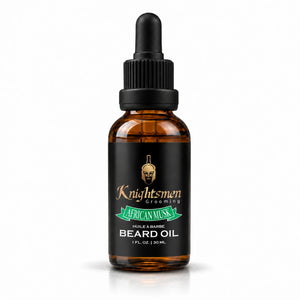
1. Knightsmen African Musk Organic Beard Oil
The African Musk scent is grounded and warm, with a woody base, a slight sweetness and nothing that overpowers. The base is made with organic carrier oils, including argan and jojoba. No parabens, no mineral oil, no synthetic fragrance.

Knightsmen Recommends
Organic Beard Oil | African Musk
A grounded, warm African Musk scent with a woody base and a slight sweetness, in a beard oil made with organic carrier oils including argan and jojoba.
Shop Now →2. Knightsmen Unscented Organic Beard Oil
For men who prefer fragrance-free or layer a cologne, the unscented version uses the same organic carrier-oil base. Works well under balm on dry, coarse beards.
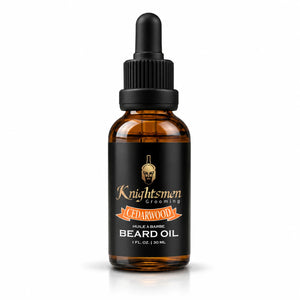
3. Knightsmen Cedarwood Organic Beard Oil
Cedarwood essential oil is a popular choice for men who want to smell put-together without trying too hard. The scent is clean and masculine without being heavy.
Beard oil + beard balm: the combination that works
For coarse beards, a simple routine is oil first, then balm. The oil conditions the hair and moisturizes the skin underneath. Balm seals it in and gives you light hold to shape the beard and tame curl.
Apply beard oil to a clean, slightly damp beard. Wait 2 minutes. Then work a small amount of beard balm through the beard from root to tip. This two-layer approach helps hold moisture better than oil alone.
How to use beard oil for coarse hair
- Wash your face and beard every day with a gentle, non-soap cleanser made for your skin type, as the American Academy of Dermatology advises
- Pat dry — don't rub. Rough drying causes breakage in coarser hair
- While the beard is still slightly damp, apply 5–8 drops of beard oil
- Work from skin outward to the tips, using fingertips not palms
- Follow with beard balm if you need hold or extra moisture retention
- Use a boar bristle brush to distribute and train curl direction
Frequently asked questions
What's the best beard oil for ingrown hairs?
Beard oil is a cosmetic and does not treat ingrown hairs; persistent or painful bumps are a job for a doctor or dermatologist. What a quality carrier oil can do is moisturize and soften coarse hair, which makes the beard easier to comb and shape.
How much beard oil should I use for a coarse beard?
A typical start for a coarse beard is 5–8 drops, and a long or thick one may take 6–10. A quality organic oil absorbs well, so it is easy to add a little more if your beard still feels dry. Add a little at a time, because too much oil leaves a beard looking greasy.
Does beard oil help beard growth for Black men?
It helps promote healthy beard growth by keeping the skin and hair conditioned. Beard oil is a cosmetic: it conditions the hair and moisturizes the skin underneath, but no oil can fill in patchy areas. Consistently oiling your beard keeps the skin and hair conditioned, but it cannot change your genetics.
Can I use hair oil on my beard?
Yes, but hair oils are often formulated for different textures. A beard-specific oil is blended with the denser, coarser hair of a beard in mind. Knightsmen's hair oil line uses similar organic bases but is formulated for the hair and scalp.
What are the key facts at a glance?
| Topic | Key point |
|---|---|
| Castor oil | Thick and high in ricinoleic acid; best for very coarse or thick beards |
| Argan oil | High oleic acid content; a conditioning oil often used for coarse hair |
| Jojoba oil | A light, smooth base oil used in many beard oils |
| Sweet almond oil | Lighter but rich in vitamin E; good for the skin underneath |
| What to avoid | Silicones and mineral oil |
| Amount per use | 5–8 drops on a slightly damp beard; 6–10 for a thick or coarse beard |
| Knightsmen scents | African Musk (deeper, earthy), Unscented (fragrance-free), Cedarwood (clean, masculine) |
What are the most common questions about beard oil for Black men?
Which Knightsmen beard oil is best for a coarse beard?
All three share the same organic carrier-oil base, so the choice comes down to scent. African Musk has a deeper, earthy tone. The Unscented oil suits men who prefer fragrance-free or layer a cologne. Cedarwood is clean and masculine without being heavy. None contains parabens, mineral oil or synthetic fragrance.
Should I use beard balm as well as beard oil?
For coarse beards the routine is oil first, then balm. Apply the oil to a clean, slightly damp beard, wait about two minutes, then work a small amount of beard balm through from root to tip. The balm seals in the oil and adds light hold to shape the beard and tame curl. For technique, see our guide to how to use beard oil.
How should I wash and dry a coarse beard?
Wash your face and beard every day with a gentle, non-soap cleanser made for your skin type, as the American Academy of Dermatology advises. Pat the beard dry instead of rubbing, because rough drying causes breakage in coarser hair, and apply your oil while the beard is still slightly damp.
What should I avoid in a beard oil for coarse hair?
Avoid silicones and mineral oil. They are found in many beard oils and can make coarse hair look smooth for a while, so read the ingredient list. Look instead for heavier plant carrier oils such as castor, argan and jojoba. For more on caring for coarse, curly beards, read our beard care guide for Black men.
Knightsmen Grooming products are cosmetics. This guide is general information, not medical advice. If you have a skin or scalp condition, or sudden changes in your hair, see a doctor or dermatologist.