Free Shipping on Orders $100+ — Canada


Short answer: Scalp oil is a lightweight plant-oil blend applied to the scalp, not only the hair lengths, to moisturize the skin and soften the hair at the roots. Use a few drops, massage them in with your fingertips, leave the oil on for a short time if you like, and wash it out thoroughly with shampoo worked into the scalp.
Oiling the scalp has been part of hair care in many cultures for generations, and it is finding a wider audience as more men look after the skin under their hair as well as the hair itself. It is simple and cheap to try, and easy to get wrong in two ways: using too much, and not washing it out properly. This guide covers what scalp oil is, how to apply it and wash it out, how often to use it and when to talk to a doctor instead. If your main goal is shine and frizz on the lengths, start with our guide to hair oil for dry hair.
Key takeaways
- Scalp oil goes on the scalp and roots. Hair oil mostly goes on the lengths and ends. Many bottles, ours included, are made to do both.
- A few drops are enough. Massage with the pads of your fingers, not your nails.
- Use it as a pre-wash step (10 to 30 minutes, then shampoo) or as a light finish, and wash the scalp thoroughly afterwards.
- Check the label for nut and essential-oil ingredients, and patch-test first if your skin is reactive. Fragrance-free options exist.
- Flaking, itching or redness that does not settle is a reason to see a doctor or dermatologist, not to add more oil.

Knightsmen Recommends
Organic Hair Oil | Tea Tree
Our Tea Tree hair oil, made in small batches in Canada from coconut, avocado, sweet almond and castor oils, vitamin E and tea tree oil, with a clean, crisp herbal scent.
Shop Now →What is scalp oil, and how is it different from hair oil?
The two are often the same bottle used in different places. A product sold as scalp oil is typically light enough to be massaged into the skin at the roots, while a hair oil is usually aimed at the lengths and ends to soften them and add shine. Knightsmen hair oils are made for both: the directions say to massage the oil into the scalp with your fingertips and then through the hair from roots to tips. Here is how the two uses compare:
| Used as scalp oil | Used as hair oil | |
|---|---|---|
| Where it goes | Scalp and roots | Mid-lengths and ends |
| How much | 3 to 6 drops | 2 to 3 drops, up to about 6 for thick hair |
| Main job | Moisturizes the skin and softens the hair at the roots | Softens the lengths, adds shine, tames frizz |
| When | Often before washing | After washing, or as a finish |
The base is a blend of coconut, avocado, sweet almond and castor oils, with vitamin E, black cumin seed oil and rosemary extract. The Tea Tree, Lavender and Bergamot versions each add an essential oil for fragrance, and the Classic has none.
What is scalp oiling used for?
People oil the scalp for practical reasons: to moisturize the skin at the roots, to soften the hair before washing, and because many enjoy the few minutes of massage. It is a cosmetic habit, not a medical treatment, and it does not replace washing: the scalp still needs regular shampooing.
Because the oil sits close to the skin, the amount matters more than the type. A few drops go a long way, and the massage does as much of the work as the oil: gentle pressure with the pads of your fingers for a couple of minutes is the whole technique. The oil also leaves hair softer and easier to comb out before the wash, which is why many people use it ahead of shampooing rather than as a leave-in.
Who should check with a doctor first, or skip scalp oil?
Scalp oil is not right for everyone, and a few cases call for care:
- An already sore or irritated scalp. If the skin is red, painful, broken or very flaky, see a doctor or dermatologist before adding any product.
- Nut allergies. Our hair oils contain sweet almond oil, which is made from almonds. Check every label if you are allergic to nuts.
- Reactive skin or scent sensitivity. Choose the unscented oil and patch-test a drop on your inner forearm for 24 hours before using it on the scalp.
- Very oily scalps. A leave-in oil can feel heavy. Use it only as a pre-wash step.
- Fine hair. Use the low end of the drop range, and if you leave the oil in, keep it off the roots, since fine hair goes flat quickly. As a pre-wash step it washes out.
How do I apply scalp oil?
- Start clean. Begin with a clean, towel-dried scalp, without leftover product or heavy oil.
- Part the hair. Work in a few sections so the oil reaches the skin rather than sitting on top of the hair.
- Add 3 to 6 drops. Put the drops straight onto the scalp or warm them between your palms first.
- Massage for 2 to 3 minutes. Use small circles with the pads of your fingers, never your nails.
- Comb through. A wide-tooth comb spreads what is left along the lengths.
- Decide how long to leave it. As a pre-wash step, our directions range from 10 to 15 minutes (Tea Tree) to 20 to 30 minutes (Classic and Lavender) before washing. As a light daily finish, use only a few drops and leave it in.
How do I wash scalp oil out?
Shampoo is what lifts the oil, so apply it where the oil is. The AAD advises putting shampoo on the scalp rather than the whole length, which washes away built-up products, dead skin and excess oil without drying the rest of the hair. Many people find it works best to work the shampoo into the oiled scalp before adding much water, then lather, rinse well with lukewarm water, and repeat if the hair still feels coated.
Follow with conditioner on the lengths if your hair is dry. Our rosemary shampoo pairs well with a weekly oiling routine, and our guide to the best shampoo and conditioner for men in Canada explains what to look for.
How often should I use scalp oil?
There is no set rule, and more is not better. The directions on Knightsmen hair oil suggest a few drops daily or every second day as a light finish.
If you oil the scalp as a pre-wash step, once a week is a sensible place to start. Add a second session only if your hair and scalp like it. Oilier scalps generally need less, and too much oil, too often, leaves hair limp and flat.
Watch the signals rather than the calendar. If your hair looks limp or the scalp looks shiny by the next day, you used too much or too often. If the scalp feels dry and tight, you can add a session. Keep a note of what you did for a few weeks and change one thing at a time.
When should I see a doctor about my scalp?
See a doctor or dermatologist if flakes, itching or redness do not settle, if the scalp is sore or the skin is broken, or if hair is falling out in patches or more than usual. The AAD notes that if you get dandruff, a board-certified dermatologist can prescribe medicine to apply to your scalp. Scalp oil is a cosmetic and is not a substitute for medical advice.
Frequently asked questions
Can I leave scalp oil in overnight?
Some people do, and the directions for our Lavender hair oil allow it for a pre-wash session. Our directions suggest 10 to 30 minutes for most sessions, which is simpler and kinder to pillowcases. If you do leave it on overnight, cover the pillow with a towel and shampoo the scalp thoroughly in the morning.
Which Knightsmen oil is best for scalp use?
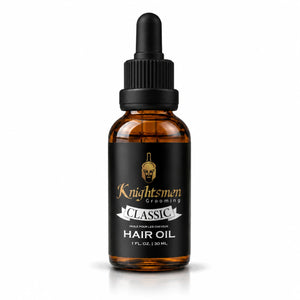
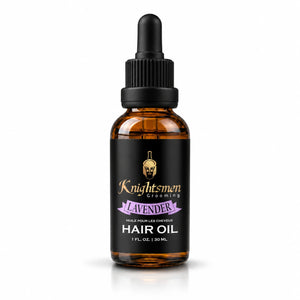
They share the same base, so choose by scent. The Classic has no fragrance, which suits sensitive noses and anyone who wears cologne. Tea Tree has a clean, sharp herbal scent that fades quickly, Lavender is soft and floral, and Bergamot is fresh citrus. The Hair Oil Discovery Set lets you try all four in small bottles.
Is coconut oil a good scalp oil?
Coconut oil is a common base for scalp oils and is used in ours, alongside avocado, sweet almond and castor oils. On its own it is solid at cooler room temperatures and can feel heavy, which is why blends that combine it with lighter oils spread more easily. Whatever you choose, check the label for allergens first.
What if my scalp is flaky?
Review your routine first. The AAD points to not shampooing often enough, or not using the right conditioner, oil or scalp moisturizer for your hair type, as common reasons for flakes. If the flaking or itching continues after a change of routine, see a doctor or dermatologist rather than adding more product.
Knightsmen Grooming products are cosmetics. This guide is general information, not medical advice. If you have a skin or scalp condition, or sudden changes in your hair, see a doctor or dermatologist.
Sources