Free Shipping on Orders $100+ — Canada


Short answer: Hair oil for dry hair is a blend of plant oils that you smooth over the mid-lengths and ends to soften the hair, add shine and tame frizz. Look for plant oils you can name on the label, such as coconut, avocado and sweet almond, and start with 2 to 3 drops on damp hair, adding more only if you need it.
Dry hair feels rough, looks dull and frizzes at the first hint of humidity. Shampooing, hot water, heat styling, sun and cold winter air all play a part, and the longer the hair, the further the scalp's natural oil has to travel to reach the ends. A hair oil is one of the quickest ways to make dry hair feel softer, provided you pick a light one and use it sparingly. This guide covers what to look for, how much to use and when to apply it. If you are comparing oils, our guide to organic hair oil in Canada shows what we make.
Key takeaways
- Put the oil on the mid-lengths and ends, where hair is driest, rather than the roots, unless you are deliberately oiling the scalp.
- Plant oils such as coconut, avocado and sweet almond soften the hair. Thick oils such as castor work best in small amounts within a blend.
- Fine hair needs 2 to 3 drops. Thick or coarse hair can take more, up to about 6.
- The American Academy of Dermatology (AAD) advises shampooing dry, curly or thick hair only when needed, putting conditioner on the whole length if hair is dry or curly, and, for curly hair, adding an oil or leave-in afterwards.
- If your scalp is flaky or itchy for more than a short while, see a doctor or dermatologist.

Knightsmen Recommends
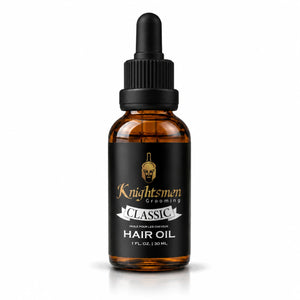
Organic Hair Oil | Classic
Our fragrance-free Classic hair oil, made in small batches in Canada from coconut, avocado, sweet almond and castor oils, plus vitamin E, black cumin seed oil and rosemary extract.
Shop Now →Why does hair feel dry?
Hair feels dry when it loses moisture faster than it can hold on to it, and it has no oil glands of its own. The oil that keeps it soft comes from the scalp, so the ends of longer hair, and hair that is curly or coily, tend to run driest. Frequent washing, hot water, blow dryers and flat irons, sun and winter air all add to it.
The AAD's tips for healthy hair work as a checklist. Shampoo according to how often your hair gets dirty or oily, but only when needed if your hair is dry, curly or thick. Apply shampoo to the scalp rather than the whole length. Use conditioner after washing, on the whole length if your hair is dry. Detangle gently with a wide-tooth comb, pat the hair with a towel instead of rubbing it, and use low or medium heat with a heat protectant.
What should I look for in a hair oil for dry hair?
Look for a base of plant oils you can name on the label, and go lighter if your hair is fine. These are the common choices:
| Oil | What it is | How it feels in the hair |
|---|---|---|
| Coconut oil | Pressed from coconut | Softening, with a light sheen |
| Avocado oil | Pressed from avocado fruit | Richer, smooths and adds shine |
| Sweet almond oil | Pressed from sweet almonds | Light, spreads easily |
| Castor oil | Pressed from castor seeds | Thick and sticky, so used in small amounts |
| Black cumin seed oil | Pressed from black cumin seeds | Used in small amounts within a blend |
Knightsmen hair oils combine coconut, avocado, sweet almond and castor oils with vitamin E, black cumin seed oil and rosemary extract, and the scented oils add essential oils for fragrance. The full ingredient list is on every product page. If you have a nut allergy, check the label first: sweet almond oil is made from almonds.
How many drops of hair oil should I use?
Start smaller than you think. For Knightsmen hair oil, 2 to 3 drops on damp hair is enough for fine or short hair, and thick or coarse hair can take up to about 6 drops. Warm the drops between your palms, then work them through from the mid-lengths to the ends and comb through. Add a drop at a time if the hair still feels dry. If it looks greasy an hour later, use a drop or two less next time.
Work the oil through in sections, starting with the ends, which are driest, and moving up only as far as the mid-lengths. Comb through at the end to spread it evenly and check how it looks: that tells you whether the amount was right for your hair.
When is the best time to apply hair oil?
There are three good moments, and you can mix them:
- After washing, on towel-dried hair. The AAD's tips for curly hair suggest applying an oil or leave-in conditioner after washing and conditioning, to assist with moisturization. Damp hair also helps the oil spread evenly.
- On dry hair, as a finish. One or two drops smoothed over the ends tames flyaways and frizz between washes.
- Before shampooing. Some men work the oil through dry hair and leave it for 20 to 30 minutes before washing it out, as an extra conditioning step once a week.
If you only pick one moment, the towel-dried option is the easiest to get right, because damp hair spreads a few drops further than dry hair does.
How do I choose between the scents?
All four of our hair oils share the same base, so the choice is about fragrance:
| Hair oil | Scent | Pick it if |
|---|---|---|
| Classic | Unscented | You want no added fragrance, or you wear cologne |
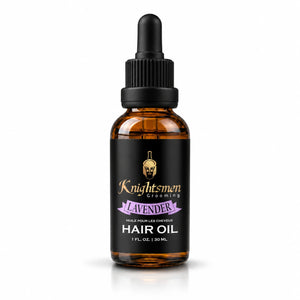
| Lavender | Soft floral | You like a gentle floral note |
| Bergamot | Fresh citrus | You like something bright and clean |
| Tea Tree | Clean, sharp and herbal, fading quickly | You like a crisp herbal scent |
Not sure yet? The Hair Oil Discovery Set has all four in 5 ml bottles, so you can try each one before choosing a full size.
What is the difference between hair oil, hair balm and conditioner?
They do different jobs, and they work well together. Conditioner is the rinse-out step: the AAD notes that it moisturizes and detangles hair and makes it easier to manage. Hair oil is the light, leave-in finish that adds shine and softness. Hair balm is thicker, made with shea butter and beeswax, and gives a flexible hold for styling.
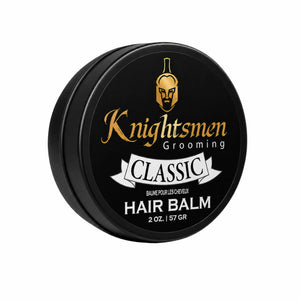
A simple routine for dry hair is conditioner in the shower, a few drops of oil on damp hair afterwards, and a little balm only if you want shape. Our Classic hair balm is the fragrance-free option, and our guide to hair care routines for men shows where each step fits.
Why does my hair look greasy after using oil?
Almost always because there is too much of it, or it went on the wrong place. Fine hair weighs down quickly, and oil applied at the roots sits on the scalp instead of the dry ends. Here is what to do instead:
- Use 2 to 3 drops, then add one at a time.
- Keep the oil to the mid-lengths and ends. Our Bergamot hair oil directions say to avoid the scalp if your hair is fine.
- Apply it to clean hair, not hair that already has product on it.
- Wash the scalp regularly. The AAD notes that shampoo applied to the scalp washes away built-up products, dead skin and excess oil without drying the length of the hair.
Frequently asked questions
Can I use hair oil on dry hair every day?
Yes, for most hair types. Knightsmen hair oil is light enough for daily use, and the directions say to use it daily or every second day. If your hair gets oily quickly, use it every two to three days or keep it to the ends. Always start with a small amount and add more only if you need it.
Should I put hair oil on wet or dry hair?
Either works. Towel-dried, damp hair helps the oil spread evenly, and it matches the AAD's curly-hair tip to add an oil or leave-in after washing and conditioning. Dry hair suits a quick finish on the ends. Use fewer drops on dry hair, because it absorbs less, and comb through to spread it.
Can I use hair oil if I have fine hair?
Yes, with a lighter hand. Use 2 to 3 drops, keep the oil to the ends and away from the roots, and apply it to clean, damp hair. Fine hair tends to look flat or greasy with too much oil, so build up slowly rather than starting with a full palm.
What if my scalp is flaky as well as my hair being dry?
The AAD notes that common reasons for flakes include not shampooing often enough, or not using the right conditioner, oil or scalp moisturizer for your hair type. Review your routine first. If the flaking or itching does not settle, see a doctor or dermatologist, who can look at the scalp and suggest what to do next.
Knightsmen Grooming products are cosmetics. This guide is general information, not medical advice. If you have a skin or scalp condition, or sudden changes in your hair, see a doctor or dermatologist.
Sources