Free Shipping on Orders $100+ — Canada

Short answer: Beard growth is a slow, mostly genetic process: hair in general grows about 4 to 6 inches a year, and many beards keep filling in until around age 30. You can't reliably speed it up, but sleep, balanced eating, daily skin care and patience help you avoid setbacks.
Growing a beard faster is a common grooming question, and some of the answers online are really supplement ads. This guide is the beard-specific one: a realistic timeline, what the awkward early weeks look like, and how to care for a beard at each stage. For sleep, food, stress and the whole-body basics that apply to beard and scalp hair alike, see our guide to supporting healthy beard and hair growth.
Key takeaways
- Your genes decide how dense your beard can be, and most beards keep developing until about age 30. Your male relatives' beards are a useful clue.
- At the average hair growth of 4 to 6 inches a year, a short beard takes a few months and a long one a year or more.
- The early weeks are the awkward phase: uneven patches and a prickly feel are common. Wash daily, moisturize, and wait before you judge or shave.
- Trim for shape, not speed. See a doctor if your beard changes suddenly, thins in round patches or changes on one side only.

Knightsmen Recommends
Organic Beard Oil | Classic
The organic jojoba, argan and plant-oil blend this guide suggests working into clean, slightly damp skin. This is the fragrance-free version, for men who prefer no added scent.
Shop Now →How fast does a beard actually grow?
Hair in general grows about 4 to 6 inches a year on average, according to Cleveland Clinic, which works out to roughly a third to half an inch a month. That is an average for hair in general and individual rates vary, so treat any beard figure as a rough guide.
Two things set your own pace. The first is genetics: Cleveland Clinic says your genes are one of the main factors in how thick or thin your facial hair is, and if your male relatives have full beards you may be in luck. The second is age: from about 18 to 30, most beards keep developing in thickness and coarseness, so a beard that looks thin at 20 can look quite different at 28.
Each hair also runs on its own cycle of growth, transition and rest, so a new beard rarely looks perfectly even at first.
What does a realistic beard growth timeline look like?
The lengths below are simple arithmetic from that 4 to 6 inches a year average for hair in general, not a beard-specific measurement, so treat them as a rough guide. Your beard may run slower or faster, and thin areas will take longer to look full.
| Time | Rough length | What to expect | What to do |
|---|---|---|---|
| Month 1 | 0.3–0.5 in (about 1 cm) | Short, uneven stubble that can feel prickly | Wash daily, moisturize and leave the length alone |
| Month 3 | 1–1.5 in | Thin areas are easy to see; a short beard is taking shape | Tidy only the neckline and cheek line |
| Month 6 | 2–3 in | A medium beard whose shape and density are mostly visible | Add oil and a little balm; trim to shape |
| Month 12 | 4–6 in | A full-length beard if your genes allow it | Keep conditioning and trim regularly |
The first weeks are the awkward phase. The stubble is short, the patches show and the skin is adjusting, which is when it is tempting to shave it all off. Decide in advance to wait.
Why does my beard look patchy, and what can I do?
Patchiness is largely genetic. The American Academy of Dermatology says your genes determine whether you develop thin, sparse areas in your beard, while Cleveland Clinic adds that a patchy beard can be more than genes, because some medical conditions play a role too.
The AAD's suggestions are practical. Let the beard grow out to fill in the gaps, then use a beard wax to style it and hold the hairs in place. If thin spots remain, choose a style that lets you trim or remove those areas, and ask a barber which shapes suit your growth pattern. Cleveland Clinic's advice on the waiting part is simple: be patient.
If the patchiness is new, appeared suddenly or affects only one side, do not wait it out. See a doctor, as covered below.
How should you care for your beard at each stage?
In the stubble stage, the AAD says to wash your face and beard every day with a gentle cleanser matched to your skin type rather than soap, rinse with lukewarm water, pat dry and moisturize. It suggests a moisturizer with SPF 30 or higher, and a gentle exfoliating scrub once or twice a week if you are prone to ingrown hairs. Try not to touch your beard while it grows in.
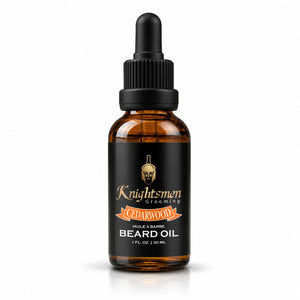
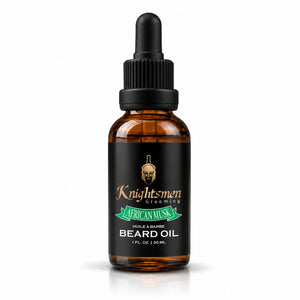
Once the hair is long enough to work through, add beard oil. Start with 3–5 drops on clean, slightly damp skin, work them down to the skin and not just the hair, and use it sparingly. Organic Beard Oil | Classic is fragrance-free, while Cedarwood and African Musk use the same base with scent. Beard oil helps promote healthy beard growth by moisturizing the skin and conditioning the hair, but it does not add follicles.
For a longer beard, add a little balm for light hold and conditioning. The Beard Growth Starter Kit pairs beard oil with beard balm, and our beard washing guide covers the full method. You can browse everything in the beard care collection.
Should you trim your beard while it grows?
Trim for shape, not for speed. A dermatologist quoted by the AAD calls the idea that cutting hair more often speeds up growth a myth, because growth happens below the skin. What trimming does is keep a growing beard tidy and remove damaged ends.
A simple plan works well. Leave the length alone for the first weeks. When there is enough to shape, tidy the neckline and cheek line, because crisp edges make a beard in progress look intentional. The AAD advises applying a shaving oil, cream or gel before trimming with an electric razor, and using scissors for longer hair, and Cleveland Clinic suggests cleaning clippers and razors at least every five to seven days. Our guide to trimming a beard at home has the step-by-step method.
Do sleep and food change how fast a beard grows?
Not in a way anyone can promise, but they support your overall health, which is reason enough to look after them. Cleveland Clinic says a healthy diet can help beard growth, smoking can harm skin and hair, and stress can contribute to hair loss. It also mentions a small study of 10 young men in which short-term sleep loss slowed beard growth. At the same time, it notes that there is little research on reliable ways to increase the fullness of a beard.
So treat them as basics, not levers. Adults aged 18 to 64 are advised to get 7 to 9 hours of good-quality sleep a night, and Canada's Food Guide suggests building meals around vegetables and fruit, whole grain foods and protein foods. If you suspect something is missing, a doctor can check with a blood test. The rest of the whole-body picture is in our overview of healthy beard and hair growth.
What does not work for growing a beard faster?
Several heavily marketed ideas do not hold up.
- Shaving to thicken the beard. Cleveland Clinic says shaving does not change how thick or how fast hair comes back. Stubble looks darker and feels coarser because you see the wider base of each hair instead of its fine tip.
- Serums with special formulas. Nothing you apply changes your genes. Cleveland Clinic notes that even popular hair-growth products are not FDA-approved for beards, and the AAD notes that a common side effect of putting a scalp hair-loss medicine on the face is raw, irritated skin, so talk with a dermatologist first.
- High-dose supplements. Biotin has the biggest reputation, but a 2024 review of the published studies found that its popularity as a hair supplement is not matched by high-quality research.
- Castor oil, or any single oil, as a shortcut. Oils condition hair and moisturize skin, which is useful. None of them adds follicles.
- Derma rolling at home. Cleveland Clinic says home devices have far shorter needles than the ones dermatologists use, so do not expect the same results, and the AAD lists irritation and scarring among the risks of overdoing it. Ask a dermatologist first.
When should you see a doctor about your beard?
Talk to your doctor if a change in your beard is new, unusual or asymmetrical, says Cleveland Clinic. Start with your primary care doctor and see a dermatologist if there is no clear answer. That includes a beard that suddenly thins, hair that falls out in smooth, round or oval patches, or growth that stops on one side.
See a doctor or dermatologist, too, if the skin under the beard is painful or broken, or has a rash that does not improve with gentle care, or if you are also losing hair on your head or body. Beard oil and balm are cosmetics. They are not a treatment for any skin or hair condition.
Frequently asked questions
Can you actually make your beard grow faster?
Not reliably. Your genes set how fast and how full your beard can be, and Cleveland Clinic notes there is little research on reliable ways to increase beard fullness. What you can do is avoid setbacks: moisturize the skin, limit breakage, sleep and eat well, and give a new beard time. If growth changes suddenly, see a doctor.
How long does it take to grow a full beard?
It depends on your genes and your goal. At the average of 4 to 6 inches a year, a short beard of an inch or so takes about three months and a medium one of 2 to 3 inches about six. Many beards also keep thickening until around age 30, so a beard that looks thin early may fill in later.
Does shaving make your beard grow back thicker?
No. Cleveland Clinic says shaving does not make hair come back thicker, darker or faster. Freshly cut hair looks darker and feels coarser because you see the wider base of each hair, and it feels prickly because the ends are newly cut. Keeping the skin and hair moisturized helps with the prickly feeling.
Why is my beard patchy?
Patchiness is largely genetic, according to the AAD, and a young beard is still developing: Cleveland Clinic says most beards keep thickening until around age 30. The AAD suggests letting the beard grow out and choosing a style that suits your growth. If the change is new, sudden or lopsided, see a doctor.
What vitamins should I take for a fuller beard?
No vitamin is a reliable shortcut. Supplements are most useful when you are actually low in something, and a doctor can check with a blood test. A balanced diet comes first, and too much of some vitamins, such as vitamin A, can itself cause hair loss. Ask a doctor or pharmacist before starting any supplement.
What is the best beard oil for a growing beard in Canada?
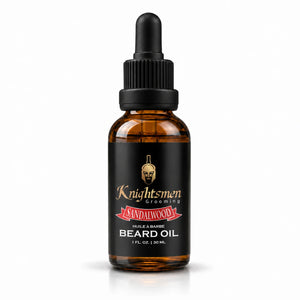
Look for a light oil made with carrier oils such as jojoba and argan, and no mineral oil or synthetic fragrance. Knightsmen Organic Beard Oil | Classic is fragrance-free, and the Cedarwood, Sandalwood and African Musk versions use the same base with scent. All of our oils are COSMOS-certified organic and handcrafted in small batches in Toronto.
Sources
- American Academy of Dermatology: a dermatologist's top tips for a healthy beard
- American Academy of Dermatology: common beard problems, including sparse or patchy growth
- American Academy of Dermatology: skin, hair and nail tips from dermatologists
- American Academy of Dermatology: microneedling
- American Academy of Dermatology: sudden hair loss in patches
- Cleveland Clinic: why some beards come in sparse
- Cleveland Clinic: how fast hair grows
- Cleveland Clinic: shaving and hair thickness
- Cleveland Clinic: microneedling and at-home devices
- Cleveland Clinic: beard care tips
- Public Health Agency of Canada: sleep recommendations in the Canadian 24-Hour Movement Guidelines
- Health Canada: eat a variety of healthy foods
Knightsmen Grooming products are cosmetics. This guide is general information, not medical advice. If you have a skin or scalp condition, or sudden changes in your hair, see a doctor or dermatologist.