Free Shipping on Orders $100+ — Canada

Short answer: A low fade is a haircut where the hair shortens gradually from the natural hairline, just above the ear and along the neckline, down to skin level. The fade zone is narrow, so it keeps more length on the sides than a mid or high fade and the contrast stays softer.
Key takeaways
- A low fade starts at the natural hairline, and the fade zone sits in the bottom third of the sides and back.
- Common variations are the low skin fade, low drop fade, low taper fade and low temp (temple) fade.
- The lower the fade, the more side length you keep and the less contrast there is between the top and the sides.
- Tell your barber the fade type and the length on top, and bring a reference photo.
- A cut every 3–4 weeks keeps a low fade sharp.
The low fade shows up in the description of almost every popular men's haircut right now — "low fade with a crop," "low fade with a quiff," "low fade with a textured top." But most men walking into a barbershop don't know exactly what they're asking for when they say it. That disconnect leads to miscommunication, and miscommunication leads to leaving the chair with something you didn't want.
Here's a complete breakdown of what the low fade actually is, the variations worth knowing, and how to walk in knowing exactly what you want.
What is a low fade haircut?
A fade is any haircut where the length transitions gradually from longer to shorter — typically from the top of the head down to the sides and back. "Low" describes where the shortest point of the fade begins: at the natural hairline, just above the ear and along the neckline. The fade zone is relatively narrow, sitting in the bottom third of the sides and back.
Everything above the fade line stays at a consistent, longer length. The contrast between the faded bottom and the longer top is what gives the low fade its clean, structured look — without the dramatic skin-level contrast of a mid or high fade.
Low fade variations worth knowing
Low skin fade: The hair fades all the way to skin at the bottom. The lowest setting on the clippers — often a 0 or 0.5 — is used at the edge, graduating to longer lengths as you move up. Creates a sharp, visible line between the faded skin and the hair above. The most common interpretation when someone asks for a "low fade."
Low drop fade: The fade line drops behind the ear — instead of a straight horizontal line, the fade curves downward toward the neckline. This creates a more rounded silhouette and works particularly well when combined with curly or wavy hair. The drop gives the back of the head a cleaner, more intentional shape.
Low taper fade: A more gradual transition that doesn't go all the way to skin. The hair gets shorter toward the bottom but maintains some length throughout — no visible skin. More conservative and professional-looking than a skin fade.
Low temp fade (temple fade): The fade is applied specifically at the temples, creating a clean edge from the corner of the forehead to the ear. Works as a standalone detail or combined with a broader low fade.
What makes it different from a mid or high fade
The position of the fade start point changes the entire character of the haircut:
- Low fade: Fade begins at the natural hairline. More conservative, more length retained on the sides, softer overall contrast.
- Mid fade: Fade begins at the temple. Wider transition zone, more contrast, more modern-aggressive look.
- High fade: Fade begins above the temple, close to the top of the sides. Maximum contrast, most dramatic silhouette.
The lower the fade, the more hair is retained on the sides, and the less contrast there is between top and sides. Higher fades create more visual separation and tend to look sharper but require more frequent barber visits to maintain.
Haircuts that pair well with a low fade
The low fade is a finishing technique more than a standalone style — it pairs with virtually any top:
Textured crop: Short, choppy top with a low skin fade. One of the most popular combinations right now. Clean, low-maintenance, works on straight and wavy hair.
Quiff: Volume pushed forward and upward. The low fade provides a clean base that lets the quiff be the focal point.
Slick back: Hair combed or styled straight back. The low fade cleans up the sides and keeps the look from becoming too loose or unstructured.
Curly top / natural texture: The low drop fade in particular pairs well with natural curly or coily hair — it shapes the sides without disrupting the top's natural texture.
Modern mullet or wolf cut: A low fade on the sides while keeping length at the back adds structure and intention to otherwise loose, layered styles. See our guides on the modern mullet and wolf cut for more detail.
How to communicate it to your barber
The most common breakdown in barbershop communication is vagueness. "A fade" tells a barber almost nothing. Here's a template that works:
"Low [skin/taper] fade on the sides and back, [length] on top, [describe the top style or show a photo]."
If you want a drop fade: "Low drop fade, following the hairline behind the ear."
If you want a temple fade specifically: "Low fade with a temp fade at the corners."
Always bring a reference photo if you have one. Verbal descriptions of haircuts are inherently imprecise — one man's "short on the sides" is another's "mid fade."
Caring for hair with a low fade
The faded sections expose scalp that was previously covered. That exposed skin needs care — particularly in Canadian winters when indoor heating dries everything out.
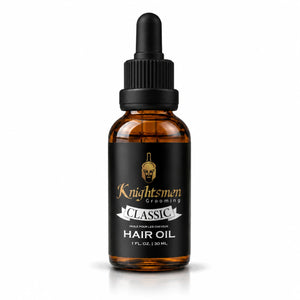
Tea Tree Hair Oil applied to the scalp a few times per week keeps the skin moisturized, which matters on a close fade where dry skin shows up visibly, and helps promote healthy hair growth. Tea tree is a traditional ingredient in scalp care, and it gives the oil a clean scent that fades quickly. The coconut, avocado, sweet almond and castor oil base conditions the scalp and hair.
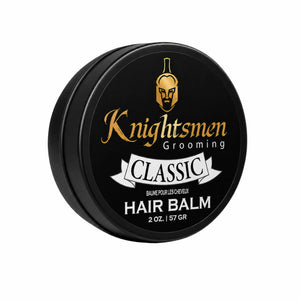
For the top, Tea Tree Hair Balm provides light hold with the same clean tea tree scent. The shea butter and beeswax formula styles and conditions simultaneously without buildup.

Knightsmen Recommends
Organic Hair Oil | Classic
Prefer fragrance-free? This unscented hair oil gives sensitive, freshly-faded scalps the same oil-based conditioning as the tea tree pick above, without any added scent.
Shop Now →Frequently asked questions
What is a low fade haircut?
A low fade is a haircut where the hair gradually shortens from just above the ear and neckline downward to skin level. The transition zone sits in the bottom third of the sides and back, keeping more length above the fade line than mid or high fade variations.
What is the difference between a low fade and a low taper?
A low fade goes to skin at the bottom edge. A low taper reduces length gradually without reaching skin — it is more conservative. A low fade creates a visible skin line; a low taper blends into the natural hairline more gradually.
How often do you need to cut a low fade?
Every 3–4 weeks to stay sharp. A low fade grows out more gracefully than a high fade because the transition zone is narrower. Most men can push to 4 weeks and still look intentional, especially if they clean up the neckline at home between visits.
Does a low fade suit all face shapes?
Yes — the low fade is the most universally flattering fade variation. It works on oval, square, round, and oblong faces. For oblong faces it is the best fade option because it retains side length and avoids making the face appear even longer.
What is a low drop fade?
A low drop fade is a variation where the fade line curves downward behind the ear rather than following a straight horizontal path. The drop creates a more rounded silhouette at the back of the head and pairs particularly well with curly or wavy hair textures.
What are the key facts at a glance?
| Fade | Where it starts | What to expect |
|---|---|---|
| Low fade | At the natural hairline | More conservative, more length kept on the sides, softer contrast |
| Mid fade | At the temple | Wider transition zone, more contrast, a more modern look |
| High fade | Above the temple, close to the top of the sides | Maximum contrast and the most dramatic silhouette; more frequent barber visits |
| Low skin fade | Fades all the way to skin at the bottom | A sharp, visible line; the most common meaning of 'low fade' |
| Low drop fade | Curves down behind the ear | A rounder silhouette that suits curly or wavy hair |
| Low taper fade | Gradual, does not reach skin | More conservative and professional-looking than a skin fade |
What are the most common questions about low fades?
How does a low fade differ from a mid or high fade?
The start point changes the character of the cut. A low fade begins at the natural hairline, keeps more length on the sides and gives softer contrast. A mid fade begins at the temple, with a wider transition zone and a more modern look. A high fade begins above the temple for maximum contrast and the most dramatic silhouette, but needs more frequent barber visits. Compare it with our mid taper haircut guide.
What should I say to my barber to get a low fade?
Be specific, because 'a fade' tells a barber almost nothing. Try: low skin or taper fade on the sides and back, a set length on top, and a description or photo of the top style. For a drop fade, ask for a low drop fade following the hairline behind the ear. Always bring a reference photo. To find the right barber, read how to choose a good barber.
Which haircuts pair well with a low fade?
The low fade is a finishing technique more than a standalone style, so it pairs with almost any top. Popular choices are a textured crop, a quiff, a slick back and a curly or natural-texture top, where the low drop fade works particularly well. It also adds structure to the modern mullet and the wolf cut.
What is a low temp fade?
A low temp fade, also called a temple fade, is applied specifically at the temples. It creates a clean edge from the corner of the forehead to the ear. It works as a standalone detail or combined with a broader low fade. To ask for it, say low fade with a temp fade at the corners.
How should I care for my scalp with a low fade?
The faded sections expose scalp that was previously covered, so it needs care, particularly in Canadian winters when indoor heating dries everything out. A few times a week, work a conditioning scalp oil such as Organic Hair Oil | Tea Tree into the exposed skin. For the top, use a light-hold hair balm that styles and conditions without buildup.
Knightsmen Grooming products are cosmetics. This guide is general information, not medical advice. If you have a skin or scalp condition, or sudden changes in your hair, see a doctor or dermatologist.