Free Shipping on Orders $100+ — Canada

Short answer: The wolf cut is a layered haircut that sits between a shag and a mullet, with volume at the crown, layers through the mid-lengths, more length at the back than a standard cut and a textured, lived-in finish. It suits wavy hair best and can work on straight, curly and thick hair with the right cut and products.
Key takeaways
- The wolf cut draws from the 1970s shag, with modern proportions and less back length than a traditional mullet.
- Its defining features are heavy layering, a longer and slightly disconnected back, curtain bangs or a longer fringe, and a textured, undone finish.
- Wavy hair is the ideal type; straight hair needs more product, and fine hair needs lighter layers.
- To style it, work a few drops of hair oil through towel-dried hair, diffuse or air dry, add a little balm for shape and place the fringe last.
The wolf cut sits somewhere between a shag, a mullet, and a layered cut — and that in-between quality is exactly what makes it work. It's got volume at the crown, layers through the mid-lengths, and more length at the back than a standard cut. The result is textured, lived-in, and deliberately imperfect in a way that takes some intention to pull off correctly.
Here's what it actually is, whether your hair type suits it, and how to style it at home without it looking like you just rolled out of bed.
What is the wolf cut?
The wolf cut is a layered haircut characterized by:
- Heavy layering through the top and sides that creates volume and movement
- A longer, slightly disconnected back section — more length than a standard cut, less than a classic mullet
- Curtain bangs or a longer fringe that frames the face
- A generally textured, undone finish rather than a clean or polished one
It draws from the 1970s shag haircut — heavily layered and voluminous — but with modern proportions. The crown has more volume than a shag; the back has less dramatic length than a traditional mullet. Think of it as the midpoint between those two styles.
How it differs from a mullet
The classic mullet has a clear disconnect — short on top and sides, dramatically longer at the back. The contrast is the point. The wolf cut blurs that contrast. The layers create a gradual transition from crown to back rather than a sharp separation. The back is longer than the top, but the difference is less dramatic and the overall silhouette is more continuous.
The wolf cut also typically has more volume at the crown than a mullet, and the fringe or curtain bangs are a defining feature — most mullets don't have significant fringe length. See our full guide to the modern mullet if you want to compare them side by side.
Which hair types suit the wolf cut best
Wavy hair: The ideal hair type for a wolf cut. Natural wave amplifies the textured, layered look and gives the cut movement without much styling effort. Wavy hair also holds the volume at the crown naturally.
Straight hair: Works well but requires more product to build texture and prevent the layers from falling flat. A light hair oil worked through damp hair before air-drying adds the movement that straight hair lacks naturally.
Curly hair: Can absolutely work — the layers reduce bulk and allow the curls to spring freely rather than stacking on each other. Requires a curl-aware barber to layer correctly without creating a triangle silhouette.
Fine hair: The layering removes weight, which can make fine hair appear even thinner. If your hair is fine and you want this look, ask for lighter layers and keep more length overall — the volume comes from styling product rather than the cut itself.
Thick hair: Benefits enormously from the wolf cut's layering — it removes bulk, adds shape, and makes thick hair manageable in a way that blunt cuts don't.
Face shapes and the wolf cut
Oval: Works well. The balanced proportions of an oval face carry the wolf cut's volume and length without issue.
Square: The soft, layered fringe and rounded silhouette of the wolf cut complement strong square jaw lines by adding softness at the top. Avoid very short fringe — keep it long enough to curve around the forehead.
Round: Works best with the curtain bangs swept to the sides rather than falling forward — this adds height and visual length to a round face. The volume at the crown helps elongate.
Heart: The wolf cut's volume at the crown can over-emphasize a wider forehead. Keep the fringe fuller and the crown volume moderate.
How to style a wolf cut at home
The wolf cut looks effortless when it's actually styled — the key is achieving texture and movement without making it look product-heavy.
Step 1: Apply hair oil to towel-dried hair. Knightsmen Bergamot Hair Oil is the right product here — a few drops worked through towel-dried hair before any other styling. The coconut, avocado, sweet almond and castor oil base moisturizes the hair shaft and reduces frizz, while the bergamot essential oil adds a fresh, clean scent. It absorbs quickly without leaving the hair looking oily.

Knightsmen Recommends
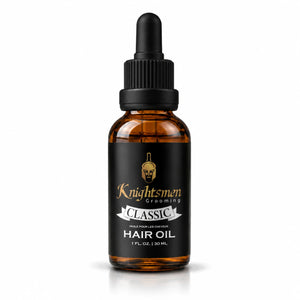
Organic Hair Oil | Classic
The unscented version of Knightsmen's hair oil line: a few drops worked through towel-dried hair is exactly the texture-priming step this styling routine starts with.
Shop Now →Step 2: Diffuse or air dry. If you have wavy or curly hair, diffusing on low heat enhances the natural texture. If your hair is straight, scrunch it slightly while drying to encourage movement.
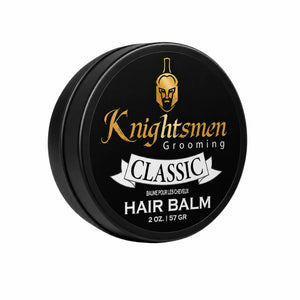
Step 3: Apply hair balm for shape. A small amount of Bergamot Hair Balm worked through dry hair adds light hold and definition without weighing the layers down. The shea butter and beeswax formula provides structure without stiffness. Focus on the ends and the crown — not the roots.
Step 4: Shape the fringe last. The curtain bang or fringe should be placed last, either pushed to the sides or left to fall naturally depending on your preference and face shape.
The Hair Growth Kit bundles the hair oil and matching hair balm together — the complete styling routine in one purchase.
Frequently asked questions
What is the wolf cut for men?
The wolf cut is a layered men's haircut with volume at the crown, graduated layers through the mid-lengths, more length at the back than a standard cut, and a textured, lived-in finish. It combines elements of the 1970s shag and the modern mullet into a softer, more continuous silhouette.
Is the wolf cut suitable for men?
Yes — the wolf cut has been worn by men consistently since its resurgence. It works particularly well on men with wavy, straight, or thick hair who want texture and movement without a clean, structured cut. It suits oval, square, and round face shapes well.
What is the difference between a wolf cut and a mullet?
A mullet has a sharp disconnect between short sides and a dramatically longer back. The wolf cut blurs that contrast with heavy layering that creates a gradual transition from crown to back. The wolf cut also has more crown volume and typically includes curtain bangs or a longer fringe — features most mullets lack.
What products should I use to style a wolf cut?
A lightweight hair oil applied to towel-dried hair before styling adds moisture and defines the layers without grease. Follow with a small amount of light-hold hair balm worked through dry hair for shape and hold. Avoid heavy wax or gel — they flatten the layers and remove the textured, lived-in quality the wolf cut depends on.
Does the wolf cut work on straight hair?
Yes, but straight hair needs more styling effort to achieve the textured look. Apply hair oil to damp hair and scrunch slightly while air drying to encourage movement. A light-hold balm adds the texture and separation the cut needs. The wolf cut looks most effortless on wavy hair but works on straight hair with the right products.
What are the key facts at a glance?
| Hair type | What to know |
|---|---|
| Wavy | The ideal hair type; natural wave adds movement and holds volume at the crown |
| Straight | Works well but needs more product to build texture and keep the layers from falling flat |
| Curly | Can work, as the layers reduce bulk; needs a curl-aware barber to avoid a triangle silhouette |
| Fine | Layering removes weight, so ask for lighter layers and keep more length overall |
| Thick | Benefits from the layering, which removes bulk and adds shape |
What are the most common questions about the wolf cut?
Which face shapes suit the wolf cut?
Oval faces carry it easily. On a square face, the soft layered fringe adds softness at the top; avoid a very short fringe and keep it long enough to curve around the forehead. On a round face, sweep the curtain bangs to the sides rather than letting them fall forward, which adds height and visual length. On a heart-shaped face, keep the fringe fuller and the crown volume moderate. Not sure of your shape? Try our face shape guide.
How do I style a wolf cut at home?
Work a few drops of hair oil through towel-dried hair. Diffuse on low heat if your hair is wavy or curly, or scrunch slightly while drying if it is straight. Then work a small amount of hair balm through dry hair, focusing on the ends and the crown rather than the roots. Place the curtain bang or fringe last, pushed to the sides or left to fall naturally.
Can curly or fine hair pull off a wolf cut?
Both can, with the right adjustments. On curly hair, the layers reduce bulk and let the curls spring freely, but you need a curl-aware barber to layer without creating a triangle silhouette (how to choose a good barber). On fine hair, layering removes weight and can make the hair look thinner, so ask for lighter layers, keep more length overall and let styling product build the volume.
How is the wolf cut different from a shag?
The wolf cut draws from the 1970s shag, which is heavily layered and voluminous, but it uses modern proportions. The back carries more length than a standard cut, though less dramatic length than a traditional mullet, so the wolf cut sits at the midpoint between the two. Curtain bangs or a longer fringe are a defining feature. Compare it side by side with our modern mullet guide.
Knightsmen Grooming products are cosmetics. This guide is general information, not medical advice. If you have a skin or scalp condition, or sudden changes in your hair, see a doctor or dermatologist.