Free Shipping on Orders $100+ — Canada

Short answer: The best beard oil for sensitive skin is a fragrance-free one with a short, readable ingredient list. Patch test it on your forearm or behind your ear before it goes on your face, add it on its own rather than alongside other new products, and if your skin turns red, itchy, burning or swollen, stop using it.
Sensitive skin under a beard is common, and most grooming content skips over it. Skin that reacts easily does not stop reacting when a beard covers it, and the wrong products can make a touchy area feel worse. This guide covers what to look for in a beard oil, how to read an ingredient label, how to patch test, and when to stop and see a doctor.
Key takeaways
- Choose "fragrance free" over "unscented": the American Academy of Dermatology warns that an unscented product can have its fragrance covered up rather than left out.
- Read the whole ingredient list. Check for fragrance or "parfum", essential oils and anything you already know you react to. A shorter list is easier to check.
- Patch test first, on your inner forearm or behind your ear. Health Canada suggests 24 hours; the American Academy of Dermatology suggests seven to 10 days for a thorough test.
- Add one new product at a time, and begin with a few drops.
- If your skin turns red, itchy, burning or swollen, stop using the product, and see a doctor if it does not settle.
Which beard oil ingredients can bother sensitive skin?
Any ingredient can bother someone, but a few come up more often than others. Check for these first:
- Fragrance or "parfum". The American Academy of Dermatology calls fragrance one of the most common causes of skin reactions to products. On a Canadian label it may appear simply as "parfum", which can stand for a blend of scent ingredients that are not named one by one.
- Essential oils. These are concentrated plant extracts, and "natural" does not mean "gentle". The AAD cautions that products with plant-based ingredients may still contain fragrance-related ingredients.
- Alcohol-based thinners. Some thinner products contain denatured alcohol, listed as "alcohol denat." or "SD alcohol". Alcohol can feel drying on skin, which is the opposite of what a beard oil is for.
- Preservatives. Products that contain water need a preservative to keep them from spoiling, and a blend of oils with no water often does not. Check which one a product uses and avoid any you know you react to.
- Plant oils you are allergic to. Nut, seed and fruit oils can cause a reaction in someone with an allergy, so read the full list.
What should I look for in a beard oil for sensitive skin?
Look for a fragrance-free oil with no added essential oils and a short ingredient list you can read. The American Academy of Dermatology suggests a fragrance-free, non-comedogenic moisturizer for sensitive skin under a beard, so if you choose a beard oil, hold it to the same standard:
- "Fragrance free" on the label. If fragrance bothers your skin, the AAD advises choosing products labelled "fragrance free" and being careful with "unscented" ones.
- No added essential oils. Without them the scent is faint or absent, which is the point.
- A short ingredient list you can read. Fewer ingredients means fewer possible causes, and if you do react it is easier to work out why.
- A simple carrier-oil base. Jojoba and argan are common bases for beard oils. Jojoba is often described as similar to the skin's own oils, but any plant oil can cause a reaction in someone, which is why you patch test.
- Realistic expectations of labels. Health Canada notes that a product labelled "hypoallergenic" can still cause allergic reactions. Organic certification is about how ingredients are grown and processed, not a promise that a formula will suit sensitive skin.
How do I read a beard oil ingredient label?
In Canada, cosmetic ingredients are listed using INCI names. Health Canada's labelling guide says they appear in descending order of concentration, with ingredients at 1% or less allowed in any order, so the first ingredients are the ones present in the greatest amounts. Plant ingredients appear under their Latin botanical names.
| On the label | What it means |
|---|---|
| Parfum or fragrance | A blend of scent ingredients that are not named one by one. Skip it if fragrance bothers you. |
| Fragrance free | Should mean no fragrance ingredients were added. The AAD suggests this label if fragrance makes your skin react. |
| Unscented | Can mean a fragrance was added to cover the smell of other ingredients. |
| Hypoallergenic | Does not rule out a reaction. Health Canada says these products can still cause allergic reactions. |
| Simmondsia Chinensis | Jojoba oil. Latin names like this one are how plant oils appear on an ingredient list. |
| Alcohol denat. or SD alcohol | Denatured alcohol, which can feel drying on skin. |
How do I patch test a beard oil?
A patch test checks how your skin reacts to a product on a small area before it goes on your whole face. Do it before the first use of any new beard oil, even a fragrance-free one.
- Choose a small spot of clean skin on the inside of your forearm or behind your ear, where the product will not be rubbed or washed off.
- Apply a small amount, let it dry and leave it alone. Health Canada suggests waiting 24 hours, then washing the area gently.
- Look for redness, itching, burning, swelling or blisters. If you see any, wash the oil off and do not use it again.
- For a more thorough test, the AAD suggests using your normal amount on a quarter-sized spot twice a day for seven to 10 days. If your skin is very reactive, this is the more cautious choice.
- If the spot stays clear, start on your beard with a few drops and build up to your normal amount.
What should I expect when I switch to a new beard oil?
Change one thing at a time. If you start a new cleanser, a new oil and a new balm in the same week and your skin reacts, you will not know which one is responsible. Adding products back one at a time is also how you track down the cause of a reaction.
A new product can feel different on your skin, but redness, stinging or itching is not an adjustment period, so do not push through it. Stop using the product and give your skin a break.
Starting with an unscented, fragrance-free formula removes one variable and makes it easier to tell what your skin is reacting to.
How can I tell if it is the beard oil or something else?
Not every reaction under a beard comes from the oil. Look at the timing and the location before you blame a product.
- Shows up soon after applying: this points to the product. Redness, stinging or itching soon after application suggests contact irritation or an allergic reaction, so check the label against the list above.
- Dryness that builds gradually over days: can have other causes, but a delayed reaction to a product is possible too, so pause new products and see a doctor if it does not settle. Cold, dry weather and certain shampoos and soaps can leave skin dry, according to the Cleveland Clinic. The AAD advises washing your face and beard every day with a gentle cleanser rather than soap, and for sensitive skin a creamy cleanser labelled "soap-free" and "fragrance-free".
- One spot that stays put: a sore, bump or patch in one place, especially along the jawline or neck, may not be a reaction at all. Ingrown hairs and some skin conditions look similar, so see a doctor or dermatologist rather than guessing.
These are patterns, not a diagnosis.
When should I stop using a beard oil and see a doctor?
Stop using a product as soon as it causes a reaction, wash it off gently and do not use it again. Health Canada advises seeing a doctor if the skin looks irritated and the problem lasts a long time, and you can report a problem with a cosmetic by submitting a Consumer Product Incident Report.
See a doctor or dermatologist if:
- the reaction is severe, spreads, blisters or does not settle after you stop the product,
- you cannot tell which product is responsible,
- you have a diagnosed skin condition such as eczema, rosacea or acne and want to add a new product (talk to your doctor or dermatologist first), or
- you notice sudden changes in your skin or hair.
Swelling of the face, lips or throat, or trouble breathing, is an emergency: call 911.
Which Knightsmen beard oil is fragrance-free?
Organic Beard Oil | Classic is our fragrance-free beard oil. It has no added fragrance and no essential oils, and like all our beard oils it is COSMOS-certified organic and made without mineral oil, parabens or synthetic fragrance. The ingredient list names organic grape seed, coconut, argan, jojoba, castor seed and black cumin seed oils, plus vitamin E and rosemary leaf extract, so read the full list on the product page before you buy, especially if you have a plant, nut or seed allergy.
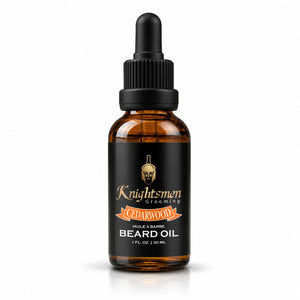
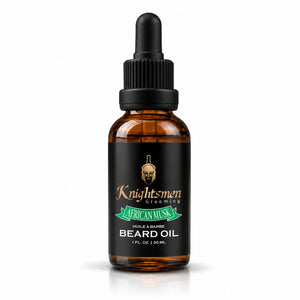
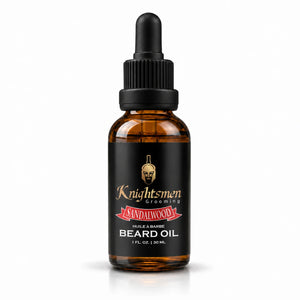
Our Cedarwood, Sandalwood and African Musk oils are scented with cedarwood oil, sandalwood oil or a natural musk fragrance, so they are not the right pick if fragrance bothers your skin. Whichever oil you choose, patch test first, start with a small amount and build up to your normal amount.

Knightsmen Recommends
Organic Beard Oil | Classic
Fragrance-free, with no added scent: organic grape seed, coconut, argan, jojoba, castor seed and black cumin seed oils with vitamin E and rosemary leaf extract. This is the oil this guide recommends for sensitive skin; see the full ingredient list on the product page.
Shop Now →Frequently asked questions
What is the difference between fragrance-free and unscented beard oil?
A fragrance-free product should contain no added fragrance ingredients. "Unscented" only tells you that you cannot smell much: the American Academy of Dermatology explains that an unscented product can have its fragrance covered up rather than removed, and a covered-up fragrance can still cause a reaction. If fragrance bothers your skin, choose a product labelled fragrance free and check the ingredient list for fragrance or parfum.
How do I patch test a new beard oil properly?
Apply a small amount to clean skin on the inside of your forearm or behind your ear, let it dry and leave it for 24 hours, as Health Canada suggests. For a more thorough test, the AAD suggests your normal amount on a quarter-sized spot twice a day for seven to 10 days. If you see redness, itching, swelling, burning or blisters, wash it off and do not use it again.
Should I use beard oil if I have a skin condition?
Check with your doctor or dermatologist first. If you have a diagnosed condition such as eczema, rosacea or acne, talk to your doctor or dermatologist before adding any new product to the area, and patch test it. Beard oil is a cosmetic, not a treatment for any skin condition.
Is jojoba oil a good choice for sensitive skin?
Jojoba is a common base for beard oils and is often described as similar to the skin's own oils. That does not make it right for everyone, because any plant oil can cause a reaction in someone. Patch test it, and if your skin is very reactive, ask a dermatologist what suits it.
Is a warming or tingling feeling from beard oil normal?
Beard oil should not sting or burn. A faint scent is normal, but heat, stinging or tingling is not a sign that it is working. If you feel burning or stinging, or your skin turns red, wash the oil off and stop using it.
Related guides
- Beard oil guide: benefits and how to use it
- How to wash your beard properly
- Organic vs. regular beard oil: which is actually better?
Sources
- American Academy of Dermatology: A dermatologist's top tips for a healthy beard
- American Academy of Dermatology: How to test skin care products
- American Academy of Dermatology: Itchy skin reactions and fragrance-free products
- Health Canada: Use cosmetics safely
- Health Canada: Industry guide for the labelling of cosmetics
- Cleveland Clinic: What may be causing your itchy beard
Knightsmen Grooming products are cosmetics. This guide is general information, not medical advice. If you have a skin or scalp condition, or sudden changes in your hair, see a doctor or dermatologist.