Free Shipping on Orders $100+ — Canada

Short answer: Beard oil for a dry beard is a leave-in plant-oil blend that softens the hair and moisturizes the skin under it. Look for jojoba, argan and similar plant oils on the label, and apply 3 to 10 drops (by beard length) to a clean, slightly damp beard, working it into the skin first.
A dry beard feels rough and wiry, looks dull and can scratch the skin around it. That is a question of feel and manageability, and beard oil is made for it: it conditions the hair, adds a light sheen and moisturizes the skin underneath. It does not change how the beard grows, and it can only do so much if the habits around it dry the beard out. This guide covers why a beard feels dry, what to look for on a label, and how to adjust your routine through the seasons. For the basics, see our beard oil guide.
Key takeaways
- Dryness is about how the hair feels and behaves. Oil softens and conditions it; it does not change how the beard grows.
- The skin makes its own oil at the base of each hair, so the ends of a longer beard are furthest from it and often feel driest.
- Wash every day with a gentle, hydrating, fragrance-free cleanser, rinse with lukewarm water and moisturize straight after, as the American Academy of Dermatology advises for dry skin.
- Use 3 to 10 drops by length, start low and work the oil into the skin first. In dry winter air, add a drop or two to the dry beard or a little balm over the oil.
- If flaking, redness or itching does not settle, see a doctor or dermatologist.

Knightsmen Recommends
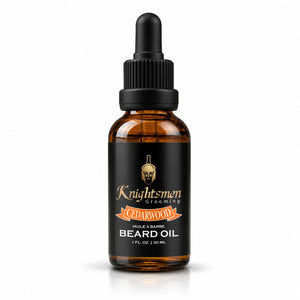
Organic Beard Oil | Classic
Our fragrance-free Classic beard oil, made in Toronto with certified organic ingredients such as jojoba and argan oils, plus vitamin E, with no added scent.
Shop Now →Why does a beard feel dry?
The skin makes its own oil (sebum) in glands at the base of the hairs. As a beard gets longer, the ends are furthest from that oil and often feel the driest. Add dry heat indoors, cold winter air and a cleanser that leaves the skin tight, and the result is a beard that feels rough and wiry.
The skin matters as much as the hair. The American Academy of Dermatology (AAD) notes that without moisturizer the skin beneath a beard can become dry, flaky and itchy, and that the beard can then feel dry and prickly. That is why moisturizing the skin is part of the job, not just conditioning the hair.
What habits make a dry beard worse?
Daily habits often decide how dry a beard feels. These are the ones to check:
- A harsh cleanser or bar soap. The AAD advises a gentle cleanser rather than soap, and for dry skin a hydrating, fragrance-free one.
- Skipping moisturizer after washing. The AAD advises applying it immediately after washing, while the skin is still a little damp.
- Long, hot showers. The AAD's dry skin tips advise keeping showers to about five to ten minutes in warm water, and its beard advice is to rinse well with lukewarm water.
- Rubbing with a towel. Pat the beard dry instead, as the AAD advises, and stop while it is still a little damp.
- Touching and stroking the beard all day. The AAD advises against it, since it moves dirt from your hands to your face.
- Dry winter air. You cannot avoid it, but you can adjust your routine for it (see below).
What should I look for in a beard oil for a dry beard?
Look for a base of plant oils that you can name on the label. Common choices include:
| Plant oil | What it is | How it feels in a beard oil |
|---|---|---|
| Jojoba oil | A liquid wax from the seeds of the jojoba shrub, often described as similar to the skin's own oils | Light and smooth, and spreads easily |
| Argan oil | Pressed from the kernels of the argan tree | Light and soft-feeling, with a little sheen |
| Castor oil | Pressed from castor seeds | Thick and heavy, so it is often used in small proportions |
An unscented oil is the simplest choice if your skin reacts to fragrance. Knightsmen beard oils are made with certified organic ingredients such as jojoba and argan oils, plus vitamin E, without mineral oil, parabens or synthetic fragrance, and the full ingredient list is on each product page. If you would rather avoid any scent, the fragrance-free Classic is Organic Beard Oil | Classic.
How do I apply beard oil to a dry beard?
- Wash with a gentle, hydrating, fragrance-free cleanser, rinse with lukewarm water and pat dry until the beard is slightly damp.
- Pour 3 to 10 drops into your palm: fewer for a short beard, more for a long or thick one. Our guide on how to use beard oil has a table by length.
- Warm the oil between your palms.
- Massage it into the skin for 30 to 60 seconds, then work it through the hair from root to tip, paying attention to the ends.
- Comb or brush to spread it evenly.
If the beard feels dry again later in the day, add a drop or two to the dry hair rather than a second full application.
How should I adjust my routine for winter and summer?
You can usually adjust the amount and the finishing step rather than switching products. A change of a drop or two is usually enough, because more oil does not make a drier beard softer, only greasier:
- Winter: use the upper part of the range for your length, add one or two drops to the dry beard later in the day, or put a small amount of balm over the oil to seal it in.
- Summer: use the lower end of the range, and skip a day if the beard looks greasy.
- Spring and fall: go by feel. The weather changes fastest, so adjust one drop at a time.
Our beard balm vs beard oil guide explains when a balm is worth adding.
What else can I do when my beard still feels dry?
Check the basics before adding more product:
- Technique: make sure the oil reaches the skin, and that the beard is damp, not dripping or fully dry.
- Cleanser: if the skin feels tight after washing, switch to a more hydrating, fragrance-free one and moisturize right away.
- Ends: frayed ends feel rougher than the rest, and a regular trim keeps the beard even and smoother to the touch.
- Consistency: a small amount every day suits a beard better than a heavy dose now and then.
If the skin under your beard stays flaky, red or itchy, see a doctor or dermatologist rather than adding more product.
Frequently asked questions
How often should I use beard oil on a dry beard?
Once a day, after washing, is the usual routine. In dry winter air you can add a drop or two to the dry beard later in the day. If the beard looks greasy, use fewer drops or skip a day. The AAD advises using beard oil sparingly because you can always add more.
Can beard oil make my beard greasy?
Yes, if you use too much. Start with the lower end of the range for your beard length, add one drop at a time, and work the oil into the skin as well as the hair so it is not all sitting on the surface. A comb or brush then spreads it evenly.
Why does my beard still feel dry after using oil?
Common reasons are oil that stays on the surface, too few drops for the length, a cleanser that leaves skin tight, and dry winter air. Check your technique first, then your cleanser. If the skin under the beard is flaky, red or itchy and stays that way, see a doctor or dermatologist.
Should I put beard oil on a wet or dry beard?
On a clean, slightly damp beard. The AAD advises patting the face dry after washing and moisturizing right away, while the skin is still a little damp, and says damp skin makes the moisturizing step more effective. Towel-dry first so the beard is damp, not dripping.
Can beard oil repair split ends?
No oil can mend a split end. Oil makes frayed ends feel smoother and less rough, and a trim is what removes them. Regular tidy-ups keep the beard looking even. Our guide on how to trim a beard at home has the method.
Related guides
- Beard oil guide: benefits and how to use it
- How to use beard oil the right way
- Beard oil for coarse beard
- Beard balm vs beard oil: which one does your beard actually need?
Sources
- American Academy of Dermatology: A dermatologist's top tips for a healthy beard
- American Academy of Dermatology: Dermatologists' top tips for dry skin
Knightsmen Grooming products are cosmetics. This guide is general information, not medical advice. If you have a skin or scalp condition, or sudden changes in your hair, see a doctor or dermatologist.