Free Shipping on Orders $100+ — Canada


Short answer: Sandalwood essential oil is a warm, woody-scented oil distilled from the heartwood of sandalwood trees, with Santalum album the most prized species. In beard and hair products it is mainly a fragrance ingredient, blended into carrier oils that do the conditioning.
Sandalwood has a long history in perfumery and in religious and traditional practices across South Asia and beyond. Today it is prized in men's grooming mainly for its rich, warm, woody scent. If you have wondered whether sandalwood is worth the premium, this guide explains what it is, how it smells, how it is used in beard and hair products, and how to choose and use one safely.
Key takeaways
- True sandalwood oil comes from the heartwood of slow-growing Santalum trees, which is why it costs more than most essential oils.
- In a beard oil, the carrier oils condition the hair and skin; sandalwood mainly supplies the scent.
- Check the label for a botanical name such as Santalum Album, not just "fragrance".
- Essential oils are concentrated, so use them in a finished product and patch-test first.

Knightsmen Recommends
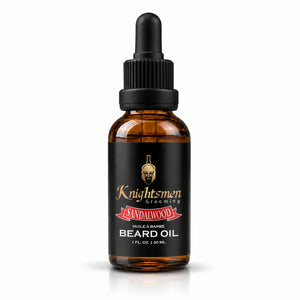
Organic Beard Oil | Sandalwood
The organic sandalwood beard oil this guide describes: a warm sandalwood scent, not sweet or floral, on a base of organic grape seed, coconut, argan, jojoba and castor oils.
Shop Now →What is sandalwood essential oil?
Sandalwood essential oil is usually steam-distilled from the heartwood of trees in the genus Santalum. The species most prized for its oil is Santalum album, known as East Indian or Indian sandalwood. Its scent comes mainly from alpha- and beta-santalol, compounds that make up most of the oil. The trees grow slowly and the oil builds up in the heartwood over many years, so true sandalwood oil is among the costlier essential oils. Many wild stands have declined, and plantations are now an important source.

| Kind of sandalwood | Botanical name | What to know |
|---|---|---|
| East Indian (Indian) sandalwood | Santalum album | The most prized species for oil; slow-growing and costly |
| Western Australian sandalwood | Santalum spicatum | Also distilled for oil, but its make-up differs, with variable levels of santalols |
| Sandalwood fragrance oil | Usually listed as "parfum" | A perfumer's blend that may be natural or synthetic; not the same as an essential oil |
What does sandalwood oil smell like?
Sandalwood is typically described as warm, creamy and woody, sometimes with a soft sweetness that grows richer as it warms on the skin. Perfumers use it as a base note, the part of a scent that lingers after lighter notes such as citrus fade, and some describe it as helping to anchor the other scents in a blend.
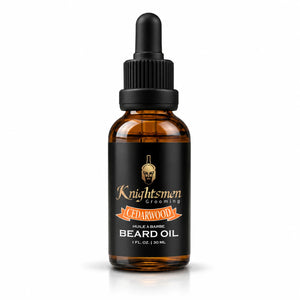
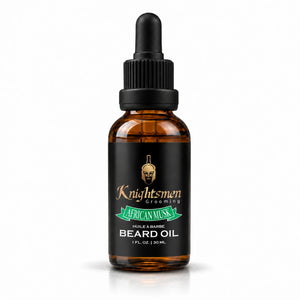
The exact scent depends on the species, how the oil was distilled and what it is blended with. Our Organic Beard Oil | Sandalwood has a warm sandalwood scent that is not sweet or floral, and the matching balm is warm, dry and classic. Sandalwood pairs naturally with cedarwood and musk, and our beard oil bundle lets you compare it with cedarwood and African Musk before committing to a single bottle. Our guide to cedarwood oil describes the drier, smokier alternative.
How is sandalwood oil used in beard care?
In beard products, sandalwood essential oil is a small part of the blend and is there mainly for its scent. The softening and conditioning come from the carrier oils it is mixed into. Our organic sandalwood beard oil lists organic sandalwood oil (Santalum Album) among its ingredients, on a base of organic grape seed, coconut, argan, jojoba and castor oils. It conditions the beard and moisturizes the skin underneath.
For light hold and shaping, use the oil first and then a little organic sandalwood beard balm. It carries the same scent and gets its light hold from shea butter and beeswax.

What does sandalwood oil do in skin and hair products?
Mostly, it adds scent. A hair oil with sandalwood in it feels the way its carrier oils make it feel, so it can add shine and tame frizz, and a body wash can leave a warm, woody scent on the skin. Our organic body wash with coconut, sandalwood and eucalyptus is described on its page as warm, woody and clean.
Research on sandalwood oil and its natural compounds exists but is limited, and much of it is laboratory work or small studies. It does not show what a beard oil or hair oil will do for your skin, and Knightsmen Grooming products are cosmetics, not medical treatments. Think of sandalwood as a fragrance and a finishing touch, and judge a product by how the whole formula feels on you. If you would like a cleanser from the same range, our charcoal facial cleanser is a bar made with organic coconut oil.
How do you use sandalwood beard oil and hair oil?
For a beard, apply the oil after showering, when the beard is clean and slightly damp.
- Dispense 3–6 drops into your palm, depending on beard length.
- Rub your hands together to warm the oil.
- Work it through the beard from root to tip, massaging it into the skin underneath.
- Comb through to spread it evenly, then add a little balm if you want hold.
Start with fewer drops and add more as needed; the American Academy of Dermatology makes the same point about beard oil, advising that you use it sparingly. For the scalp, a scented hair oil can be massaged in at 4–5 drops, two or three times a week, and left on for at least 30 minutes before washing out, or overnight with a towel over the pillow. Our organic hair oil collection includes bergamot, lavender, tea tree and unscented options. Our guide to using beard oil the right way has more detail on technique.
How do you choose a good sandalwood beard oil?
Read the ingredient list before the front label. These checks help:
- A botanical name. "Santalum Album" names the species; a vague "fragrance" or "parfum" line does not.
- Named carrier oils such as jojoba, argan or sweet almond, so you know what the base is.
- What is left out. Mineral oil may be listed as paraffinum liquidum, silicones usually end in "-cone", and parabens end in "-paraben".
- Certification. A COSMOS ORGANIC logo should come with the certifier's name and the organic percentage, and you can search a brand in the COSMOS certified products directory.
- A believable price. Real sandalwood oil is costly, so a very cheap "sandalwood" product deserves a closer look at the label.
Our organic sandalwood beard oil and sandalwood beard balm are COSMOS-certified organic formulas, handcrafted in small batches in Toronto with no mineral oil, parabens or synthetic fragrance. Explore the full beard care collection, or read our guide to certified organic oils to see what certified organic means.
Who is sandalwood oil right for?
Sandalwood suits anyone who likes a warm, dry, woody scent that stays in the background. If you prefer no scent, or fragrance has bothered your skin before, choose a fragrance-free product such as our Organic Beard Oil | Classic. The American Academy of Dermatology suggests beard oil for normal to dry skin; if your skin is oily or very sensitive, ask a dermatologist what suits it.
Whatever you choose, test it first. The American Academy of Dermatology suggests applying a new product to a quarter-sized spot, such as the bend of your elbow, twice a day for seven to 10 days, and stopping if a reaction appears. It also notes that products labelled "unscented", or made with botanical ingredients, can still contain fragrance-related ingredients. According to the Cleveland Clinic, essential oils should always be diluted before they touch skin and kept away from children and pets. If you have a skin condition, see a doctor or dermatologist.
Frequently asked questions
Why is real sandalwood oil expensive?
True sandalwood oil comes from the heartwood of slow-growing Santalum trees, and the oil builds up in that wood over many years. Demand is rising, many wild populations have declined, and plantations take a long time to mature. That makes pure sandalwood oil one of the costlier essential oils, and it is why a very cheap "sandalwood" product is worth a closer look at the label.
Is sandalwood essential oil the same as sandalwood fragrance oil?
No. An essential oil is distilled from the plant itself, while a fragrance oil is a perfumer's blend that can be natural, synthetic or both. On an ingredient list, a fragrance oil usually appears as "parfum", whereas a sandalwood essential oil appears under a botanical name such as Santalum Album. The label is the quickest way to tell which one you are buying.
Can I put sandalwood essential oil straight on my skin or beard?
No. Essential oils are concentrated, and the Cleveland Clinic advises always diluting them before they go on skin and never applying them straight from the bottle. A finished beard oil already has the sandalwood blended into carrier oils, so use that instead, patch-test any new product first and keep it away from your eyes.
Does sandalwood beard oil treat beard itch or skin conditions?
No. Beard oil is a cosmetic, not a treatment. Dry skin under a beard is a common reason for a tight, itchy feeling, and moisturizing the skin can make it more comfortable; the carrier oils do that work, while sandalwood adds scent. If the itch lasts, or comes with redness, a rash or sores, see a doctor or dermatologist.
How long does the scent of sandalwood beard oil last?
Sandalwood is a base note, so it tends to linger longer than lighter notes such as citrus. How long you notice it depends on how many drops you use, what else is in the blend and your own skin, so there is no fixed time. If you want a stronger scent, add a drop at a time rather than applying a lot at once.
Shop these products
Sources
- PLOS ONE (2013): Biosynthesis of sandalwood oil: Santalum album CYP76F cytochromes P450 produce santalols and bergamotol. PubMed 24324844, doi:10.1371/journal.pone.0075053
- Phytochemistry (2015): The transcriptome of sesquiterpenoid biosynthesis in heartwood xylem of Western Australian sandalwood (Santalum spicatum). PubMed 25624157, doi:10.1016/j.phytochem.2014.12.009
- American Academy of Dermatology: How to test skin care products
- American Academy of Dermatology: A dermatologist's top tips for a healthy beard
- Cleveland Clinic: Aromatherapy
- COSMOS-standard: Certified Products Directory
Knightsmen Grooming products are cosmetics. This guide is general information, not medical advice. If you have a skin or scalp condition, or sudden changes in your hair, see a doctor or dermatologist.