Free Shipping on Orders $100+ — Canada


Short answer: Cedarwood oil is an essential oil distilled from the wood of cedar and related conifer trees and valued in grooming for its warm, dry, woody scent. In beard and hair products it is mainly a fragrance ingredient; the carrier oils it is blended with do the conditioning.
Cedarwood has been used for centuries in many cultures, for its aroma and in traditional practices, and today it is a familiar woody scent in men's grooming. This guide covers what cedarwood oil is, how it smells, how it is used in beard and hair products, and how to choose one that suits your skin.
Key takeaways
- "Cedarwood" on a label can mean different trees, so look for the botanical name.
- Our cedarwood beard oil and balm use Atlas cedar (Cedrus atlantica), a clean, woodsy scent.
- The carrier oils condition the beard; cedarwood supplies the scent.
- Essential oils are concentrated, so use them in a finished product and patch-test first.

Knightsmen Recommends
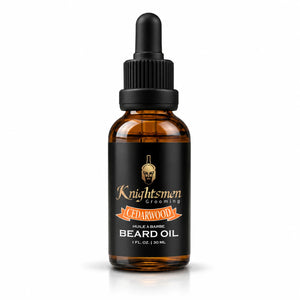
Organic Beard Oil | Cedarwood
The organic cedarwood beard oil this guide describes: a clean, woodsy cedarwood scent on a base of organic grape seed, coconut, argan, jojoba and castor oils that conditions the beard and moisturizes the skin underneath.
Shop Now →What is cedarwood oil?
Cedarwood oil is an essential oil distilled from the wood of cedar and related conifer trees. The name covers several different trees, so the chemistry and scent of the oil vary from one type to the next. Atlas cedarwood (Cedrus atlantica) comes from the Atlas Mountains of North Africa, and analyses of its wood oil list himachalenes among the main components, with the make-up varying by where the trees grow. Virginian cedarwood, by contrast, comes from Juniperus virginiana, a juniper rather than a true cedar.

| Type | Botanical source | Where it grows |
|---|---|---|
| Atlas cedarwood | Cedrus atlantica | Atlas Mountains of North Africa |
| Himalayan cedarwood | Cedrus deodara | The western Himalayas |
| Virginian cedarwood | Juniperus virginiana (a juniper) | Eastern North America |
In grooming products, cedarwood is blended into carrier oils such as jojoba, argan or sweet almond oil, which dilute the essential oil and add their own moisturizing feel.
What does cedarwood oil smell like?
Cedarwood has a warm, dry, woody scent with a soft, slightly smoky edge. Our own product descriptions call the cedarwood beard oil "clean and woodsy", and describe the cedarwood base of our Jasper soy candle as warm, dry and slightly smoky. It is grounding rather than sweet, and it layers well with sandalwood, bergamot and musk.
Cedarwood suits people who like a scent that sits in the background: it is present without being aggressive. If you would like to try several scents before choosing, our beard oil bundle includes cedarwood alongside sandalwood, African Musk and an unscented Classic, and our guide to sandalwood essential oil covers the warmer, creamier alternative.
How is cedarwood oil used in beard care?
In beard products, cedarwood essential oil provides the scent and the carrier oils do the conditioning. Our organic cedarwood beard oil lists Cedrus Atlantica (organic cedarwood oil) among its ingredients, on a base of organic grape seed, coconut, argan, jojoba and castor oils. It softens the beard and moisturizes the skin underneath.
For light hold, follow the oil with our organic cedarwood beard balm. Oil first, balm second: you get conditioning from the oil and light shaping from the balm, in one consistent scent. The balm gets its light hold from shea butter and beeswax. Warm a small amount between your palms and work it through the beard; a little goes a long way.
How is cedarwood oil used in skin and hair products?
Cedarwood also appears in some shampoos and hair products, where it is mostly a scent ingredient. Our rosemary shampoo and conditioner set includes cedarwood oil in the shampoo, and our organic hair oils come in bergamot, lavender, tea tree and unscented versions.
Much of the published research on cedarwood oil is laboratory work, which does not tell us how a beard oil or hair product will perform on your skin. Think of cedarwood as a fragrance ingredient, not a skincare treatment, and choose a product by its scent and by how the whole formula feels on you. For a cleanser from the same range, there is our facial cleanser with coconut and charcoal, a bar made with organic coconut oil.
How do you use cedarwood beard oil?
Apply it once a day, ideally after showering, when your beard is clean and slightly damp.
- Dispense 3–6 drops into your palm, depending on beard length.
- Rub your hands together to warm the oil.
- Work it through the beard from root to tip, massaging it into the skin underneath.
- Comb it through to spread it evenly.
A small daily habit works better than occasional heavy use, because dry weather and washing can leave hair and skin feeling dry. Start with fewer drops and add more if your beard is long or the skin feels tight; the American Academy of Dermatology advises using beard oil sparingly because you can always add more. Our guide to using beard oil the right way has more detail on technique.
How do you choose a good cedarwood beard oil?
What is in the bottle matters more than the front label, so read the ingredient list first.
- A botanical name. "Cedrus Atlantica", "Cedrus Deodara" or "Juniperus Virginiana" tells you which cedarwood it is; a vague "fragrance" or "parfum" line does not.
- Named carrier oils such as jojoba, argan or sweet almond.
- What is left out. If you want to avoid mineral oil, synthetic fragrance or parabens, the list shows whether they are there.
- Certification. A COSMOS ORGANIC logo should come with the certifier's name and the organic percentage, and you can search a brand in the COSMOS certified products directory.
Our organic cedarwood beard oil is a COSMOS-certified organic formula, handcrafted in small batches in Toronto with no mineral oil, parabens or synthetic fragrance. Explore the full beard care collection, or read our guide to certified organic oils to see what certified organic means.
Who is cedarwood oil right for?
Cedarwood suits anyone who likes a clean, dry, woody scent and wants an oil and balm in matching fragrances. If you prefer no scent, or fragrance has bothered your skin before, choose a fragrance-free product such as our Organic Beard Oil | Classic. The American Academy of Dermatology suggests beard oil for normal to dry skin; if your skin is oily or very sensitive, ask a dermatologist what suits it.
Test any new product first. The American Academy of Dermatology suggests a quarter-sized spot, such as the bend of your elbow, twice a day for seven to 10 days, and stopping if a reaction appears. The Cleveland Clinic advises diluting essential oils before they touch skin and keeping them away from children and pets. If you have a skin condition, see a doctor or dermatologist.
Frequently asked questions
What is the difference between Atlas, Himalayan and Virginian cedarwood?
They come from different trees. Atlas cedarwood (Cedrus atlantica) and Himalayan cedarwood (Cedrus deodara) come from true cedars, while Virginian cedarwood comes from Juniperus virginiana, a juniper. Each oil has its own chemistry and a slightly different scent. Our cedarwood beard oil and balm list Cedrus Atlantica, so they use Atlas cedarwood. When comparing products, look for the botanical name on the label.
Does cedarwood oil help hair or beard growth?
No oil grows hair by itself. Hair and beard growth depend mainly on genetics, age and general health. A cedarwood beard oil can help the beard look and feel conditioned and the skin underneath feel moisturized, which is a cosmetic effect. Research on essential oils and hair is limited and mostly small, and it is not a medical treatment. See a doctor for sudden or patchy hair loss.
Can I use cedarwood essential oil directly on my skin?
No. Essential oils are concentrated, and the Cleveland Clinic says they should always be diluted before they go on skin. That is why cedarwood is blended into carrier oils in a beard oil or balm. Use a finished product rather than the bottle of essential oil, patch-test it first and keep it away from your eyes.
Is cedarwood oil good for sensitive skin?
It depends on your skin. Any essential oil can bother some people, and "natural" does not mean a product will suit every skin. The American Academy of Dermatology suggests testing a new product on a quarter-sized spot, such as the bend of your elbow, twice a day for seven to 10 days. If fragrance is a problem for you, choose a fragrance-free product such as our Organic Beard Oil | Classic.
How many drops of cedarwood beard oil should I use?
Most people use three to six drops, depending on beard length. Warm the oil in your palms, work it through the beard from root to tip and massage it into the skin underneath. The American Academy of Dermatology advises using beard oil sparingly, because you can always add more.
Shop these products
Sources
- Chemistry & Biodiversity (2011): Chemical variability of the wood essential oil of Cedrus atlantica Manetti from Corsica. PubMed 21337506, doi:10.1002/cbdv.201000094
- American Academy of Dermatology: How to test skin care products
- American Academy of Dermatology: A dermatologist's top tips for a healthy beard
- Cleveland Clinic: Aromatherapy
- COSMOS-standard: Certified Products Directory
Knightsmen Grooming products are cosmetics. This guide is general information, not medical advice. If you have a skin or scalp condition, or sudden changes in your hair, see a doctor or dermatologist.