Free Shipping on Orders $100+ — Canada


Short answer: Lavender oil is a floral, herbal essential oil, steam-distilled from the flowering parts of the lavender plant, that is added in small amounts to hair oils and balms for its scent. Research on lavender and hair is limited, and it is not a medical treatment.
Lavender is one of the most familiar scents in grooming, and online it gets credited with a long list of benefits. This guide sticks to what we can say plainly: what the oil is, how it smells, how it is used, how to choose a product and use it safely, and what the research does not show.
Key takeaways
- Lavender oil (Lavandula angustifolia) is used in hair care mainly for its scent and as a traditional scalp-care ingredient.
- In a hair oil, lavender is a small part of the blend. The carrier oils decide how it feels and do the conditioning.
- Essential oil should never go on skin undiluted, and any new product deserves a patch test first.
- Research on lavender and hair is limited and mostly in animals. No oil grows hair by itself.
- Check the label for the botanical name, and see a doctor about sudden or patchy hair loss.

Knightsmen Recommends
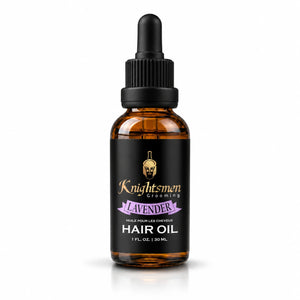
Organic Hair Oil | Lavender
The lavender hair oil this guide is about, made with certified organic ingredients: a soft floral scent in a light, fast-absorbing oil that conditions the hair and scalp.
Shop Now →What is lavender oil?
Lavender oil is the essential oil of the lavender plant, usually steam-distilled from its flowering stems. The plant behind true or English lavender oil is Lavandula angustifolia, which is native to the Mediterranean region.
Lavender is cultivated worldwide for perfume, cosmetics, food and aromatherapy products. Among its main aroma compounds are linalool and linalyl acetate. Lavandin, a hybrid of lavender and a related species, is also distilled into oil, so "lavender" on a label does not always mean the same plant.
Essential oils are highly concentrated plant extracts. That is why hair products use only small amounts, blended into carrier oils such as jojoba, sweet almond or argan.
What does lavender smell like, and how does it feel in a hair oil?
Lavender smells floral, herbal and clean. It is softer than tea tree's sharp edge or bergamot's bright citrus, and in a finished hair oil it usually reads as a light background note rather than a perfume.
The feel comes from the carrier oils, not the lavender. Lavender essential oil is light and volatile, so it adds scent rather than body. The weight, glide and finish of a hair oil come from the base it is blended into. The product page for our Organic Hair Oil | Lavender describes it as light and fast-absorbing.
Many people enjoy the smell as part of a wind-down routine. The National Center for Complementary and Integrative Health (NCCIH) says the evidence on lavender aromatherapy and sleep is unclear, so think of it as a pleasant ritual, not a medical benefit.
How is lavender oil used in hair and beard care?
Mostly for scent, and as a traditional ingredient in scalp care. You will find it in hair oils, balms, shampoos and conditioners, and in beard oils and balms from many brands.
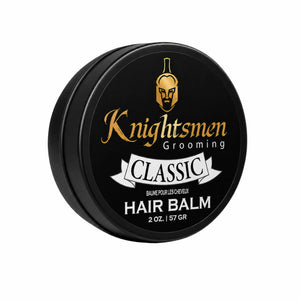
A lavender hair oil can be used two ways: worked through the lengths of damp or dry hair as a finishing oil, or massaged into the scalp before washing. Our Organic Hair Balm | Lavender is a shea butter and beeswax styling balm with light-to-medium hold and a matte finish.
The same rules apply on the face: patch-test first and go lightly. The American Academy of Dermatology says beard oil suits normal to dry skin and should be used sparingly. Our beard oils use other scents (sandalwood, cedarwood, African musk and an unscented Classic), so lavender is a hair-care scent for us.
What does the research on lavender oil and hair show?
Very little, and the best-known study was done in mice. NCCIH's lavender page covers research on anxiety, sleep and other uses, but it does not mention hair or scalp care at all.
A study often cited online is a 2016 experiment in mice, published in Toxicological Research. Researchers applied lavender oil solutions to the backs of the mice for four weeks and looked at changes in the skin and hair follicles under a microscope. It was a small animal study, so it does not show what a lavender product does on a man's scalp.
The honest summary: lavender is a pleasant, widely used scent, and the research on its effect on hair is limited. No oil grows hair by itself. For sudden hair loss, patchy loss, or a scalp that stays itchy or sore, see a doctor or dermatologist.
How do I choose a good lavender oil or hair oil?
Start with the ingredient list. In Canada, cosmetic ingredients are listed by INCI name, and for true lavender oil that name includes Lavandula angustifolia. Lavandin is a different plant, so the botanical name is worth checking. A named oil also tells you more than "parfum" or "fragrance", which Health Canada says means the product contains a fragrance or a masking agent. Even "unscented" can mean a scent has been masked.
- Organic certification. COSMOS-standard sets the rules for organic and natural cosmetics. Look for the COSMOS ORGANIC mark, the certifier's name and the organic percentage.
- Storage. Essential oils can break down with exposure to air, sun and heat, so choose a tightly closed bottle and keep it somewhere cool and dark.
- Questions. Health Canada says you can contact the business named on the label if you want to know more about an ingredient.
Our hair oils and balms are COSMOS-certified organic and handcrafted in small batches in Toronto, with no mineral oil, parabens or synthetic fragrance. Explore our hair care range and hair oil collection, or read our guide to choosing an organic hair oil in Canada.
How do I use lavender hair oil?
A ready-made hair oil is already diluted, so you do not need to measure anything. Essential oil should never go on skin straight from the bottle.
- Patch-test first. Apply a small amount to your inner forearm twice a day for four to five days, as the American Academy of Dermatology suggests for new skin-care products. If the skin looks normal, you can go ahead.
- Wash your hair as usual. Our rosemary shampoo and conditioner bundle is one option.
- Apply 3 to 6 drops to clean, slightly damp hair after showering.
- Work it from the scalp to the tips with your fingertips, then comb through.
- For a scalp-oiling routine, massage a few drops into the scalp two or three times a week.
Keep it away from your eyes, cuts and broken skin. If you ever blend your own, Cleveland Clinic's aromatherapy guidance for massage is about 1% essential oil in a carrier oil.
Who should be careful with lavender oil?
Any essential oil can cause trouble for some people. NCCIH says topical products containing lavender may cause allergic skin reactions, and that a few cases of swelling of breast tissue have been reported in children who used them, though it is unclear whether lavender was the cause.
- Children and pets. Cleveland Clinic says to keep essential oils away from both.
- Pregnancy and breastfeeding. NCCIH says little is known about lavender in these cases, so ask your doctor first.
- Some health conditions. Cleveland Clinic says aromatherapy may not be safe for people with conditions such as epilepsy, asthma and some skin conditions. Check with your doctor.
- Nut allergy. Some carrier oils, such as sweet almond oil, come from tree nuts. Read the full ingredient list.
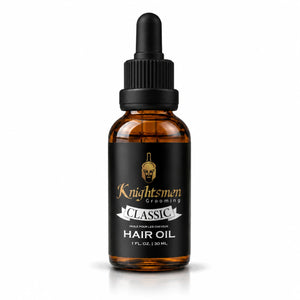
- Scent sensitivity. Choose an unscented oil, such as our Organic Hair Oil | Classic.
How does lavender compare with tea tree and bergamot?
Choose by scent first. All four Knightsmen hair oils share the same base, so scent is the main difference. The Hair Oil Discovery Set includes bergamot, lavender, tea tree and unscented in four 5 ml bottles, so you can try each scent before buying a full bottle.
| Oil | Made from | Scent | Main safety note |
|---|---|---|---|
| Lavender (Lavandula angustifolia) | Flowering stems, steam-distilled | Floral, herbal, clean | May cause allergic skin reactions in some people |
| Tea tree (Melaleuca alternifolia) | Leaves, steam-distilled | Fresh, sharp, herbal | Never swallow it. Old or poorly stored oil is more likely to irritate skin |
| Bergamot (Citrus bergamia) | Fruit peel, pressed or distilled | Bright citrus, slightly herbal | Can make skin more sensitive to sunlight |
| Unscented (Classic) | No essential oil added | Fragrance-free | Still patch-test and read the full ingredient list |
Read more in our guides to tea tree oil in hair and scalp care and bergamot oil in hair and scalp care.
Frequently asked questions
Does lavender oil help hair grow?
Lavender oil has not been shown, on its own, to change how hair grows in men. The research that exists is small and mostly in mice, and no oil grows hair by itself. Lavender is in a hair oil mainly for its scent, while the carrier oils condition the hair. For sudden or patchy hair loss, see a doctor or dermatologist.
Is lavender oil safe to put on my scalp?
Lavender is widely used in diluted, ready-made hair products, but it can still cause an allergic reaction in some people. Never apply essential oil straight from the bottle, patch-test a new product on your forearm first, and keep it away from your eyes and from cuts or broken skin.
Can I use lavender essential oil straight from the bottle?
No. Essential oils are highly concentrated plant extracts, and Cleveland Clinic says never to apply them directly to your body from the bottle. Use a ready-made, diluted product. If you blend your own, use a carrier oil and a small amount of essential oil: about 1% for massage, according to Cleveland Clinic.
How often should I use lavender hair oil?
Use a few drops daily or every second day as a conditioning oil, following the label. For a scalp-oiling routine, we suggest two or three times a week. More is not better: a few drops is enough, and too much will leave your hair greasy.
Is lavender a good choice for a sensitive scalp?
Not automatically. Any essential oil can irritate sensitive skin, and natural does not mean it suits everyone. Patch-test first, or choose an unscented oil such as Organic Hair Oil | Classic. If your scalp is often red, sore or flaky, see a doctor or dermatologist instead of adding more products.
Shop these products
Sources
- National Center for Complementary and Integrative Health: Lavender, usefulness and safety
- Cleveland Clinic: What is aromatherapy?
- American Academy of Dermatology: skin-care tips, including how to test a new product
- American Academy of Dermatology: A dermatologist's top tips for a healthy beard
- Health Canada: Cosmetic advertising, labelling and ingredients
- COSMOS-standard: COSMOS certification
- Lee BH, Lee JS, Kim YC. Toxicological Research 2016;32(2):103-108 (the mouse study).
Knightsmen Grooming products are cosmetics. This guide is general information, not medical advice. If you have a skin or scalp condition, or sudden changes in your hair, see a doctor or dermatologist.