Free Shipping on Orders $100+ — Canada

Short answer: A beard style is a chosen shape and length of facial hair, from 3–5mm designer stubble to a year-long yeard, matched to your face shape and the upkeep you will actually do. Designer stubble is the easiest to maintain, and the short boxed beard is the easiest full-beard style.
Key takeaways
- Designer stubble (3–5mm) needs a trimmer on a 2 or 3 guard every 2–3 days and just 2–3 drops of beard oil.
- The short boxed beard (1–2 inches) suits a wider range of face shapes than longer styles and is the easiest full-beard style.
- Match the style to your face: add length on a round face, add width on an oblong or rectangular face.
- Define the edges: the neckline sits two finger-widths above the Adam's apple, and the cheek line follows your natural growth.
- Apply beard oil daily and work it into the skin first; add beard balm for hold on longer or shaped styles.
Most men pick a beard style the same way — they let it grow until it becomes something and call it that. The problem is that approach rarely lands on the best look for your face, your hair texture, or your actual grooming tolerance. This guide covers 13 beard styles that work in practice: what they look like, who they suit, how to maintain them, and what products keep them looking intentional rather than accidental.
Whether you're starting from scratch or refining what you have, here's the full picture.

Knightsmen Recommends
Organic Beard Oil | Classic
The fragrance-free version of the jojoba, argan, and castor oil blend behind every style in this guide — a good starting point for sensitive skin or cologne wearers.
Shop Now →The most popular beard styles for men right now
The most popular beard styles for men in 2026 are the short boxed beard, stubble (both designer and heavy), the circle beard, the full beard, the van dyke, the goatee, and the corporate beard. These range from a few days of growth to several months of committed maintenance.
Short beard styles
1. Designer stubble (3–5mm)
The most worn beard style on the planet for a reason. Designer stubble sits at 3–5mm — past the point where it looks like you forgot to shave, short enough that it reads intentional. It works on every face shape, takes less than two minutes to maintain with a trimmer set to a 2 or 3 guard, and requires minimal product. A few drops of beard oil on the skin underneath keep it moisturized and the new hair soft, which makes the early stages of facial hair easier to stick with.
Face shapes: All
Maintenance: Trim every 2–3 days
Product: 2–3 drops of beard oil on clean skin daily
2. Heavy stubble (7–10mm)
Heavy stubble is often rated the most attractive beard length in perception research — it reads as mature and masculine without the full commitment of a beard. At 7–10mm, it's long enough to have real texture and shape, short enough to maintain easily. Trim the neckline and cheek line to keep it from looking unkempt. This length is where beard oil becomes genuinely important — the hair is long enough to be visible but short enough that it's still sitting against your skin most of the day.
Face shapes: All, particularly good for rounder faces
Maintenance: Trim 1–2x per week
Product: Beard oil daily; optional light beard balm for shape
3. Short boxed beard (1–2 inches)
A short boxed beard is a full beard kept tight and well-defined. The cheek line is clean, the neckline is precise, and the length stays between 1–2 inches throughout. It reads professional, works in most environments, and suits a wider range of face shapes than longer styles. This is the "entry-level full beard" — most men who commit to a beard end up here within the first few months. The boxed shape is created by trimming the sides slightly shorter than the chin, then defining sharp corners at the jaw.
Face shapes: All; particularly good for round and oval faces
Maintenance: Shape weekly, trim every 10–14 days
Product: Beard oil daily + beard balm for edge definition
4. Corporate beard (1–1.5 inches, natural shape)
The corporate beard is the office-appropriate full beard — long enough to be clearly a beard, short enough that it doesn't read as rugged or untamed. Think of it as the short boxed beard with slightly softer edges and less architectural precision. The defining feature is that the natural growth pattern is respected rather than forced into a hard geometric shape. This beard communicates groomed without looking like you spent an hour on it.
Face shapes: Oval, rectangular, square
Maintenance: Trim every 1–2 weeks
Product: Beard oil and comb daily
Classic beard styles
5. Full beard
A full beard is grown-out facial hair covering the cheeks, jaw, mustache, and chin at a length you've chosen rather than arrived at by default. The difference between a full beard and an unkempt beard is maintenance: clean neckline (the Adam's apple is the lower bound), trimmed cheek line, and consistent length throughout. Full beards require the most product investment — the longer the beard, the harder it is for the skin's natural oils to reach the tips, which means dryness, breakage, and the rough texture most men associate with beard problems. A daily beard oil routine helps keep the hair conditioned and soft.
Face shapes: Best on oblong, rectangular, or diamond shapes
Maintenance: Shape cheek and neckline weekly; full trim monthly
Product: 5–7 drops of beard oil on skin and through hair daily; beard balm for hold and shape
6. Garibaldi
The Garibaldi is a wide, rounded full beard worn at 4–6 inches with a rounded bottom rather than a pointed or squared-off shape. It's one of the most natural-looking long beard styles — the rounded silhouette comes from trimming the bottom in a curved line rather than a straight one. Associated with craftsmen, musicians, and the outdoors. High-maintenance at the skin level despite looking effortless: the length means beard oil every single day is non-negotiable, and beard balm keeps the bulk manageable without looking product-heavy.
Face shapes: Oval, oblong, rectangular
Maintenance: Monthly shape, weekly oil and comb
Product: Beard oil (7+ drops) daily; beard balm for texture and control
7. Yeard (one-year beard)
A yeard is simply a beard grown for a full year without cutting the length — only the neckline and occasional shape maintenance. At 12 months, most men end up with 4–6 inches depending on their growth rate. The yeard is the ultimate commitment piece. The product demands scale with the length: men growing a yeard typically use 8–10 drops of beard oil daily by the end, plus combing twice a day to distribute it evenly. The payoff is a beard that has real weight, texture, and presence.
Face shapes: Works best on longer, narrower face shapes
Maintenance: Neckline monthly; no length trimming
Product: Daily beard oil is mandatory; beard balm for day-shaping
Shaped beard styles
8. Van Dyke
A Van Dyke combines a mustache and goatee with no connection to the cheeks — the area between them is clean-shaved. The chin beard typically comes to a slight point and the mustache is often styled upward at the ends. It reads theatrical and confident. More popular in the 1990s but cycling back as facial hair styles broaden. Requires precision maintenance: keeping the cheeks clean while growing the chin and upper lip is more work than a full beard. Electric foil razor handles the cheek shaving while scissors or precision trimmer maintain the goatee shape.
Face shapes: Best on oblong and oval faces; avoid if you have a long chin
Maintenance: Cheek shave every 2–3 days; shape trim weekly
Product: Light beard oil on chin and mustache; optional beard balm for mustache control
9. Circle beard
The circle beard connects the mustache to a rounded goatee in a continuous oval shape. It's one of the most versatile shaped beard styles — precise enough to look intentional, mainstream enough for most professional settings. The key is keeping the connecting lines symmetrical and the roundness consistent, which requires a steady hand with a razor or precision trimmer. A circle beard can make a wide face appear longer and a long face appear more balanced depending on how wide the oval is drawn.
Face shapes: Versatile; adjustable based on oval width
Maintenance: Define edges every 2–3 days
Product: Beard oil or balm on the chin area daily
10. Goatee
A true goatee is only the chin — no mustache. The chin patch sits directly below the lower lip and can be worn narrow and pointed or fuller and rounded. In practice, most people use "goatee" to describe what is technically a circle beard (with mustache). The pure goatee is a distinct style: it elongates round faces significantly, adds definition to soft jawlines, and requires minimal product. The edges are razor-defined every 2–3 days.
Face shapes: Best for round, heart, and diamond shapes
Maintenance: Edge definition every 2 days
Product: Minimal — a few drops of beard oil on the chin patch
11. Balbo
The Balbo is a goatee connected to a floating mustache (the two elements are separate, not joined). It's the most technical of the shaped styles — maintaining the gap between the floating mustache and the chin beard requires daily precision. Popular because it works well on men who can't grow full cheek coverage, and because it creates strong jawline definition. Robert Downey Jr.'s Tony Stark beard is a well-known modern reference point.
Face shapes: Oval, diamond, heart
Maintenance: Edge definition every 1–2 days
Product: Light beard oil; beard balm for mustache hold
Mustache styles
12. The Chevron
The Chevron is the workhorse mustache — thick, full, trimmed to follow the natural upper lip line, and covering the top lip without extending past the corners of the mouth. Tom Selleck made it famous; it's been coming back steadily. Low maintenance as mustaches go: trim the length so it doesn't cover the lip, keep the corners clean. Works best on men with a full upper lip and strong jaw. Looks weak on men with thin lips.
Face shapes: Oval, square, rectangular
Maintenance: Trim weekly; corner clean-up every 3–4 days
Product: Small amount of beard balm worked through to train the hair
13. The Handlebar
The handlebar mustache grows past the corners of the mouth and is styled upward and outward using wax or a firm balm. The curl at the tips is the defining feature — how pronounced it is determines whether it reads as artistic or costume. A subtle handlebar with just a slight upturn works in most contexts. Getting there requires growing the mustache for 2–3 months without trimming the length, then training the curl with daily product application. Firm hold products are essential.
Face shapes: Oval, oblong, rectangular
Maintenance: Style daily; trim shape monthly
Product: Beard balm worked into tips and shaped daily
Beard styles by face shape
Round face
The goal is to add length and reduce width. Best styles: full beard with a pointed or angular chin, Van Dyke, Garibaldi (the height adds length). Avoid round or circular shapes that echo the face shape.
Square face
Strong jaw already exists — the goal is to soften it slightly. Best styles: full beard worn round at the bottom, short boxed beard with rounded edges, circle beard. Avoid hard, angular shapes that amplify the jaw.
Oval face
The most versatile shape — almost every beard style works. Best styles: any of the above, adjusted for personal preference. The circle beard and short boxed beard are particularly clean choices.
Oblong/rectangular face
The goal is to add width and reduce length. Best styles: full beard grown wider at the sides, Garibaldi, short boxed beard with full cheek coverage. Avoid goatees or pointed chins that extend the length further.
Diamond face
Wide cheekbones and narrow jaw. Best styles: full beard to fill out the jaw, Balbo (adds chin width), circle beard. Avoid styles that draw attention to cheekbone width.
How to maintain any beard style
The maintenance routine is the same regardless of the style you choose — what changes is the frequency and which tools you use.
- Define your edges. Neckline sits two finger-widths above the Adam's apple. The cheek line follows your natural growth or is cleaned up just above it. These two lines are what turn a beard into a style.
- Apply beard oil daily. Pour 3–5 drops into your palm, rub palms together to warm the oil, then work it into the skin first — not just over the surface of the hair. The skin underneath is what dries out. The oil gets to the hair on the way out.
- Use beard balm for shape and hold. For longer beards or styles with structured shape (handlebar, Balbo, boxed beard), a small amount of beard balm worked through damp hair holds the shape and tames flyaways.
- Comb daily. A beard comb or brush trains the hair to grow in the direction you want it. On longer beards, combing distributes the oil evenly from root to tip.
The right beard oil for your style
The carrier oils are what matter — not the fragrance. A quality beard oil uses cold-pressed jojoba, argan, and castor oil as its base. Jojoba is often described as similar to the skin's own oils and feels light on the hair. Argan conditions the hair shaft and leaves it soft and manageable. Castor oil is a thick, rich oil that adds weight and body to the beard.
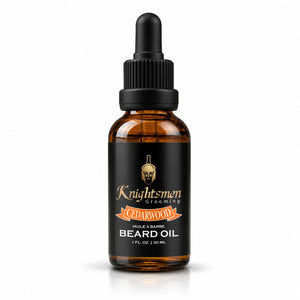
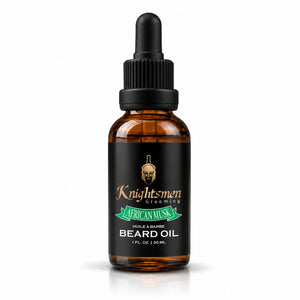
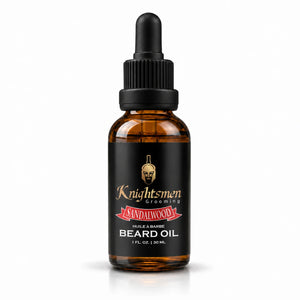
Knightsmen's Organic Beard Oil is made with all three, alongside other organic carrier oils, and comes in four variants — Cedarwood (everyday clean scent), Sandalwood (rich and warm), African Musk (earthy and subtle), and Classic, which is unscented (for sensitive skin or cologne wearers). For most beard styles, the Cedarwood is the natural starting point.
For longer styles that need hold alongside conditioning, pair the oil with the Organic Beard Balm. Oil goes in first, balm on top for shape.
Frequently asked questions
What is the most attractive beard style for men?
Heavy stubble (7–10mm) is often rated as the most attractive beard length in perception research, although findings vary between studies. It reads as mature and masculine without the full commitment of a beard. For longer styles, the short boxed beard is the most universally flattering — it works on most face shapes and reads as intentional rather than accidental.
What beard style suits a round face?
For round faces, choose styles that add length and reduce perceived width. A full beard with a slightly pointed chin, a Van Dyke, or a Garibaldi are the best options. Avoid round or circular beard shapes — they mirror the face shape and add width. Keeping the sides trimmer than the chin creates the illusion of a longer, more oval face shape.
How do I keep my beard style looking neat?
Two things determine whether a beard looks neat: defined edges and daily conditioning. The neckline sits two finger-widths above the Adam's apple — below that gets shaved. The cheek line is cleaned up to match your natural growth. Daily beard oil applied to the skin (not just the hair surface) keeps the skin moisturized and the hair soft, which is what makes a beard look maintained rather than wild.
What beard style is easiest to maintain?
Designer stubble (3–5mm) is the easiest beard style to maintain. It requires a trimmer set to a 2 or 3 guard every 2–3 days and minimal product. The short boxed beard is the easiest full beard style — it's forgiving with growth patterns and requires only weekly trimming once you're at the right length.
What products do I need for beard styling?
The two essential products are beard oil and beard balm. Beard oil goes on daily — it conditions the skin underneath and softens the hair itself. Beard balm adds light hold for shaping and is used when you need the beard to stay in place during the day. For stubble and short beards, oil alone is sufficient. For longer styles, both together give conditioning and control.
How long does it take to grow a beard?
Beard growth varies a lot with genetics and age, so there is no single timeline. Cleveland Clinic gives an average of 4 to 6 inches a year for hair in general, which is only a rough guide for a beard. Designer stubble comes first, a short boxed beard and a full beard take progressively longer, and a Garibaldi or yeard takes many months to a year. Track your own pace.
What are the key facts at a glance?
| Style | Typical length | Upkeep |
|---|---|---|
| Designer stubble | 3–5mm | Trim every 2–3 days |
| Heavy stubble | 7–10mm | Trim 1–2x per week |
| Short boxed beard | 1–2 inches | Shape weekly, trim every 10–14 days |
| Corporate beard | 1–1.5 inches | Trim every 1–2 weeks |
| Garibaldi | 4–6 inches | Monthly shape, weekly oil and comb |
| Yeard | 4–6 inches after about 12 months | Neckline monthly; no length trimming |
What are the most common questions about beard styles?
What is the difference between a short boxed beard and a corporate beard?
A short boxed beard is a full beard kept tight and well defined, with a clean cheek line, a precise neckline and an even length throughout. A corporate beard is 1–1.5 inches with softer edges, because its natural growth pattern is respected rather than forced into a hard geometric shape. Both read as professional. For more detail, see our short boxed beard guide.
What is the difference between a goatee, a circle beard, a Van Dyke and a Balbo?
A true goatee is only the chin, with no mustache. A circle beard connects the mustache to a rounded goatee in one continuous oval. A Van Dyke combines a mustache and a goatee with no connection to the cheeks, which stay clean-shaved. A Balbo is a goatee paired with a separate, floating mustache, and it is the most technical of the shaped styles to maintain.
Which beard styles suit an oblong or rectangular face?
For oblong and rectangular faces the goal is to add width and reduce length. The best options are a full beard grown wider at the sides, a Garibaldi, or a short boxed beard with full cheek coverage. Avoid goatees and pointed chins, which extend the length further. For more on matching a beard to your face, see our face shape guide.
How many drops of beard oil does each beard length need?
Stubble needs only 2–3 drops on clean skin daily. A general routine uses 3–5 drops worked into the skin first, a full beard takes 5–7 drops, a Garibaldi 7 or more, and a yeard typically uses 8–10 by the end of the year. Warm the oil between your palms, then comb it through to spread it evenly from root to tip.
How do I choose between a chevron and a handlebar mustache?
The chevron is the low-maintenance workhorse: thick, trimmed to follow the natural upper lip line and never extending past the corners of the mouth, with a weekly trim. The handlebar grows past the corners and is styled upward and outward with wax or a firm balm, which takes 2–3 months of growth and daily styling. Choose the chevron for simplicity and the handlebar for a bolder look.
Knightsmen Grooming products are cosmetics. This guide is general information, not medical advice. If you have a skin or scalp condition, or sudden changes in your hair, see a doctor or dermatologist.