Free Shipping on Orders $100+ — Canada

Short answer: Stubble is the short, 1–7mm stage of facial hair, and it looks intentional when the length is even, the neckline is clean and the skin underneath is cared for. Trim every 2–3 days with an adjustable trimmer, set the neckline two fingers above your Adam's apple, and apply beard oil to the skin daily.
Key takeaways
- Light stubble is 1–2mm, medium stubble is 3–4mm, and heavy or designer stubble is 5–7mm.
- Even length, a clean neckline and skin care underneath are what make stubble look intentional.
- Run an adjustable trimmer across the whole face every 2–3 days, trimming against the grain for the most even result.
- Set the neckline about two fingers above the Adam's apple and curve it from ear to ear.
- Put two to three drops of beard oil on clean skin, because at stubble length it goes straight onto the skin.
Stubble is the most common beard style worn by men — and the least maintained. Most men grow it by not shaving rather than by actively choosing it, which is why so much stubble looks accidental rather than intentional. The difference between stubble that looks sharp and stubble that looks unkempt comes down to three things: even length, a clean neckline, and skin care underneath.
None of it takes long. Here's how to do all three correctly.
The different stages of stubble
Stubble isn't one thing — the length changes the look and the maintenance requirements significantly.
Light stubble (1–2mm): The 5 o'clock shadow range. Grows in within 1–3 days of shaving depending on your growth rate. At this length the hair is too short to have much shape — the focus is on keeping it even across the face and clean at the neck. It reads as intentional when it's consistent; it reads as forgetting to shave when it's patchy or undefined.
Medium stubble (3–4mm): Around 4–7 days of growth for most men. This is the most universally flattering range — long enough to show clear beard coverage, short enough to stay neat with minimal effort.
Heavy stubble / designer stubble (5–7mm): Getting close to short beard territory. At this length, shaping the cheek lines and neckline becomes more important — ungroomed edges at 5–7mm read much more disheveled than at 2–3mm.
The itch problem — and why most men quit here
The itch associated with early stubble growth is one of the most common reasons men either shave it off or let it grow past the point they actually wanted. It usually eases as the hair gets longer and softer.
The itch usually isn't coming from the hair itself but from the skin. As stubble grows, the short, stiff ends of recently shaved hair can press into the surrounding skin with each movement of the face, and dry skin under facial hair can add to the irritation.
Moisturizing the skin matters here, so apply beard oil to the skin, not just the hair. At the stubble stage, most men skip beard oil because they don't think they have enough beard for it. That's backwards. Stubble is when beard oil matters most, because at short lengths it goes directly onto the skin rather than being absorbed by longer hair first.
Two to three drops of Knightsmen Unscented Organic Beard Oil on clean skin, massaged in with fingertips, help moisturize the skin underneath and soften the stubble. The jojoba and argan oils in it moisturize the skin surface and soften the hair ends. The unscented version is a good choice for stubble because you're applying it directly to facial skin at close range.
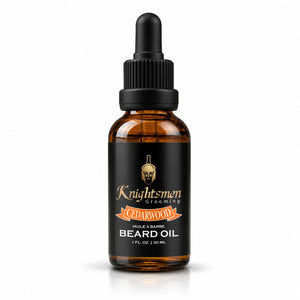
If you prefer a scent, the Cedarwood version works equally well on the same organic carrier oil base.

Knightsmen Recommends
Organic Beard Oil | Classic
The unscented formula recommended above for stubble — jojoba and argan oil that softens short facial hair.
Shop Now →How to maintain even stubble
An adjustable stubble trimmer is the most important tool for this. Set it to your preferred length and run it across the entire face every 2–3 days to maintain even growth. The goal isn't shorter — it's consistent. Facial hair grows at different rates in different areas, so without regular trimming the cheek areas fall behind the upper lip and jawline, creating an uneven look.
Key trimming notes:
- Trim against the grain for the most even result. With the grain leaves more length and can miss shorter hairs.
- Do the neck last. Decide where your neckline sits (one to two finger-widths above the Adam's apple is the standard guideline) and clean it up with a razor or trimmer on the lowest setting.
- Check in good light. Bathroom mirror light is often too forgiving. Natural light or a well-lit mirror shows patchy areas more clearly.
The neckline: where most men go wrong
A defined neckline is what separates intentional stubble from unkempt stubble, especially at 4mm and above. Most men either don't clean up the neckline at all or they set it too high — shaving up to the jawline creates a floating beard effect and can make the face look rounder.
The correct neckline position: place two fingers horizontally above your Adam's apple. Where the top finger sits is approximately where the neckline should be. Shave or trim everything below that line. The neckline should curve naturally from ear to ear, following the contour of the jaw rather than cutting straight across.
Cheek lines: leave them or define them?
At light stubble (1–3mm), natural cheek lines are usually fine — the hair is too short to need shaping. At medium to heavy stubble (4mm+), a stray hair or uneven cheek line becomes more visible. Cleaning up the cheek line with a single-blade razor every week or two keeps the look from drifting into disheveled territory.
The rule: keep the cheek line natural (don't create an artificially high or sharp cheek line) but remove outliers that sit well above where the main beard density is.
Stubble and skin care
Short facial hair exposes more skin than a full beard. The skin under and around stubble is visible and needs care. Two things matter:
Moisturizer or beard oil daily. The skin under stubble dries out faster than bearded skin because the short hair provides less insulation and the skin surface is partially exposed. Beard oil applied to clean skin in the morning helps moisturize the skin and softens the stubble so it looks less dull and wiry.
Exfoliation once or twice per week. Stubble can lead to ingrown hairs when short hairs curl back into the skin, and the American Academy of Dermatology suggests a gentle exfoliating scrub once or twice a week if you are prone to them, followed by moisturizer. The Activated Charcoal Facial Cleanser is a plant-based cleansing bar with a coconut oil base, for face and body.
Frequently asked questions
How do I stop stubble itch?
Stubble itch comes from dry skin being irritated by short, coarse hair ends. Apply 2–3 drops of beard oil directly to the skin under and around the stubble every day after washing. The jojoba and argan oil base moisturizes the skin surface and softens the hair ends. Used consistently, it helps keep the skin under your stubble moisturized and the hairs soft.
Should you use beard oil on stubble?
Yes — and it's actually more important on stubble than on longer beards. At the stubble stage, beard oil goes directly onto the skin rather than being partially absorbed by longer hair. It moisturizes the skin underneath and softens the hair ends, so short facial hair feels more comfortable against the skin.
How long does it take to grow stubble?
Light stubble (1–2mm) appears within 1–3 days of shaving for most men. Medium stubble (3–4mm) takes about 4–7 days. Heavy designer stubble (5–7mm) typically takes 1–2 weeks. Growth rate varies significantly between men — genetics, testosterone levels, and age all play a role.
Where should the stubble neckline be?
Place two fingers horizontally above your Adam's apple — that's approximately where your neckline should sit. Shave or trim everything below that line. The neckline should follow the natural curve of your jaw from ear to ear. Avoid shaving the neckline too high (up to the jawline) as this creates a floating beard effect.
How do I keep stubble even?
Use an adjustable stubble trimmer set to your preferred length every 2–3 days. Facial hair grows at different rates in different areas, so regular trimming is required to keep coverage consistent. Trim against the grain for the most even result and check in natural light to catch patchy areas.
What are the key facts at a glance?
| Topic | Quick answer |
|---|---|
| Light stubble | 1–2mm; appears within 1–3 days of shaving; keep it even and clean at the neck |
| Medium stubble | 3–4mm; around 4–7 days of growth; the most universally flattering range |
| Heavy or designer stubble | 5–7mm; typically 1–2 weeks; shape the cheek lines and neckline |
| Trimming | An adjustable trimmer every 2–3 days, against the grain |
| Neckline | Two fingers above the Adam's apple, curving from ear to ear |
| Skin care | Beard oil or moisturizer daily; a gentle exfoliating wash once or twice a week |
What are the most common questions about stubble?
What is the difference between light, medium and heavy stubble?
Light stubble is 1–2mm, the 5 o'clock shadow range, and the goal is to keep it even and clean at the neck. Medium stubble is 3–4mm and is the most universally flattering range, long enough to show clear coverage and short enough to stay neat. Heavy or designer stubble is 5–7mm, close to short beard territory, so edges matter more. For longer lengths, see the beard length guide.
Should I define my cheek lines on stubble?
At light stubble of 1–3mm, natural cheek lines are usually fine because the hair is too short to need shaping. At 4mm and above, a stray hair or uneven cheek line is more visible, so clean it up with a single-blade razor every week or two. Keep the cheek line natural rather than artificially high or sharp, and remove only the outliers. For a full walkthrough, see how to trim a beard at home.
Does stubble need skin care?
Yes. Short facial hair exposes more skin than a full beard, and the skin under stubble dries out faster because the short hair provides less insulation. Use a moisturizer or beard oil daily, applied to clean skin in the morning, and use a gentle exfoliating wash or cloth once or twice a week. The Activated Charcoal Facial Cleanser is a plant-based cleansing bar for face and body.
What makes stubble look intentional instead of forgotten?
Three things: even length, a clean neckline and skin care underneath. Most stubble looks accidental because men grow it by not shaving rather than by choosing it. Pick a length, run an adjustable trimmer over the whole face every 2–3 days, set the neckline two fingers above the Adam's apple, and keep the skin moisturized. None of it takes long. For shorter beard looks, see short beard styles.
Knightsmen Grooming products are cosmetics. This guide is general information, not medical advice. If you have a skin or scalp condition, or sudden changes in your hair, see a doctor or dermatologist.