Free Shipping on Orders $100+ — Canada

Short answer: Soy wax is a firm, plant-based wax made from soybean oil that holds its shape well, while coconut wax is a softer wax made from coconut oil that carries scent further. Many makers, including us, blend the two to get structure and scent together.

Knightsmen Recommends
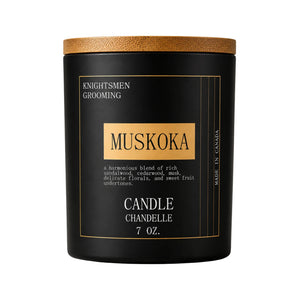
Muskoka | Scented Candle
Pine, fresh water, birch and clean air, poured in the same coconut-soy wax blend this guide describes. Muskoka has a crackling wood wick and burns for approximately 75 hours.
Shop Now →Key takeaways
- Soy wax sets up firm and holds a wick straight, but it is a dependable scent carrier rather than an exceptional one.
- Coconut wax carries scent further, but on its own it is soft and tends to cost more than soy.
- Our candles are poured from a paraffin-free coconut-soy blend: soy supplies the structure and coconut helps carry the scent.
- Let the first burn reach the edge of the jar, trim the wick to about a quarter inch every time, and keep sessions to two to four hours.
- Our four candles burn for about 70 to 75 hours, depending on the scent and the wick.
Ask someone what makes a good candle and they will talk about scent. Fair enough, but incomplete. Scent is the fragrance oil's job. Whether that fragrance fills the room, and whether the candle burns down flat or leaves a hollow crater through the middle, depends heavily on the wax and the wick. It is the part almost nobody asks about before buying.
We are asked fairly often why our candles use a coconut-soy blend instead of plain soy wax. The honest answer means explaining what each wax actually does, because the marketing language around both has gotten a little loose.
What does soy wax actually do?
Soy wax is hydrogenated soybean oil, and it became the standard alternative to paraffin for practical reasons rather than trend. It is plant-based, it comes from a renewable crop, and it tends to release fragrance steadily as it melts.
Its real strength is structure. Soy wax sets up firm, holds a wick straight, and resists the soft slumping that lower-density waxes are prone to in a warm room.
That same firmness is also its limit. Soy is a dependable carrier for fragrance oil, not an exceptional one. A well-made soy candle smells accurate to the label, but it does not always smell strong enough to carry through a large room.
What does coconut wax actually do?
Coconut wax is made from coconut oil, and it solves the exact problem soy struggles with: scent throw. Candle makers who work with it commonly report a stronger cold throw, which is the scent you notice before lighting the candle, and a stronger hot throw once it is burning, compared with soy on its own. Like soy, it comes from a renewable plant source.
The catch is structural, and it is a real one. Pure coconut wax is soft. A candle poured from nothing else can struggle to hold its shape in a warm room, melt unevenly, or tunnel down the centre instead of pooling out to the edge of the jar. It also tends to cost considerably more than soy, which is why a candle made from 100% coconut wax is uncommon on shelves and priced accordingly.
How do coconut wax and soy wax compare?
The two waxes trade strengths: soy brings structure and coconut brings scent. This table sums up the differences described above and shows where the blend sits between them.
| Feature | Soy wax | Coconut wax | Coconut-soy blend |
|---|---|---|---|
| Made from | Soybean oil | Coconut oil | Both oils |
| Structure | Firm; holds a wick straight | Soft on its own | Soy supplies the backbone |
| Scent throw | Dependable, not exceptional | Stronger cold and hot throw | Coconut supplies the throw |
| Main trade-off | May not carry through a large room | Can slump, melt unevenly or tunnel; costs more | Needs a full first burn to set an even melt pool |
Neither wax is strictly superior. Which one suits you depends on whether you value a firm, even melt pool or a stronger scent, and a blend is a way to get both.
Why do we blend coconut and soy wax?
Our candles are poured from a coconut-soy wax blend, and we will not dress that up as a proprietary breakthrough. It is the standard, sensible way candle makers get coconut wax's scent throw without inheriting its structural weaknesses.
Soy contributes the backbone: an even melt pool and a wax that holds its shape. Coconut contributes the throw that soy alone cannot match, which matters for fragrance-led candles like Muskoka, Saffrona, Elysian and Jasper.
The blend is also entirely paraffin-free, which was never up for negotiation, and our candles use no synthetic dyes and no phthalates. It is not a hybrid for the sake of a label claim. It is the wax that behaves the way we want a candle in this price range to behave. For a wider buying guide, see what makes a great candle.
How should I burn a coconut-soy candle?
Burn it patiently the first time. Soy-based waxes have a "memory": the melt pool from the first burn sets the pattern every later burn follows. Let the first burn run until the wax has melted flat from edge to edge, roughly two to three hours depending on the jar. If you put the candle out early, you build a tunnel into it that no later burn fully corrects.
- Trim the wick to about a quarter inch (6 mm) before every burn. An untrimmed wick burns hotter than it should, throws more soot and shortens the candle's life.
- Keep sessions to two to four hours, and let the wax solidify fully between burns.
- Keep the candle away from drafty windows and vents, because moving air pulls the flame sideways and melts the wax unevenly.
- Never leave a burning candle unattended, and keep it away from children, pets and anything that can catch fire.
How long do our candles burn, and which wick does each one use?
Handled that way, our candles run about 70 to 75 hours depending on the scent. The same coconut-soy wax sits underneath all four, and the wick depends on the scent.
- Jasper: cedarwood, black amber and a quiet thread of smoke; cotton string wick, silent while it burns; about 70 hours.
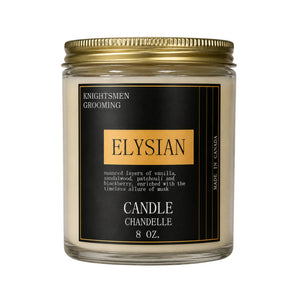
- Elysian: warm amber and sandalwood over an earthy base; cotton string wick; about 70 hours.
- Muskoka: pine, fresh water, birch and clean air; wood wick that adds a quiet crackle; about 75 hours.
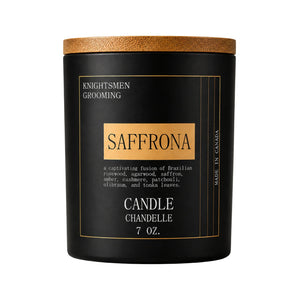
- Saffrona: saffron and amber; wood wick that adds a quiet crackle; about 75 hours.
Those figures assume a trimmed wick and sessions of two to four hours. Skipping either step can shorten the burn time.
Frequently asked questions
Is soy wax better than paraffin?
It depends on what you want from a candle. Soy wax is plant-based and renewable, while paraffin is made from petroleum. We pour our candles in a paraffin-free coconut-soy blend, but how a candle behaves also depends on its wick, its fragrance and how you burn it, not only on the wax named on the label.
Is coconut wax better than soy wax?
Coconut wax is better at one thing and weaker at another. It generally carries scent further, while soy wax holds its structure better and costs less. Neither is strictly superior on its own, which is the reason blends like ours exist.
Why do some candles tunnel?
Tunnelling (tunneling in US spelling) happens when a candle is put out before its melt pool reaches the edge of the jar, almost always on the first burn. Once a narrow tunnel forms, later burns tend to follow the same path, leaving wax along the outer wall that never melts and never gets used. A wick that is too small for the jar can cause the same problem.
How long should I burn a candle the first time?
Long enough for the melt pool to reach the edge of the jar, typically two to three hours for a standard container candle and longer for a wider jar. Watch the wax surface rather than the clock. Once it has melted flat and level, the first burn has done its job.
How long do Knightsmen candles actually burn?
About 70 to 75 hours per candle, depending on the scent, when the wick is trimmed before each burn and sessions are kept to two to four hours. Jasper and Elysian run about 70 hours, and Muskoka and Saffrona about 75. Skipping either step can shorten that.
Are Knightsmen candles paraffin-free?
Yes. Our candles are poured from a coconut-soy wax blend with no paraffin, and they use no synthetic dyes. They are hand-poured in small batches in Toronto, Canada, on a cotton string or wood wick depending on the scent. You can browse all four scents in our candle collection.